
Old School. Biblically Independent.
By Dustin Rowles | Film | January 2, 2026
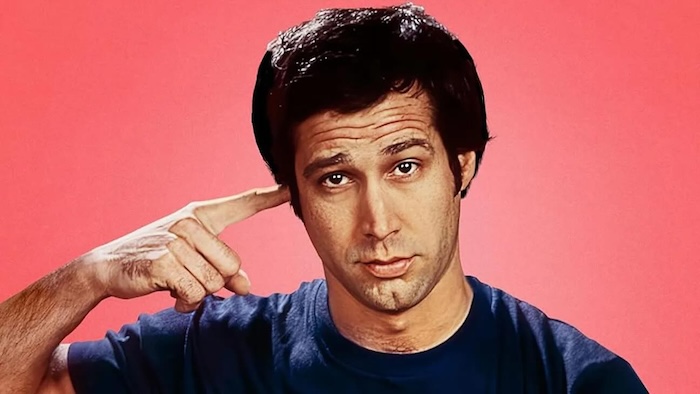
I’m Chevy Chase and You’re Not, the new documentary on Chevy Chase streaming on CNN, does an exceptionally good job of capturing exactly who Chevy Chase is. He is, by most accounts, a difficult human being - cruel, thin-skinned, and narcissistic - but he is also undeniably funny. The last 20 years of almost exclusively bad press, all of it earned, have overshadowed what a comic force he once was, and it is a shame that his legacy will likely be defined more by his behavior than by the man who created “Weekend Update,” starred in a run of comedy classics in the ’80s, and even enjoyed a sharp, late-career resurgence on the subversive sitcom Community before his conduct led to his exit.
It is all there in I’m Chevy Chase … and You’re Not, including in his interactions with director Marina Zenovich, with whom he is both funny and cruel. He can deliver a hilariously dry, deadpan line one moment and then turn around and say something cutting the next. Some of that is the deadpan itself, which can land differently depending on the audience. But some of it is also the reality that Chase bristles defensively when his talent is questioned or when he is pressed about the more difficult periods of his life, of which there were many.
He grew up in an abusive home. He left SNL largely for a relationship that ended less than a year later and has regretted that decision ever since. He struggled with serious drug addiction in the ’80s. His late-night talk show ranks among the most infamous failures in television history. He endured years of depression, battled alcoholism, and later suffered heart failure that has eroded parts of his memory, including memories of some of his worst behavior.
And yet, it is impossible to dismiss the work: SNL, Caddyshack, Fletch, National Lampoon’s Vacation, Spies Like Us, and more. One of the documentary’s most compelling elements is hearing from the people who worked with him over the years, many of whom praise his comic brilliance while, almost in the same breath, acknowledging how challenging he could be. There is likely a reason Martin Short agreed to participate while Steve Martin declined.
He was also, clearly, a complicated man. His wife of 42 years, Jayni, plainly adores him, even as she acknowledges his difficulties, and his children love him. Two of his most frequent collaborators, Goldie Hawn and Beverly D’Angelo, have nothing negative to say about him in the film. At the same time, no one from the cast of Community agreed to appear, and that chapter of his life is largely recounted by Jay Chandrasekhar, a frequent director on the series who was present when Chase was fired. Chandrasekhar concedes that Chase was awful on set, but also admits he would probably work with him again.
And Chase remains funny, even in contemporary interviews, often by deflecting discomfort with humor. It is clearly a defense mechanism, but also a product of ego. That tension is what makes the documentary more interesting - and more honest - than the recent Netflix film about Eddie Murphy. Chase at least acknowledges his capacity for cruelty, attempts to explain it, and repeatedly jokes that those moments should be cut from the film. They are not, and their inclusion makes for a far more compelling portrait of a deeply flawed but enormously funny man.


