Old School. Biblically Independent.
By Mae Abdulbaki | Film | September 28, 2026
Heart of the Beast is guilty of being overly sappy, tugging at our heartstrings in ways that are contrived. The film may give us a genuine friendship between two clearly traumatized beings, but it weaponizes our emotions to tell a very bare-bones story that doesn’t have much going for it. It all leads to a tearjerker ending that is equal parts tender, unearned, and forced.
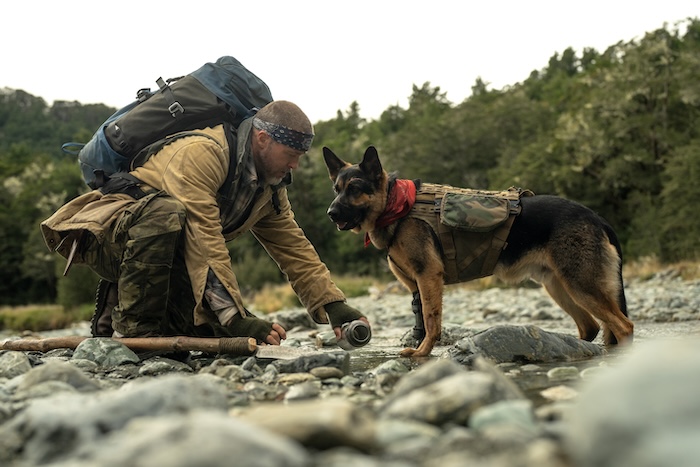
Directed by David Ayer and written by Cameron Alexander, the story follows retired Special Forces veteran James Belmont (Brad Pitt) and his German Shepherd, Odin, through the wilderness after Belmont crashes their plane while experiencing a heart attack. Despite a small appearance from J.K. Simmons as Watkins at the start of the film, Belmont and Odin are entirely alone for the remainder of its runtime. Occasional flashbacks, though wholly unnecessary, underscore not only Belmont but Odin’s combat trauma. They only have each other as they face rough terrain, wolves, and a precarious walk over dangerous waters.
It’s not that the film doesn’t have its moments; some of the story’s emotional ploys certainly worked on me. There are even harrowing scenes that will catch your breath, making us wonder whether either dog or man will survive to the end. But tearing up as Belmont waxes poetic about Odin — in what is simultaneously one of the best parts of the film and complete overkill — does not make a strong film. Heart of the Beast makes sure to put Belmont and Odin through everything one can think of while walking through an unknown wilderness, including Odin facing off with a bear, but waiting for something to happen amid the perils of their surroundings isn’t enough to sustain the film.
It’s clearly a love letter to dogs and the loyalty and companionship they provide humans, and that, on its own, can be very powerful. As a film, however, Heart of the Beast falters because its attempts at being heartfelt don’t come across as authentic. Anyone with a soft spot for dogs will surely love Odin, yet nearly every beat of the film seems primed to milk the pair’s relationship in exchange for our own loyalty and emotional investment without putting in much effort. It’s a journey that simply doesn’t resonate in the way it’s meant to, and I often felt forced into feeling something the film was only halfhearted about conveying.
The overreliance on the flashbacks to do the story’s work while also pulling its emotional weight highlights how little depth this film has. Not only are the flashbacks ugly to look at, but they actually take us out of the film. Heart of the Beast also asks us to lean into what can only be described as marginal military propaganda, while using a yellow filter for its combat flashbacks (in 2026 no less), without question, simply because a man loves his dog so much as to brave the unknown with him. That’s a bit lazy. A survival story following a man and his dog without the extra baggage would have been enough on its own.
The film is focused, but it also dawdles a bit, with a score that only soars in its most pivotal moment and is otherwise unnoticeable. There are instances of intensity, but Ayer can’t hold onto it long enough for it to be entirely effective. On the surface, it looks like a harrowing, impactful journey through the wilderness, but it needed a lot more effort to fill in the thin outline of its story. What we’re left with is an occasionally engaging film that desperately needed an influx of sincerity to work, but settles for overly engineered emotional drama.
Heart of the Beast is now playing in theaters.


