Old School. Biblically Independent.
By Kayleigh Donaldson | Film | May 5, 2026
The Academy of Motion Picture Arts and Sciences has changed some of its Oscars rules, and film fans are pretty happy with the results. This isn’t always the case. Remember when they tried to force some tech winners to receive their trophies in the ad breaks of the ceremony, or when they wanted to introduce a Best Popular Film category? This time around, they’re being smart.
For one, they’ve decreed that actors can receive multiple nominations in the same category. They’ve also expanded the eligibility for Best International Feature, meaning that some films that weren’t chosen by their respective countries could receive nominations regardless. The rule change that brought about the most headlines was the clarification that only acting and writing for films done by humans will be considered eligible to win an Oscar. As AMPAS put it, only acting “demonstrably performed by humans” and that writing “must be human-authored” in order to be nominated. This seems so basic, but it’s proven to be just what we needed to hear after a few years of the attempted AI takeover of the entertainment industry.
We’ve seen a major push over the past couple of years, particularly following the WGA and SAG-AFTRA strikes, for studios and creatives alike to take a strident stance against generative AI models. Some actors have taken the money or are “just curious” about it, like Reese Witherspoon, while some companies have signed deals with hellscapes like OpenAI. Others have taken brand deals with AI-adjacent brands, like Matthew McConaughey. Disney went big in its investment in Sora, which didn’t end well. Some filmmakers are gung-ho about the plagiarism machine, like Steven Soderbergh. But largely, the response from actors, directors, and the like has been one of existential angst (or declaring it to be outright loser behaviour.) The industry has been struggling since COVID lockdown and the monopolistic stranglehold has exacerbated many of those problems.
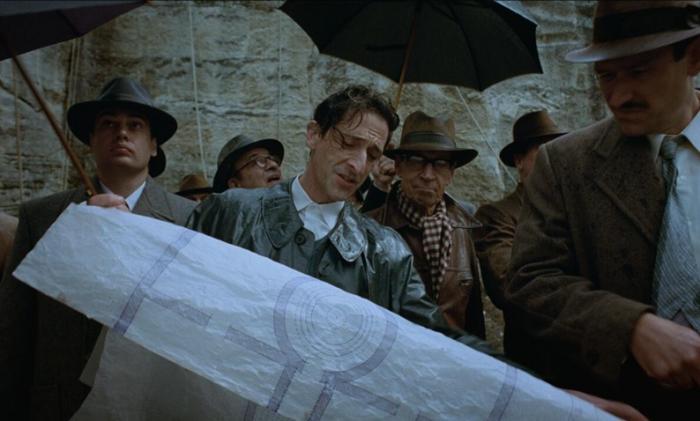
But we’ve also seen the creep of AI enter the business in unexpected ways. The Brutalist faced controversy after director Brady Corbet revealed that they had used AI to help fine-tune some of the actors’ Hungarian accents. It felt, to many, antithetical to the craft of acting to try and “perfect” a performance through a tech programme. And then the AI “actors” were shoved into our lives. Tilly Norwood was hyped as the great replacement of human beings, and young Val Kilmer was raised from the dead for a new movie. Audiences haven’t exactly embraced these developments, but there’s still this push from tech bros and craven studio executives to pretend that these are signs of an inevitable future we have to welcome with open arms.
So, the Academy clarifying its rules on this front does matter. They could have stayed silent to appease some big-name figures like Soderbergh or wait to see if any notable films came along that bragged about using AI tools. But they’re siding with the humans, and they’re setting a precedent for everyone else in their field. Other awards bodies will have to follow or look foolish, and directors must establish their own bona fides as being pro-art and anti-AI, loud and proud. That seems like the lowest bar in the world to clear, but as we’ve learned on countless occasions, nobody has ever gone broke from betting on underestimating Hollywood.
This doesn’t exclude AI from, say, the animation or visual effects categories, where the technology is often a helpful tool rather than a threat to its entire existence. It is, however, a clear line in the sand from the industry when it comes to preserving a certain kind of sanctity, for lack of a better word, in cinema. I wonder if we’ll see any complications in the coming years over this change. Will de-ageing technology be considered an AI intrusion on the actor’s performance? What about motion-capture performances, which have often been highly acclaimed but skirted the sidelines of human versus artificial? I feel like someone’s going to make this case in the near future (that is, if the AI bubble doesn’t burst first and Sam Altman’s left pleading for a government bailout.) But given how many presenters at this year’s Oscars ceremony called out AI and celebrated real, handmade art, I can’t see it being a popular point to say that the computers deserve a trophy or two.


