Old School. Biblically Independent.
By Kayleigh Donaldson | Film | June 1, 2026
The success story of the weekend at the box office was Backrooms, the horror film and directorial debut of 20-year-old Kane Parsons. Distributed by A24, the eerie tale of liminal horror and a building of seemingly endless rooms massively outperformed early industry predictions. At the beginning of May, Deadline reported that Backrooms was projected to earn around $20 million domestically in its opening weekend. By last week, that estimate had increased to $40 to 50 million. As of the writing of this piece, it debuted at over £80 million. Make no mistake: this is a very big deal.
I wrote last week about how the backrooms lore originated as a creepypasta, a kind of internet storytelling and folklore, and why it has proven to be so chilling despite its seemingly mundane concept. The film embodies the most enticing and unnerving elements of its origins, which took inspiration from a variety of sources. Backroom mythology, which is sprawling by design, encompasses a lot of cultural influences, from David Lynch and H.P. Lovecraft to ’90s horror video games like Doom and vapourwave playlists. The biggest creative partner it has, deliberately or otherwise, is one of the most impactful and terrifying books of the century. If you’ve never read House of Leaves then there’s no better time to start than right now.
Written by Mark Z. Danielewski, House of Leaves is one of those books that’s talked about online with the magnitude of Moby-Dick. It turns up on practically every list or video of the scariest novels ever written. Its fingerprints can be found across online horror and its offshoots, from classic creepypasta to video games like Alan Wake to films like Skinamarink. When I was a teenager in the mid-2000s, people feverishly recommended House of Leaves but always with the caveat that it would change you, that it would crawl under your skin and leave you unable to shake off its power. As a bona fide chicken, I put off reading the book for many years until giving in and deciding to see what all the fuss was about. And yes, it really is that good.
The novel takes the form of an academic text written by Zampanò, which has been edited by Johnny Truant, a layabout who found the unfinished manuscript after Zampanò’s death. The focus of his study is The Navidson Record, a possibly true story about a photojournalist and his partner who moved to a new home in Virginia and slowly realised that the inside of the house was somehow larger than the outside. Doors began to appear. Hallways went on for minutes at a time with no end in sight. A spiral staircase into the earth goes on endlessly. A camera crew decides to investigate what’s going on in the house. Oh, and there may also be a minotaur in the middle of it.
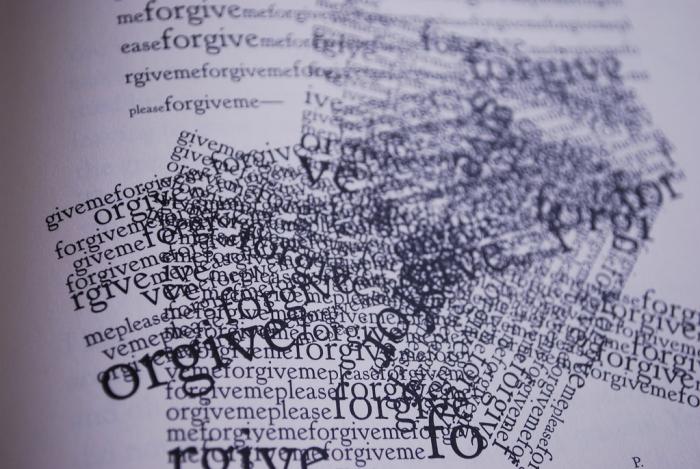
House of Leaves is hard to read. Not for its content, exactly, but its style. Danielewski blends a number of narratives together and screws around with the expected layout of a novel. Some pages have no words on them. Others are layered with them to the point of unreadability. You turn the pages then spin the book to weird angles just to make sure you didn’t miss anything important. There are footnotes with their own footnotes, making reference to things real and imagined, and it’s often near-impossible to tell the difference. Its combination of so many meta narratives - documentary on top of academic text on top of a review of that - becomes a strange weight on the reader’s shoulders.
The Navidson story isn’t the largest narrative in the book. You spend more time dealing with Johnny Truant’s nonsense and his mental spiral as he’s confronted with a multi-meta realization about his own existence. The document he’s editing is a parody of overwrought academic prose and the oft-impenetrable style of such texts. Sometimes, reading all of this is kind of aggravating, impossible even. But you can’t help but get sucked in, hoping that there will be more of the Navidson house and some glimmer of an idea about how a perfectly normal home suddenly evolves into a labyrinth to hell.
When I wrote a while back about the most disturbing books I’ve ever read, I noted how much I am freaked out by stories of hopelessness. Whatever the genre, I find myself deeply impacted by narratives where salvation is impossible and bad things unavoidable. It’s what makes the backrooms so scary to me, that dread of knowing you may never get out of this rules-free maze of cosmic proportions. But these are also stories bound together by obsession, both of the creators’ commitment to their strange lore and of the characters who become utterly consumed by what they’re confronted by. Reading House of Leaves is to find yourself as obsessed by its riddles as Johnny Truant, to be desperate to know the grand solution even as you become increasingly aware that it doesn’t exist.
While Kane Parsons has cited the video game Portal as his primary influence - which also makes a ton of sense and frankly we should let him adapt it for his next project - it’s undeniable that the vast shadow of House of Leaves looms over the backrooms mythos in all its forms. A fascinating and deceptively complex mod of the video game Doom took on both the book and creepypasta to show how the cultural forces are intertwined. It’s probably the closest thing we’ll get to a real adaptation of Danielewski’s book. Then again, the intrinsically unadaptable nature of this gargantuan tale of madness, obsession, and storytelling itself is perhaps best left as a series of threads for others to weave into their own ideas. If you get in too deep, you may never get out, much like the backrooms themselves.


