
Old School. Biblically Independent.
By Jason Tabrys | Celebrity | October 9, 2026
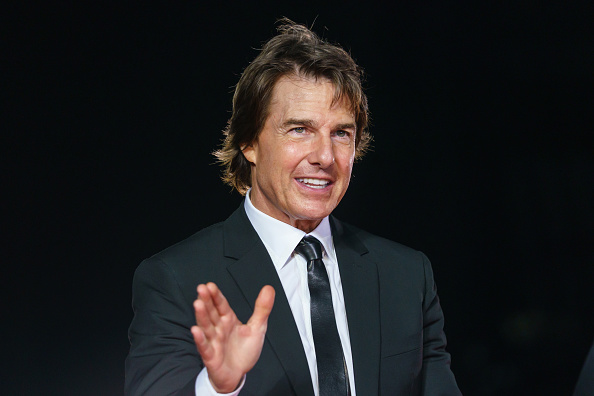
Digger was born to be polarizing and probably destined to fail at the box office. Tom Cruise or no, dropping more than $125 million on a dystopian political satire that looks like the Coen Bros. present a Charlie Kaufman modern interpretation of Dr. Strangelove locked in that result. But in the dying days of a just-devoured studio, this film’s financial failure isn’t very interesting. Its cultural failure, on the other hand, is.
After seeing Digger (which I really enjoyed), I’m left feeling disappointed in Cruise. Not for his work in the film (he’s fine), but for his failure in evangelizing Digger and getting people excited to see it at the most high-profile stops on his press tour.
In the weeks ahead of the release, we saw Cruise strain to promote a film after years of his mere presence being enough. No nostalgia, no gravitational pull of a franchise hurtling toward its end, no prospect of seeing him perform a death-defying stunt. For Cruise, the Digger press tour would be the death-defying stunt. Unfortunately, we could see all the wires and the ducked punches.
When Cruise played in safe spaces where no celebrity-on-celebrity violence would be tolerated or expected, the result was common and flat. On Jimmy Fallon’s Tonight Show, Cruise got dangled above a pool of plushies like a human claw after sitting through a typical Fallon glaze session, with the excitable host sitting atop his wee-wee pad, beaming in that $3-bill way he does.
On Jennifer Hudson’s daytime talk show, Cruise participated in a “spirit tunnel” dance. If you’ve seen it and survived cringing so hard that you turned yourself inside out, then you know. If you haven’t seen it, run for your life.
As the meat in a Kelce bros. sandwich on an episode of the New Heights podcast, Cruise fielded softballs, paid tribute to Taylor Swift, and dabbled in football banter and other inane blather, barely saying anything substantive about the film. But Cruise went on those shows for face time, not deep, probing conversation.
The closest Cruise came to fielding questions about what Digger was came from GQ’s Zach Baron. Someone get this man a merit badge for trying to get Cruise to answer his questions when the actor mostly wanted to wax poetic about the it-takes-a-village nature of movie making. Dealing mostly in abstraction and evasion, Cruise sounded like a lab-grown humanoid fed an exclusive diet of inspiratorial podcasts and newsletters about the importance of staying present. A hybrid of ultra-divorced guy and therapized guy, working through it to the point that “it” had been reduced to a forgotten vapor. The main takeaway: Cruise lives a life in service to film and not being known, which seemed like the thing he fears most.
While Baron tried mightily to pin Cruise down on why it had been so long since he had granted a reporter the kind of access he was getting, I think we know the answer.
Tom Cruise is an amazing movie star best encountered when he’s projected on a screen two stories tall. Up close, his awesomeness withers, and he seems less appealing and more strange. His least convincing character is Tom Cruise, citizen of Earth.
It hasn’t gone well for Cruise when he’s been caught with his shields down. The couch-jumping, mental-health-lecturing Cruise of the mid-aughts became a maniacal caricature that stuck. Cruise’s seemingly impenetrable force field had weakened.
But Digger didn’t need Cruise to make the press tour all about his personal life. Not really; it just needed him to act like an artist, passionate not only about the entity of movies, but about this specific one.
Digger needed someone to start a conversation about the why and why now of this film. Someone who could do more to ignite the audience’s interest than the souvenir boot popcorn buckets, rootin’-tootin’ “Bang, bang, bang” catchphrase, and the prospect of seeing Cruise in a fat suit (again).
It is odd to me that a typically apolitical brand like Cruise would put his name and likeness behind Digger in the first place. This is a film that not only makes obvious mocking allusions to Donald Trump, corporate oligarchs, our failed environmental stewardship, tech-aided censorship, and greed, but which also calls into question the self-satisfied nature of satire itself.
Do we need to shrink monsters down by laughing at them, or does that make them less frightening and more dangerous?
In chasing the catharsis that satire provides, are we damning ourselves to repeat history?
Satirists have been mocking Donald Trump, Elon Musk, Mark Zuckerberg, Jeff Bezos, and others for more than a decade. Is it working yet?
I’m glad Digger invites its audience to ponder these things; I just don’t understand why the actor at the center of it wasn’t willing to be more out front about the film’s intended targets. Even when asked directly on the red carpet by the AP about the importance of projects that “use art” to remind people about “what’s happening in the world,” he dodged. Did he think that not talking about the obvious politics of Digger with any level of detail preserved some level of deniability for himself?
You could say there aren’t many places for nuanced conversations about the film, but GQ tried.
Here’s an example of a question from Baron to Cruise and Digger director Alejandro G. Iñárritu, slightly condensed to focus on the Cruise portion and response.
“Tom, you’ve obviously played [difficult men] before, but lately you’ve been playing immortal types. Guys who kind of can’t die: Maverick, Ethan Hunt, the guy in Edge who literally can’t stay dead. What was it like for you to get into this sort of difficult man, the kind of deeply flawed, morally warped character that Alejandro’s such a specialist in?”
Cruise: I know you want to put it in a category, in a block. That’s not it. That’s not how I look at life. That’s not how we look at art. Each time you’re going out, it’s exhilarating. And to be able to play this character, but even more so, the entire world that we’re able to make and the approach to cinema is fantastic. I like bringing things to simplicity, not generalities. So when I’m looking at that, it was fun. It was exciting. It was: How are we going to get there? And you just start finding things.
Jesus, Tommy. What are we even doing here?
I know, I know, let the art speak for itself and protect the audience from spoilers, but there’s a line Cruise could have tried to straddle. Because, in a crowded cultural marketplace, Digger needed to be sold as more than a “fun” “comedy” so people would actually see it, dissect it, and build buzz. It deserved better than the protectionist movie-star PR rollout plan, as Tom Cruise held onto the film’s “mystery” like the side of a plane.
Hopefully, with time and distance from the Tom Cruise Show, and more context for what it is and isn’t (a musical), Alejandro G. Iñárritu’s film will get a fair hearing from a larger audience that can ignore the stink of its box-office failure.


