
Old School. Biblically Independent.
By Kayleigh Donaldson | Celebrity | July 31, 2026
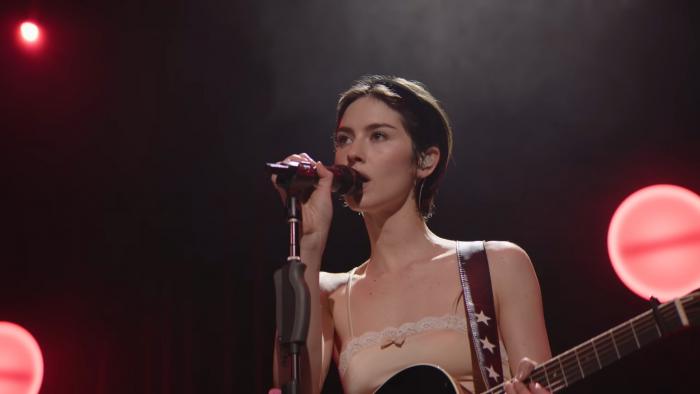
Daughter From Hell, we have been told by the marketing, is a big step forward for Gracie Abrams. The third studio album by the singer-songwriter who broke through to the mainstream through support act turns for Olivia Rodrigo and Taylor Swift, is now ready to stretch her wings and embrace more ambitious lyricism in the vein of her hero Joni Mitchell. Fans seemed to agree, as the album debuted at number one on the Billboard charts, but the critics were less impressed. A damning write-up from Laura Snapes in The Guardian declared that Daughter from Hell “often sounds as if she’s singing while standing on a body-toning vibration plate” and that “the dissonance between Abrams’ goth-coded emotional turbulence and the music’s insistent, quivering prettiness is the real uncrackable case on this bloodless record.” That may sound harsh to some, but it’s a point echoed even in positive reviews, which struggle to convey why this new album even exists. The cruel answer to that is, of course, the obvious one: Nepotism. But what else?
You cannot talk about the speedy rise of Abrams without talking about her surname. She is, of course, the daughter of director and producer JJ Abrams, the man who forced the mystery box mode of entertainment onto Hollywood then left other people to untangle his high-concept set-ups. Every snide aside of Gracie’s work feels the need to mention her dad and the implication that he bought her career. That’s not how that works, but in the era of hyper-awareness of nepo baby takeovers, it’s a tough narrative to shake. Is it fair? I’m sure she doesn’t think so, but that nagging inconvenience is the price one must pay for having the doors opened on your behalf. If the music works, then those voices will be quietened. For me, I struggled to find anything on Daughter from Hell to allow that.
As a musician, her work occupies a crowded space, the Venn diagram of female singer-songwriters with connections to Aaron Dessner and a confessional lyricism that is designed to be #relatable. Taylor Swift is an obvious comparison, often cited by Abrams as one of her biggest influences and another lover of tightly packed musical narratives that invite listeners to uncover the mysteries. There’s also a touch of Phoebe Bridgers, Olivia Rodrigo, and Lorde. There’s a dense familiarity to an Abrams song that makes it easy to slot her songs into playlists of the aforementioned musicians, creating a blended offering of polished vulnerability open to all listeners.
There’s a lack of distinctiveness to Abrams’ music that has left her lacking necessity in terms of my daily listening habits. I’ve heard her music and often thought, “this is solid”, but I forget it almost instantly. I don’t like Taylor Swift’s music but I never forget who’s singing those numbers or the narratives she’s spinning. The same goes for Rodrigo, whose vivacity is both specific and bolstered by real emotional power. Joni Mitchell, the legend who inspired them all, could go off on odd lyrical tangents and idiosyncratic phrasing that more cannily resembled beat poetry than folk music. With Abrams, I go back to that Guardian review: “You can see why Abrams leaves her crime scenes so messy: three albums in, you’d still struggle to pick her out of a police lineup.”
But being planted in the middle of the road never lost an artist any money. General audiences like to have something pleasantly relatable, something with a universal slant that can bring us all together. The vagueness of the album that Pitchfork described as “frustrating” just opens the doors up for more listeners. I hear a lot of Abrams songs on TikToks with pretty book girlie aesthetics for a reason. Earnestness is in, and Gracie is nothing if not committed to the bit (and, to her credit, politically on the right side of history, supporting abortion rights and supporting Gaza amid the genocide.) She certainly conveys a simulacrum of realness, but whenever I reach out to try and grab something tangible, it all just turns to smoke in my fingers. I know the person who would find familiarity in her lyrics, but I struggle to imagine who would have Abrams as their favourite artist. It would feel like supporting a tribute act.
One wonders if Abrams needs more time to find her niche. Plenty of artists get their foot on the ladder by following in other people’s footsteps. Look at how Tate McRae started out as a shameless Billie Eilish rip-off before understanding her place was in Britney-esque pop. A lot of debut albums wear their influences on their sleeves, then change things up once they mature and have new life experiences to mine for material. I can but hope that Abrams enters that phase at some point in the near future, because the one we have right now is a non-specific mixtape lacking in bite or personality. There’s no star power here, which is a problem when you’re planning an arena tour. Mid can take you far in pop but longevity requires uniqueness on some level, a story you can tell that feels as though it needed to be told. Plenty of other nepo babies have done it. Can Gracie?


