Old School. Biblically Independent.
By Kayleigh Donaldson | Celebrity | March 18, 2026
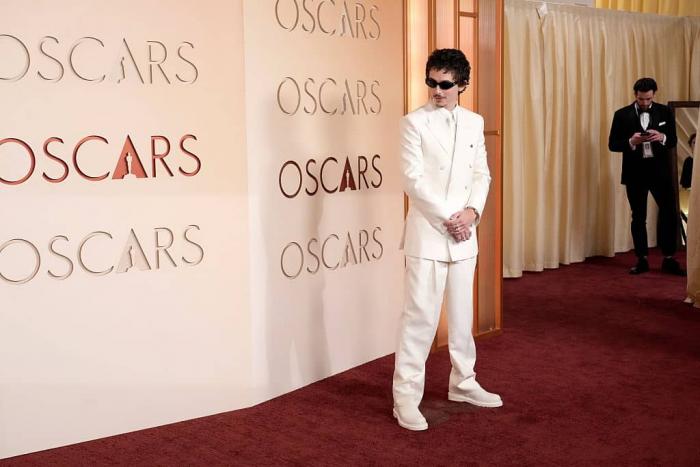
Let’s get it out of the way: Timothee Chalamet did not lose the Best Actor Oscar because of his comments on opera and ballet. While he had begun the awards season as the category’s frontrunner for his excellent performance in Marty Supreme, much of the momentum had switched towards Michael B. Jordan in the final weeks, well before his pipsqueaky interview had gone viral and caused such a ruckus. Indeed, voting was less than a day from closing when that clip from a conversation that took place a month prior spread like wildfire across social media. Alas, for Timmy, the Oscar lore will now say that the fat lady sung and killed his chances, a fizzled-out conclusion made all the worse by a ceremony with more than a few comments made at his expense.
The whole incident made Chalamet into the last-minute villain of the season, giving a lot of people some giddy schadenfreude at his seeming discomfort as the Oscars ceremony cemented him as the also-ran. It was a weird sensation, to feel like the room wasn’t in his corner, especially since he’s spent years being elevated as The Star of His Generation by those same peers. Every celebrity faces some kind of backlash, especially if they’ve been on top for any amount of time with little to no controversy. Usually, this happens more frequently to women whose biggest crime is to be a bit annoying (we’ll never stop trying to avenge you, Anne Hathaway.) Displays of eagerness aren’t coded as cringe when men do them. Indeed, they’re usually rewarded, especially in the context of an awards race. The Academy wants you to hustle for that trophy. But is it possible to hustle too close to the sun?
Chalamet went hard on trying to make Marty Supreme at hit. The expectations were lofty for the actor. He was the lead of a very expensive indie drama that would otherwise have been marketed as niche, and the job of selling it was almost exclusively his job. The director was exposed for some gross misconduct. One of his costars was a MAGA loser. Gwyneth wanted to be excluded from life. Odessa A’Zion was game but also not a big star. So it was Timmy Supreme, and to his credit, he did it all: he stood on top of the Sphere in Vegas, he was on the cover of Vanity Fair, he appeared on every chat show and was a New York omnipresence for months. He and his girlfriend did matching red carpet outfits (and sorry, but I loved it.) Moreover, he made Marty Supreme merch the must-have items of the season. It was a multi-pronged operation that made the movie A24’s biggest commercial hit ever. If ever there was proof needed that Chalamet is a movie-star, here it was.
The Timmy hustle was another extended platform for him to be plain-spoken about his ambition, about his desire to be a legendarily good actor but also someone who the industry could rely on. In the age of the so-called death of the movie-star, Chalamet was consistently heralded as an exception, and he leaned into that. After all, he’s got the box office receipts to back it up. Brand Timmy was mighty, right up until it wasn’t. I don’t think it was just that interview that punctured the fantasy, but the glimpse that nincompoop quote offered into his mindset just cemented that feeling a lot of people have had about him. Well, not just him but the industry at large. Why is it all such a bloody competition?
It’s hard to overlook one of the key reasons why Chalamet faced such a strident backlash to his ambition: because his particular kind of ceaseless brand-strengthening hustle is, potentially, the future of Hollywood. If you want to be a classic movie-star, you don’t get to have mystique anymore. You have to be everywhere, do all the shtick, pretend the TikTokers’ inane questions are interesting, sell a ton of products, and be open about it all. Chalamet’s candour about his desire to be one of the greats is fascinating, in part because he understands that humility has no place in the modern system, but it’s also extremely unappealing to most outsiders. We don’t like being sold to. Film lovers don’t enjoy having every auteur’s indie passion project be turned into a merch fest with a meme-spewing lead working the greased pole of commodities. Why does even an indie drama about ping pong and Jewish masculinity need a line of baseball caps?
When Chalamet talked, albeit glibly, about opera and ballet being artforms that ‘nobody cares about’, he’s aware of the sickness but not of how widespread it is. Film is not immune to the problems that have sidelined anything outside of monopolized clickbait and regurgitated IPs. The needless takeover of Warner Bros. Discovery by Paramount will kill thousands of jobs and reduce the amount of films made (and that doesn’t even get into the overt politicisation David Ellison is expected to push upon the mega-studio.) For someone like Chalamet, the need to hustle ever harder is more crucial than ever. He could be replaced by a younger, hotter, more popular-on-Instagram guy very easily. His career strategizing harkens back to his old-school heroes but it’s also the act of a modern star who knows he’s expected to be an influencer, a one-man show who must beg audiences to support his movies lest the studios stop making that kind of film altogether.
He has to win. He has to get that bag. Timmy was treating cinema like sports, a thing that can be bet on, and while he wasn’t necessarily wrong to do so in the current hellscape, it remained a tough embrace to people who just want a watch an effing movie. We’re disinclined towards anything that can be construed as arrogance: add an endless gambling pitch on top of that and it’s no wonder Chalamet ended up irritating so many. Movies are winners, ballet is a loser, and the hustling never stops. So the logic goes.
But here’s the thing: when it works, people love it. Fandom has eagerly embraced its status as a bean-counting machine for its favourites, bragging about box office grosses and Letterboxed average scores as though they’re tangible proof of one artist’s greatness exceeding someone else’s. the dwindling number of executives who have consolidated frightening levels of power want more Chalamets (and, honestly, more Michael B. Jordans, as he’s also an ambitious leading man with dreams of being an A-Lister and multi-pronged power players in Hollywood.) And casual audiences? Well, they did go to see Wonka. They’ll go to see Dune: Part Three. Indeed, barely 24 hours had passed after the Oscars before Chalamet was sharing the poster for his next movie. The grind goes on, and eventually, people will be back on his side. He will win this.


