Old School. Biblically Independent.
By Kayleigh Donaldson | Celebrity | January 14, 2026
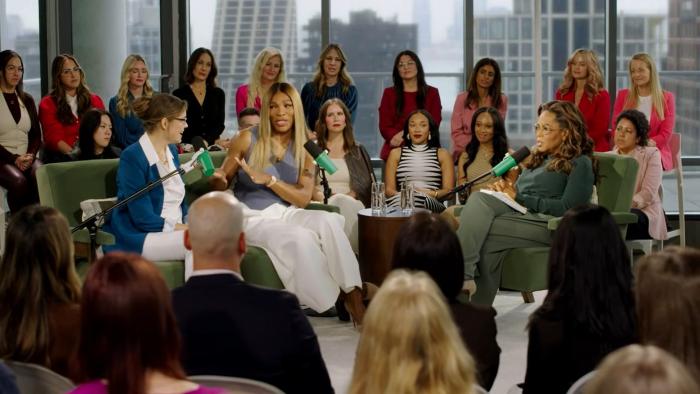
Oprah Winfrey recently hosted an event for her podcast dedicated to the topic of GLP-1 medications, a.k.a. weight loss drugs such as Ozempic. Winfrey had opened up about using the medication in 2023 and how it changed her life, and she is now promoting a book she co-wrote on the subject of obesity as a disease. In Enough: Your Health, Your Weight, and What It’s Like to Be Free by Dr. Ania M. Jastreboff, obesity is discussed as a disease and genetic issue, not a failing of willpower or greed. It’s a very personal topic for Winfrey, whose weight have been the subject of scrutiny and worldwide shaming for over four decades. Using GLP-1s, Winfrey said, helped her to turn off the ‘food noise’ that had dominated her mind for many years, and to have a better relationship with her mind and body.
In the event, Oprah also sits down with Serena Williams, the legendary tennis player, who recently opened up about using GLP-1s herself. To be specific, Williams endorsed Ro, a healthcare brand she had partnered up with who offer weight loss drugs to customers. Williams soon started wearing the company’s merch, speaking about her investment in Ro (her husband is also on the board), and celebrating how this very lucrative deal was the best decision for herself and her body. As she told Winfrey, “There should be no shame attached to it. I think a lot of people will be on GLP-1s—not only for weight loss, but for all the other things research is starting to show they help with.”
Listening to this podcast, which I did via YouTube to see the in-person reactions, was a very odd experience for me. It’s the latest in a long cycle of Winfrey’s brand centring weight loss and finding a brand new thing to fix the problem. On her show, she promoted all kinds of fad diets, quackery, and wellness schemes that claimed to be the solution to every life problem. Only a few years ago, she became a spokesperson and board member for Weight Watchers and decreed that to be the answer (she coincidentally decided not to continue that business deal once she opened up about using GLP-1s.) Hearing Oprah excitedly discuss the latest thing that’s made her happier than ever, I couldn’t help but feel like I was experiencing a bout of déjà vu.
Williams’ involvement only adds another strange angle to the story. It’s not simply that she has used weight loss drugs. It’s that she immediately turned it into a business opportunity that she could sell to everyone else. The American healthcare system is so sinister that wearing branded merch for a corporate entity selling medication to people for profit is the least surprising part of this story. This is not to discount her experiences with her health or what worked for her, but the blending of the personal and the professional is a tumultuous decision. This is an increasing norm in an era where celebrities and influencers can get sponcon plastic surgery and do Instagram ads for certain drugs.
I would never wanted to be in Oprah or Serena’s shoes, despite their incredible talents and experiences. They are two of the most obsessed over people alive and the ways their bodies have been vivisected and derided are truly sickening. You can find decades of tabloid headlines declaring that Oprah is on the verge of dying because of her weight and that her partner is ashamed to be seen with her (as if Steadman would ever!) She has starved herself to stave off the abuse (I wrote about it recently for my newsletter.) And Serena is a dark-skinned Black woman in a lily-white sport who has faced misogynoir and transphobic harassment because of her athleticism and ambition. She is one of the greatest athletes to ever walk the planet and that couldn’t protect her from the violence of institutional racism. If both these women had decided to forego having bodies altogether and become heads in jars like Nixon in Futurama, who would blame them? They are foremost authorities on body shaming and trying to navigate it.
They’re also both fabulously wealthy people who have found ways to make money from society’s hatred of fat people. Maybe they view their investments and endorsements in entirely altruistic ways, but that’s not how putting your face on a healthcare brand’s posters works. Drugs like Ozempic are life savers for so many (including those with Type Two diabetes, many of whom are still dealing with shortages because of its popularity for weight loss), and trying to fight for access to something that is making a lot of people a lot of cash is tough. We’re already at the point where it’s become a class indicator to possess these drugs. As with the past century and more of fatphobia, weight loss remains a money maker with new iterations around every corner. Just move onto the next plan if this one doesn’t work.
Societally speaking, we have rolled back every hard-earned inch of body positive and body neutrality that activists spent decades fighting for. These drugs are being treated like the cure for fatness (or anything that isn’t hyper-thinness) and a way for us to culturally bypass our biases and structural failings around bodies. I know a number of larger people who have been told to get on Ozempic, whether they want it or not, but then those who are on it are judged for ‘not losing weight properly.’ The ‘right’ way, it seems, is ceaseless public suffering. They want it to hurt. They want you to feel bad.
Anti-fatness will not be cured with GLP-1s, and that’s the topic on which we have a long way to go. We won’t be rid of body policing even if every person whose body has been deemed unruly takes these drugs and become identical to one another. The return of hyper-skinniness to the mainstream has been an unnerving reminder of how high the stakes are, financially and culturally. The judgment will never go away, and that’s the hard part to accept.


