
Old School. Biblically Independent.
By Dustin Rowles | Celebrity | June 23, 2026
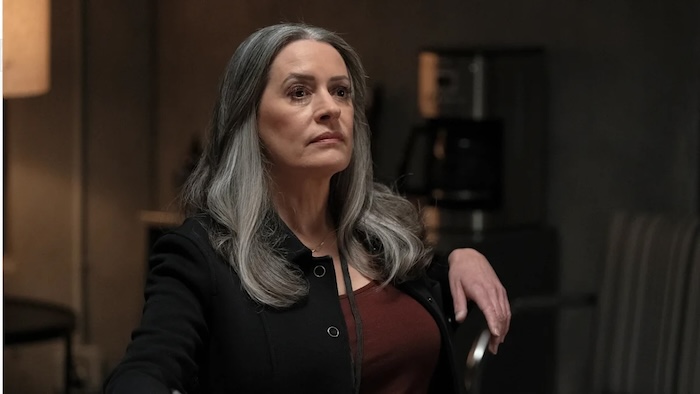
Over the weekend, actor Paget Brewster decided to take a poorly aimed swing at a ScreenRant writer, Shealyn Scott, over what was frankly a very mild critique of Criminal Minds: Evolution, gently chiding the series for a format change: When it moved to Paramount+ a few years ago, it reduced its episode order to 10 episodes instead of the usual 18-21 episode seasons and introduced a serialized arc.
That’s it. That was the complaint.
Brewster inexplicably lashed out on social media, targeting Shealyn Scott by name and suggesting they “sell vintage” or “work at a shelter” because “right now you suck.” Brewster also bizarrely claimed that a single lukewarm review could cost 350 crew members their jobs. Ahem.
The internet did what it always does, reacting with predictable pearl-clutching, condemning Brewster for “punching down.” Brewster deleted the post, issued a blunt apology (“Turns out, last night, I sucked”), and we all moved on to Halsey.
But I dunno, y’all. As critics, we spend our lives flinging crap at art. When an artist decides to fling the crap right back, why are we recoiling in horror? We should be celebrating it, not just because “Paget Brewster read my piece,” but because “Someone actually still gives a damn about criticism.”
The alternative is worse. Trust me. The greater threat to most critics working today is not the loud celebrity with a beef, it’s the quiet, passive-aggressive post-mortem email. I’ve received plenty. They are sent privately by directors, showrunners, or authors after a harsh review drops. They don’t yell. They (usually) don’t threaten. Instead, they weaponize civility: “I’m sorry my work didn’t resonate with you,” or “We poured our hearts into this, and it’s disappointing to see it dismissed.”
Ugh. Give me a break. Show some spunk! Grow a backbone! Stop with the “dignified” psychological guilt-trip designed to massage the critic. It’s an insidious tactic, because it relies on your empathy to make you pull your punches next time. Don’t make me think about your feelings. Does no one remember what critics learned from Almost Famous? We are the enemy. We are not your friends. Act like it! Give us a public meltdown any day of the week over the polite bulls*** manipulation of the private inbox.
On the other hand, when a celebrity publicly loses their mind at a critic, they are doing something validating: they are acknowledging that we still matter (nevermind that not a single critic — or 30 combined — has the ability to kill 350 jobs). We are all prisoners of the algorithm, Rotten Tomatoes, and TikTok. The greatest threat to criticism right now isn’t a celebrity with magnificent grey hair lashing out. It’s the silence. A public outburst proves that sometimes, we still matter.
Look: Shealyn Scott had the biggest day of their career! One of the biggest days of my career as a critic came 15 years ago when Kevin Smith unloaded on me for my review of Cop Out. I woke up to literally hundreds of new followers and a ton of traffic. Smith didn’t send wounded “I’m sorry you didn’t care for my movie” emails; he went on a scorched-earth Twitter campaign, suggesting critics should have to pay for their own tickets (I agree!) and debating the entire philosophy of film criticism.
It was loud and petty and absolutely magnificent, and we spent days talking about the value of criticism. And what is that value in 2026? Occasionally letting readers know that Rotten Tomatoes is wrong—that there is something the 30 percent RT score didn’t see or surfacing a movie the algorithm missed, or, lately, doing a lot of PR work that Apple TV isn’t doing enough of.
Granted, Paget Brewster went about it the wrong way. It wasn’t her criticism. It was her target. The ScreenRant piece she attacked wasn’t a malicious takedown. It was a fairly standard piece of television commentary arguing that streaming’s shorter, 10-episode seasons give procedural storytelling less room to breathe than old-school, 22-episode network runs. Come on! That wasn’t a scathing review. It was an observation. If you’re going to take a swing, take aim at a stinging rebuke (like, for instance, that Criminal Minds: Evolution is tired and played out, but for the Elias Voit storyline that could operate on its own).
In other words, don’t target Shealyn Scott personally. Target their work. Shealyn Scott didn’t attack Brewster. They (harmlessly) took issue with the show’s format.
But also, critics are not children. Sure, Paget Brewster has a ton more followers, but it feels so patronizing to say that she was “punching down,” as though critics warrant some kind of immunity for being jerks on the internet. It’s what we do! We are professional a-holes! Give us some credit for our ability to withstand the occasional punch from an actress who was exceptional in that one season of Community.
So, yes: Critique away, Paget. The whole ecosystem is healthier when the friction between artist and critic is out in the open and messy as hell. Just pick better targets.


