Old School. Biblically Independent.
By Kayleigh Donaldson | Celebrity | August 20, 2026
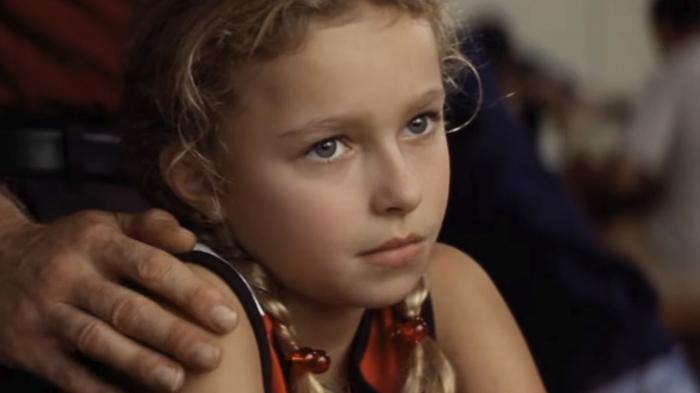
The passing of Hayden Panettiere at the age of 36 elicited much grief within the pop culture sphere. The star of Heroes and Nashville had made a return to the public eye in recent months to promote her memoir and begin the first steps of an industry comeback. That she would suddenly die after a moment of seeming triumph felt particularly cruel. Coverage of her death has featured a lot of recurring comments, most of them focused on her status as a former child actor. Panettiere had been working in entertainment from the age of eight months and didn’t take a break until postpartum depression forced her to step away from the business. She had worked in film, television, and video games for 30+ years, making the jump from child performer to jobbing adult actress. And so, of course, obituaries and social media chatter has rushed to label her death as yet another example of the dreaded “child star curse.”
To become a celebrity and make your living before you’re old enough to have adult teeth is to be flung head-first into an obstacle course with an unnervingly high fatality rate. There are too many examples to count, from Judy Garland and Bobby Driscoll to Corey Haim and Brad Renfro to Jennette McCurdy and Lindsay Lohan. The cycle is set in stone, and despite changes to labour laws and greater awareness of the problems at hand, we keep seeing the pattern repeat itself: exploitative parents and financial ruin, intense public scrutiny and media cruelty, overwork and a lack of support, and seedy executives who will ditch you the moment you stop being “cute.” Even those who have avoided many of the pitfalls of child stardom in their evolution to adult careers—Leonardo DiCaprio, Keri Russell, Zendaya—are heralded as having avoided the curse and all the pesky trauma it causes.
It’s viewed as an inevitability, the thing that will befall any kid who gets famous from a young age: that they will suffer and be humiliated and become a cautionary tale for future generations. For all of the talk of making things better for new generations, I’d argue that we’ve actually made child stardom even worse for its participants in the current era. Social media is obviously its own poison, with executives coaxing actors onto toxic platforms to build up their follower count and thus make them more employable. Online labour of this ilk is not covered under the labour laws that restrict on-set work in film and TV. Neither are conventions, where the likes of Millie Bobby Brown were driven from event to event to spend 10+ hours hugging fans for a fee. We have different kinds of celebrities now as well, most infamously the family vloggers and influencers who make bank through 24/7 coverage of their lives from conception onwards. The removal of boundaries is the point.
In an article for Elle, Christy Carlson Romano, who was a star in the Disney Channel series Even Stevens, wrote, “Early fame is like CTE. Not as a diagnosis. As a way of thinking about repeated impact. We now have language for youth sports: protocols, helmers, parents worried about concussions. But we have almost no language for what happens when stress, scrutiny, rejection, adult pressure, and the collapse of privacy become the architecture of a childhood.” She notes how child stars are treated as exceptions, both special in their ability to be “mature” and hard workers yet unimportant when it comes to issues of welfare. When they try to find solutions to the problem, they’re mocked for it or dismissed as another sufferer of the curse. “Culture blames the child when the child becomes an adult in pain,” she added.
In her memoir, Hayden Panettiere wrote eloquently about the realities of being a child star. Being your family’s breadwinner from infancy is a brutal responsibility that creates decades of reverberations. It changed the dynamic of her household, with her mother being more a manager than a parent. She struggled with rejection and replacement when she wasn’t cute enough for a part. In adolescence, she was forced to deal with gawking adult men turning her adolescence into a fetish. As Romano herself experienced, she was expected to be grateful to suffer from exhaustion and be passed around like a doll among executives who only saw her in terms of profit. Reading her book, my stomach churned frequently, but, unfortunately, I wasn’t surprised, because I’d read all of this before with so many women over the decades. Nothing’s improved. Really, it’s gotten worse.
To talk about the “child star curse” in 2026 is to confront the reality that every kid is now expected to market themselves as a brand. Adults are in the same wagon, of course, as the always-online side-hustle hunger forces us into a cycle of self-promotion in the hopes of earning a few extra dollars in a crumbling economy. For kids who are forced into this by eager parents and predatory algorithms, the complete erasure of protections has left them afloat at sea without a raft. Young actors on red carpets or press junkets are the most public example of it, and even with laws in place to help, they’re still at a horrifying risk. And all of it, all of these kids, from the headliners to the crying babies on TikTok? Society has decided that their pain is expected.
Certain narratives are just too juicy to subvert. There is something inherently enticing to us about the image of the adorable child star who fell afoul of the curse. The press loves to see a sweet little girl go through adolescence, trying to figure out her identity separate from the one the business shoved onto her, and call her a slut and an attention seeker. They encourage Disney Channel stars to go all in on hyper-sexualized styles to fully cast off the shackles of perennial virginity, only to shame them as they let the cameras leer over their bodies. They covet the notion of the “perfect” little boy or girl then revel in seeing said image fall apart. At no point do they want to delve into the tangled psychology that encourages these children to become spotless performers and compliant cogs in the machine.
The older I get the more I feel that forcing kids to have a job, even one as “special” as acting, is an abusive act. If the industry and media is so determined to stick to the status quo of the curse then the only way to survive it is to not participate. But how can we sit this out when everyone has the power of a studio and distributor on their phones? How can we help children escape this system when seemingly every parent is trying to land influencer deals based on their offspring’s nonconsenting participation? There are wonderful and talented kids out there who deserve sturdy platforms to show their skills, but why does that have to be a full-time occupation? Really, why are kids’ talents in any field immediately monetized? I’m looking at you, you f**king weirdos who gamble on little league games.
There needs to be a wide-scale legal shift to protect kids from exploitation in the online and entertainment spaces. We also need a change in perspective, an active rewriting of expectations so that we no longer see the “curse” as a weary certainty. There is nothing inevitable about abuse. The struggles and traumas of those who have been flung into this whirlpool of degradation and objectification are not and have never been fated. That attitude just gives an out to those who cause the damage.


