Old School. Biblically Independent.
By Kayleigh Donaldson | Celebrity | November 5, 2026
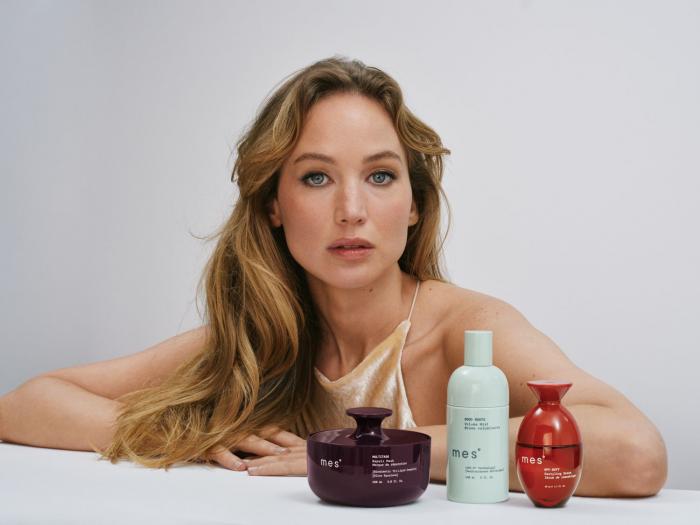
Jennifer Lawrence is launching a haircare line. The Oscar winner beloved for her candour and lack of social filter wants to sell you shampoo. Mes features a trio of products, including a repair mask ($52), restyling serum ($44), and volume mist ($34) that promise an effortless approach to beauty. It's a "new perspective", apparently. I can't say I ever looked at Lawrence, who is gorgeous, and felt hair envy or wondered about her haircare routine. Certainly, this wasn't a business venture any of us expected her to start, but every celebrity needs one nowadays, and hair is very in right now.
While Lawrence is a late-comer to this space, she's part of a renewed trend for celebrity branding and its ceaseless hunt for the next big money-maker. Beyonce has Cecred. Rihanna expanded Fenty Beauty to include hair products. Tracee Ellis Ross's Pattern is popular. Blake Lively's range less so. Jennifer Aniston's LolaVie, Priyanka Chopra's Anomaly, Flawless by Gabrielle Union, Stripes by Naomi Watts... And that barely scratches the surface.
The make-up and skincare trend has become oversaturated with choices, with major names like Scarlett Johansson's The Outset shutting up shop and even Fenty reportedly in a slump. Alcohol remains popular but, again, the market is crowded and tougher to carve out a niche in. Not every celebrity can launch a mobile phone plan, and some are savvy enough not to put their names to gambling apps. The most effective celebrity side-hustles are all about personalisation and relatability, and hair is perfect for that.
The worldwide haircare business of 2026 is valued at just under $100 billion. The days of a quick dip in the shower with Head and Shoulders are over. You don't need a 12-step routine of retinols and serums that your face requires (according to marketing gimmicks), but there are conditioners and masks and special treatments to help you keep your mane looking mighty. As someone who is otherwise not vain but has long bleached blonde locks and a psoriasis-heavy scalp, I take my haircare very seriously and will pay through the nose for it if I have to.
It's a tempting prospect for any celebrity hoping to market themselves as an authority on beauty, something women have been encouraged to do in the business for decades. But I'd argue it's far harder to get a foothold in hair than it is in skincare or make-up. Customers are less willing to experiment with haircare than a new make-up brand. It's a narrower space by design, and differentiation of product is a greater challenge. What makes Jennifer Lawrence's "new perspective" on haircare such a radical shift away from, say, Blake Lively's? Or Jennifer Aniston's? Frankly, when I see those three women in a row, their hair seem pretty damn similar.
And there isn't exactly anything radical in the lack of hair diversity on show. Entering the haircare space is also to enter a heavily racialized space. Black haircare was long sidelined or run by white-dominated companies. I don't think it's a coincidence that many of the most successful celebrity haircare brands are by Black women. Pattern by Tracee Ellis Ross launched in 2019 and has remained a big hit with customers. Cecred is going from strength to strength. Black celebrity haircare is still a highly saturated space, but it's one where a degree of expertise is expected from its founders.
There's also the other elephant in the room: it's easier to sell haircare to people if you've had cosmetic procedures done than it is skincare. There are only so many ways you can sell the lie that your poreless, motion-free, 50-something face is the result of a serum or $40 moisturizer. Advertising is built on an illusion, one we largely understand to be at least somewhat rooted in fantasy, but your customer base will only have so much patience for an outright fib. For this marketing tour, Lawrence has been typically candid about her recent cosmetic surgery, which some people feel is incongruent with her brand's claims of embodying imperfection and messiness, but it is all so very JLaw.
Of course, hair can be faked too. Beloved leading men can go from being follically challenged to having wavy locks so thick that they could stop a bullet. Many women regularly wear wigs on the red carpet. When was the last time you saw Nicole Kidman's actual hair (and even she has a haircare line, apparently?!) But we aren't currently besieged by discourse over being culturally gaslit by celebrities over fake hair. Maybe that's in our future if this trend keeps up. As with skincare or make-up, celebrity brands are at a disadvantage with selling the idea that their incredibly famous founders actually use the products. I buy that Rihanna uses her own foundation or that George Clooney drinks his own tequila, but who ever truly believes that Jennifer Lopez's impeccable visage is down to her own serums? When you're a millionaire for whom appearance maintenance is a job requirement, you're going straight to the Botox and lasers, not the creams. Celebrity worship is fickle and the kayfabe of fandom will only carry you so far once you start asking for $50+ for a hair mask.
A celebrity brand either needs to be genuinely revolutionary or excellent in its market (and marketing), or it has to have a compelling story behind it, and that's on top of being a believable extension of the subject's image. Cecred makes sense because Beyoncé grew up in hair salons with her mother and sister, and she's spent decades in the industry with changing hair and maintaining it in white-dominated beauty spaces. Aviation Gin sold because Ryan Reynolds is a consummate showman who worked around the clock to promote it. Skims is dominant because the products work. But sometimes, none of that is enough, not when people are broke and they're disinclined to give their hard-earned cash to millionaires and their latest toy. Scarlett Johansson is one of the highest-grossing actors of all time, and even she couldn't get her skincare brand to last longer than four years.
I'm admittedly sceptical that Lawrence can make this haircare line last. I don't feel like there's a want or need for it, she's not an undeniable hair icon that customers are craving, and the prices are too high. The haircare market is too crowded as it is, and we just want to stick to the one thing that works for us. Our options are far more limited than those of celebrities and they know it.


