Old School. Biblically Independent.
By Kayleigh Donaldson | Celebrity | July 2, 2026
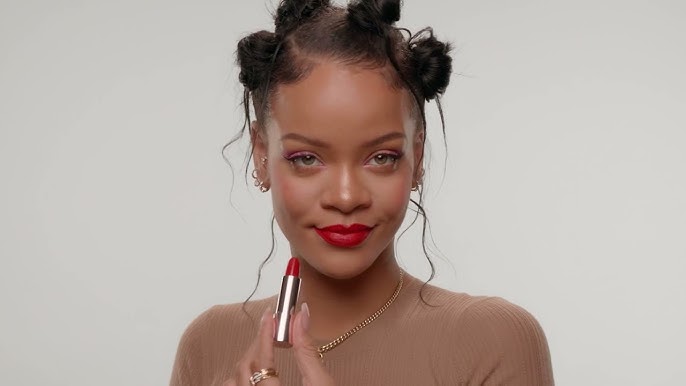
Late last year, reports swirled that LVMH, the conglomerate behind a slew of luxury brands like Louis Vuitton and Bulgari, was considering selling its 50% stake in Fenty Beauty. Reuters said that the company was considering moving away from the company and reassessing its beauty portfolio amid a market downturn for luxury demand. MarcyPen Capital Partners a private equity and venture capital firm co-founded by Jay-Z, was allegedly in talks to acquire LVMH’s stake, according to a report from earlier this month. The rumoured cost of 50% of Fenty Beauty? Potentially over a billion dollars.
It’s hard to overstate the seismic impact that Fenty had on the make-up world when it launched only nine years ago. The brand, the brain-child of Rihanna, turned the singer into a business mogul and the first female musician to achieve billionaire status. A whole generation of kids only know Rihanna as a beauty icon, not a singer. In her footsteps followed legions of celebrities and influencers, eager to cash in on the growing market of beauty, make-up, and hair. Fenty redefined make-up for a new era. So, why would LVMH want to sell its stake?
Rihanna was not the first celebrity to launch a make-up line or get into the beauty game. Iman’s legendary line was launched in 1994. Drew Barrymore’s Flower Beauty predates Fenty by a good four years. Kylie Jenner’s lip kits were a mid-2010s viral success. What made the launch of Fenty Beauty so unique was its range. On day one of its launch, there were 40 shades of Pro Filt’R foundation available, covering a far wider array of skin tones than what the vast majority of big-named brands offered at the time. The products didn’t cost the earth, certainly when compared to other luxury brands, and the ad campaigns featured an array of gorgeous models of colour and gender, as well as Rihanna herself. It was the simplest route to success and yet one a racist industry had failed to match for decades: just give your customers what they want. And they flocked to Fenty in droves.
Everyone else looked foolish by comparison. Post-Fenty, the idea of a big-money make-up launch that didn’t include more than five shades of concealer was embarrassing. And yet many made that mistake. When Kim Kardashian launched her concealer line for KKW Beauty in 2019, it included 14 shades and was dragged accordingly. To this day, there are brands that cannot keep up with Fenty (which expanded its concealers to 50 shades) and it’s Rihanna’s work they’re negatively compared to by fans.
As Fenty’s range expanded, and became more readily available in places like Sephora, the company entered a cycle of self-fulfilling hype. Make-up influencers loved it. So did celebrities. And Rihanna’s growing empire, which included Fenty Skin and Hair lines, and the lingerie brand Savage X Fenty, made her a highly alluring figure to emulate. Many celebrities jumped onto the makeup bandwagon post-Rihanna, hoping to get a foothold in what was becoming an increasingly crowded industry: Selena Gomez’s Rare Beauty, Lady Gaga’s Haus Labs, and Ariana Grande’s REM Beauty, to name but three of the biggest ones.
According to Puck, Fenty has tumbled down the rankings of the most popular brands at Sephora. “North American sales at the retailer were ‘down double digits’ last year,” according to a source. The reason? Another source said that Fenty was not being prioritized as heavily by Sephora compared to currently hot brands like Rhode, and the current makeup trends are more aligned with the aesthetics they offer. Rihanna herself is not promoting the brand as heavily as she used to, spending more time with her growing family and out of the spotlight compared to Fenty’s early days.
Various makeup-related Subreddits inform me that Fenty fans have been lamenting its downturn for a few months now. “There is nothing innovative anymore,” wrote one user. “Rihanna is known for daring bold looks and the makeup line is mostly pink glosses. It’s very underwhelming.” Another said, “I feel like Fenty had such a strong brand identity and a lot of really great products. Over the last year though a lot of their product launches just seemed weird and lacked effort.” There have been questions about some of their products undergoing formula changes, something that most brands are dealing with thanks to EU regulation changes.
This is not a “the brand is dead” end-times declaration. Puck’s report, as negative as it is, still noted that Fenty is a solid seller. It’s no longer unique and the market is far more crowded, but Rihanna’s hardly lacking for sales opportunities (and Fenty isn’t as blatantly dodgy as Savage, which has long been criticized for its predatory seller tactics and sweat shop labour.) It may be that she is merely a victim of her own success. She paved the way and everyone followed. A decade ago, shockingly few brands had even a semi-decent range of products to suit all skin tones. Now, it’s still not the norm but the options are more plentiful. And LVMH’s sizeable portfolio probably has a ton of luxury make-up lines filling the gaps. Plus, it’s 2026, we’re all broke, and the idea of spending that amount of money on beauty products is ill-advised. Luxury brands are usually pretty good at weathering economic troubles because the uber-rich don’t suffer, but things seem to be different these days.
If LVMH does offload Fenty, one wonders if a new partner, like Jay-Z’s company, will take it more into a mass market direction. That would make it less elite, but it’s already been heading that way for a while, and being a long-term success requires being accessible to as many people as possible. Whatever the case, Rihanna won’t be hurting for money, and Fenty will endure. One reason it’s got that staying power is that it’s largely avoided defining itself by trends, like the clean girl aesthetic or the era of overtly heavy contouring. It’s make-up for every occasion and style. Fenty broke down a lot of doors and it doesn’t need to keep doing so. Sometimes, consistency is more appealing than innovation.


