
Old School. Biblically Independent.
By Andrew Sanford | Celebrity | July 1, 2024
Some performers spend a season or two on SNL and then you never hear from them again. It happens all the time. They remove themselves from the (potential) comfort of an ensemble show and try their shot at a solo career, only to be swallowed up by the Hollywood ecosystem. They snag a few supporting roles here and there and aren’t unsuccessful, but they never reach superstar status. There are, however, some
cast members whose names become bigger than the show itself. Eddie Murphy is one of those people.
Murphy joined SNL in 1980 at 19 years old. 19!! There were no growing pains. No adjustment was needed. Murphy showed up to SNL ready to go toe-to-toe with Joe Piscopo. Murphy and Piscopo were the only performers from their inaugural season to be hired back the next year. Murphy was a mega-star. He lifted the show up and then went on to become one of the most bankable comedic actors in the world. Then, he hit a slump.
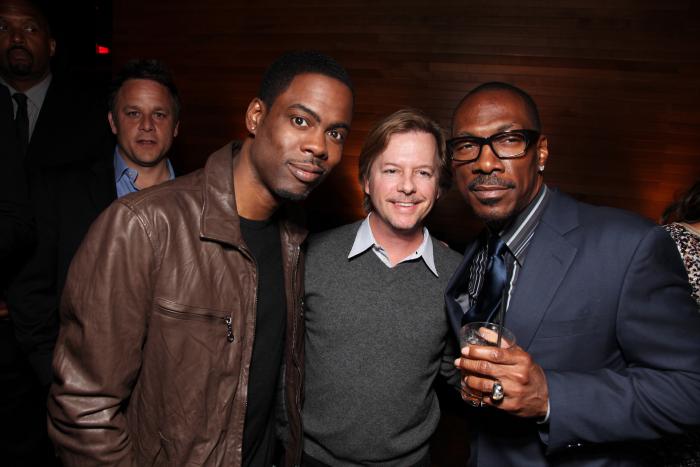
Most people don’t stay “hot” forever, and Murphy was no exception. He starred in several films that underperformed in the mid to late ’90s and that trend continued for some time. In 1995, David Spade addressed Murphy’s failures on an episode of Saturday Night Live. “Look, children, it’s a falling star. Make a wish,” the Joe Dirt star said with a picture of Eddie Murphy on display. To put it mildly, Murphy did not appreciate the jab. He still doesn’t.
Eddie Murphy was no stranger to fellow cast members giving him grief. In a sitdown with the New York Times, he reflected on his time on the show and treatment from his co-stars. “Back in the old days, they used to be relentless on me, and a lot of it was racist stuff,” Murphy explained to the outlet. He continued, saying, “There was no Black Hollywood. There was no rappers, hip-hop. It was the ’80s.” He says it was a “whole different world,” but he took it personally when Spade said “sh*t about my career” on Weekend Update.
“It was like: ‘Yo, it’s in-house!’” Murphy said of the joke. “I’m one of the family, and you’re f*cking with me like that?’ It hurt my feelings like that. … It was like, ‘Hey, hello. This is Saturday Night Live,’” he explained. “I’m the biggest thing that ever came off that show. The show would’ve been off the air if I didn’t go back on the show, and now you have somebody from the cast making a crack about my career?” He’s not wrong! He breathed new life into the show when he joined. There is an argument to be made that it may not have continued without him.
The joke particularly upset Murphy, and kept him from the SNL hallways for decades, because he knows the process behind getting it on air. “I know that he can’t just say that — a joke has to go through these channels — so the producers thought it was okay to say that,” Murphy told the New York Times. “All the people that have been on that show, you’ve never heard nobody make no joke about anybody’s career. Most people that get off that show, they don’t go on and have these amazing careers. It was personal.”
He did not stop there. Not only did Murphy think the joke was personal, but he also found it racially motivated. “It was like, ‘Yo, how could you do that?’ My career? Really? A joke about my career? So I thought that was a cheap shot. And it was kind of racist, I thought - I felt it was racist.” Murphy returned to host SNL in 2019, his first time on the show since 1984. He won an Emmy for his performance.


