Old School. Biblically Independent.
By Dustin Rowles | Books | August 14, 2026
I read Claire Burke’s debut novel, Yesteryear, several months ago, and honestly, I mostly shrugged and moved onto the next novel on my to-read list. I didn’t dislike it. I wasn’t bothered by the twist, except for all the weird continuity errors. It’s a book about a deeply unlikable trad-wife protagonist who kind of gets what she deserves.
I also find the trad-wife trend kind of amusing. My mother-in-law was basically a trad-wife in the ’70s and ’80s, back before it was an influencer/marketing grift. They called them back-to-landers. It was not a conservative movement. It was a counterculture movement. Conservative influences just co-opted it. My wife grew up without electricity or running water and kept their milk cool in a stream because of Vietnam, the oil-crisis, the Cold War, and because the youth back then liked to smoke pot, listen to The Band, and garden (and after every catastrophic event of the last decade, my wife still asks, “Can we move to the country now?”). And now, women pretend to be trad-wives movement is a capitalistic endeavor. Ironic.
These new trad-wives with nannies and microwaves hidden off-screen? Pshaw. They have no idea what it means to actually be a trad wife, which is kind of the point of Yesteryear, marketed as a pitch-black satire that proceeds to essentially break its own ankles jumping off a cliff.
For those who haven’t read it, the premise is catnip for anyone who spends too much time on the internet or listens to too many podcasts. Natalie Heller Mills is a Harvard grad who married into obnoxious generational wealth, bought an off-grid Idaho ranch using her father-in-law’s money, and built a multimillion-dollar empire selling “the simple life” to exhausted suburbanites. And then she wakes up in 1855.
Or so it seems. And that “or so it seems” is doing a lot of work (unlike Natalie Heller Mills!)
Readers come for the schadenfreude. We wanted to watch a woman who uses raw milk as a personality trait cry because she has to churn her own butter without a ring light. It was supposed to be a revenge fantasy. It was supposed to be The White Lotus goes to the Oregon Trail.
And then came the twist. And for a lot of folks, that twist is a dumpster fire.
Spoilers ahead, obviously, though at this point trying to avoid Yesteryear spoilers is like trying to avoid seeing Tom Holland and Zendaya clips on Instagram.
Here’s the deal: Natalie never went anywhere. There is no time travel. There is no magic prairie vortex. After a massive public scandal nukes her brand — a messy affair, an assault allegation, and the catastrophic leak that her “simple homestead” was being secretly run by a staff of twenty — Natalie simply loses her damn mind. She snaps, deletes the 21st century from her brain and decides her family is going to actually live the LARP life. She’s been on her own ranch the whole time, wandering around in dirt while her terrifyingly complicit family enables her full psychotic break.
What’s the controversy? One side insists the twist is a giant cop-out. Burke spends 300 pages dissecting the grift of tradwife culture, only to pivot at the 90-minute mark and say, “Just kidding, she’s not a cynical grifter or a religious zealot, she’s just severely mentally ill!” By giving Natalie a psychiatric diagnosis, the novel stops indicting a toxic ideology and just turns into a story about one sad, broken rich lady. The patriarchy gets off scot-free, and Natalie takes the bullet alone.
The second camp thinks the delusion is the whole point. If you perform a fake, reactionary identity hard enough and long enough for the camera, the costume eventually becomes your everyday wear. The persona eats the person. It’s the exact same trajectory as every washed-up 2000s comedian who starts a “just asking questions” podcast and, three years later, is genuinely convinced Taylor Swift is a government psy-op.
There’s also a third camp who just hates it because the protagonist is so deeply unlikable, and she is. But that’s kind of the point, unless you romanticize the brand. (A fourth camp will also simply insists that it’s not particularly well written, but that camp exists for every novel written by a woman on the bestseller list).
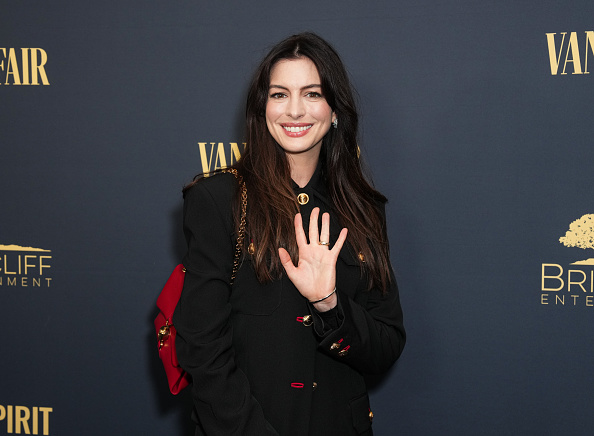
Love it or hate it, you have to sort of appreciate that Yesteryear refuses to be the neat, comforting piece of rage-bait many had hoped for. It’s meaner, messier, and way more uncomfortable than a simple “dunk on the tradwives” story. And Anne Hathaway has already signed up to play the lead in the film adaptation, and bless her, she’s perfect for the role, and I love her for recognizing that.


