
Old School. Biblically Independent.
By Tori Preston | TV | February 3, 2026
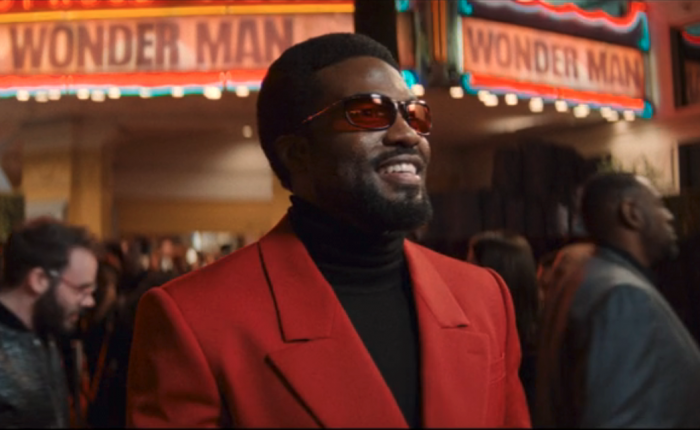
When I reviewed the first two episodes of Marvel’s Wonder Man last week, I hedged my initial enthusiasm by noting I’d been burned by the MCU’s television output before. “Am I afraid I’ll be eating those words of optimism in a few days when I’ve finally plowed through the rest of the episodes? You bet I am.” Well, good news, folks! I finished the show, and I’m here to say that I’m not eating those words at all. Wonder Man nailed its finale, and showed that Marvel may finally be learning how to close out a story for television.
The key difference? Wonder Man stayed true to its own story the whole way through. Most Marvel shows, in the Disney era, start off being about a character (perhaps coming into their powers, or already set on their path from the movies), but then they face a bigger threat that reaches, in the season’s climax, some sort of movie-style CGI battle. It’s the WandaVision conundrum, rehashed and recycled ad nauseam. It’s a particular failure of vision that assumes viewers are tuning in to see the typical Marvel superhero story, strung out across episodes. And whenever a show tries to actually be a show - to take its cues from television formats instead of films - it inevitably ends up getting stuffed back into the square hole of superhero movies anyway.
Wonder Man is not a typical MCU joint in that regard. I mean, it serves the function of introducing a character with superpowers who will most likely play a role in some other future franchise adventures, don’t get me wrong. Simon Williams (Yahya Abdul-Mateen II) is certainly now a piece on the MCU chessboard, to move as the studio chooses. But the story the show told about Simon Williams was one of friendship, and that friendship dictated every plot development from start to end. Even the choice to include Ben Kingsley as Trevor Slattery, the show’s biggest thread of connective tissue to the MCU, proved thematically relevant. Trevor, the one-time fake Mandarin, chose to sacrifice his freedom by assuming the role once again to take the fall for Simon’s accidental explosion of powers, claiming it as another act of terrorism. Their friendship led to Trevor’s redemption, and Trevor’s sacrifice allowed Simon to achieve his dream. His Wonder Man movie was a big hit, and Trevor’s role as the friend who betrays the hero was recast… with JOEY PANTS! That’s a Chekhov’s Pantoliano, thank you very much.
The other MCU connection was the presence of the Department of Damage Control and Agent Cleary (Arian Moayed), but instead of dragging our heroes into Marvel’s connected universe, they mostly functioned to test the central relationship. Cleary blackmailed Trevor into befriending Simon in the first place, to gather proof that Simon was a dangerous individual, but Trevor soon found himself protecting Simon by delaying Cleary’s investigation instead. Then, when Trevor claimed responsibility for Simon’s explosion and was taken into custody by the DODC, Simon broke him out. With his superpowers, yes, but mostly by using his fame to “shadow” a DODC worker by pretending he’s researching a role. He saved his friend with acting!
Destin Daniel Cretton and Andrew Guest, the show’s creators, were very intentional in how Simon’s superpowers played into the narrative. Or more specifically, how they didn’t. We see Simon lose control of his emotions and let out a destructive burst of energy three times over the course of the season. Once, to establish that he has them. Once to show that his family knows. And then the big one on the studio lot, which threatens to reveal his status to the world and derail his career (until Trevor takes the blame). Thanks to a convenient law that says superpowered individuals can’t work as actors, Simon’s gifts are only ever framed as something to be hidden for the sake of his big role - they’re never actually defined because then they might define him, and he is not a hero. He’s an actor. The show, which is about Simon playing “Wonder Man” and not being him, is so careful to avoid focusing on Simon’s powers that they’re only ever explained in passing by Agent Cleary at the very end of the finale: “If he’s capable of harnessing ionic energy, then Simon Williams is an extraordinary threat… or asset.” Apparently, Simon has ionic energy power! Cool beans!
De-emphasizing the nature of Simon’s powers also means we’re never really clear on what he can do, which makes the big rescue so satisfying. Turns out Simon can fly, which he proves when he grabs hold of Trevor in his cell and blasts out through the roof to the surprise of everyone - Trevor, Cleary, and the audience included. My husband remarked that Simon must have been practicing how to use his powers ever since Trevor was arrested, but I’m not so sure. Until that moment, all we’d seen was what happens when Simon loses control of his powers, but that doesn’t necessarily mean he didn’t know how to control them. It just means we didn’t need to see him use them before. Maybe he learned to use them when he was a kid, or maybe it was last week. For all we know, Simon flew out of his mother’s womb! But by keeping his powers sidelined for so much of the season, it allowed Wonder Man to pull off something unique: instead of ending with a big climactic fight, the season closed with Simon simply using his powers, one time, intentionally.
A whole eight-episode MCU show about two dudes being bros, where the climax is merely the reveal of the hero’s true powers? To save a friend, and zero punching? Keep it up, Marvel, I think you’re on to something here!


