
Old School. Biblically Independent.
By Kaleena Rivera | TV | June 16, 2026
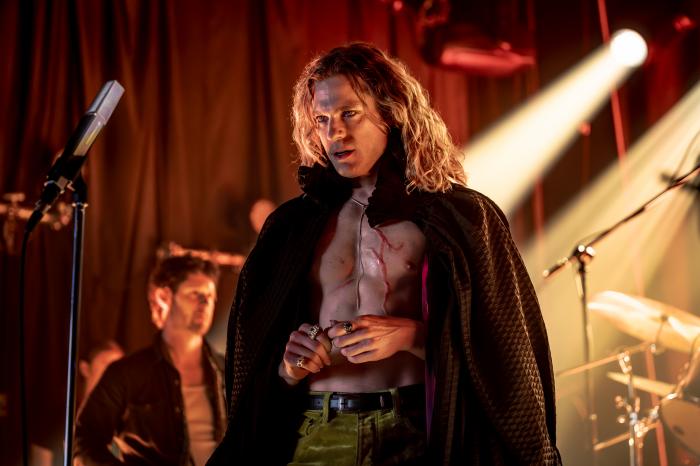
“If you’re still listening after the Oedipiphany of the last hour, welcome back.”
Once one gets past Lestat’s (Sam Reid) pearl-clutching, but unflinchingly accurate, portmanteau summarizing the relationship between him and his fledgling/biological mother, Gabriella (Jennifer Ehle), a measure of credit should be granted for the rare instance of self-awareness on display; rarely are people with a keen ability to cruelly scrutinize others capable of turning that judgemental eye on themselves—see: his recurring jealousy over Louis despite his feigned casualness, a trap he falls into time and again like a narcissistic Wile E. Coyote (“Very specific detail to pluck out thin air!”)—but Lestat can employ clarity when it comes to their unique bond. At least, that’s what The Vampire Lestat would like us to think.
Towards the end of season two of Interview with the Vampire, it was revealed that Louis’ (Jacob Anderson) recollection of the events that transpired during his and Lestat’s tumultuous relationship were less than accurate. Not outright lies but rather a melding of time, hurt feelings, and, most of all, an all-too human unwillingness to perceive himself as the victim. The damage, however, is already done once Daniel Molloy (Eric Bogosian) publishes their interview, to Louis’ great regret, made all the worse by the timing of it (nothing like pissing off your ex on FaceTime).
Lestat, of course, is nowhere near innocent, but he’s not entirely baseless in his objection against his portrayal as, in his words, “a mayonnaise villain with sociopathic tendencies.” Despite the series name change (which properly reflects his newfound rock star status), unreliable memory continues as a running theme, but now we have Lestat’s flair for the dramatic to account for. This is all but confirmed by his narration of the scene between Louis and Daniel, letting us know that, “when tertiary figures appear in it [Lestat’s story], I will be speaking for them,” though he makes no bones that his account, “comes with less whining than their attempt.”
What, then, are we to make about his memories of his upbringing in Auvergne? It’s not hard to believe that his birth family were little more than aristocratic pigs, though their slow rot over the years does invite the question of how much of that may be the result of an 18th century infection or merely a reflection of Lestat’s hateful bitterness. Even the matter of just how many wolves he managed to slaughter could be called into doubt, as we see when a grievously wounded Lestat informs an already-impressed Gabriella that it wasn’t five wolves, as she heard, but eight. Because five wolves are light work, dontcha know?
For all of Lestat’s mixed cocktail of a persona—a peacock and an artist that craves validation like a tree needs sun, a condescending aristocrat meets cruel tyrant and passionate lover, all sporting a beautiful face masking a petty streak and profound loneliness that loops back to inspiring his inner artist—the biggest surprise this series could possibly do is reveal that all of it is true. Not to mention that, despite my adoration of the previous seasons, a similar journey down the unreliability of memory would cause it to lose some luster. There’s only five more episodes left (with luck an additional season will be slightly extended, much like seasons one and two of Interview with the Vampire), and with the rest of Lestat’s tale to tell, including his hand in awakening Akasha (whom we’ve yet to meet), the truth is amazing enough as is.
The Vampire Lestat airs on AMC+/AMC every Sunday at 3am/9pm EST (respectively).
Kaleena Rivera is the TV Editor for Pajiba.


