
Old School. Biblically Independent.
By Jason Tabrys | TV | April 18, 2026
Another season of The Pitt has come and gone, reminding us all that, when in the right hands, medical procedurals can rise above the mid-brow box they’ve been in since the ER season count stepped into double digits in the early aughts.
That said, the proclamation above this article is not really meant to wax authoritative about the greatness of The Pitt’s second season. Instead, I want to talk about how American life-coded the show feels after 15 more episodes of outright dysfunction and stifled frustration, whether intended or not.
As an aside, there’s a line from another amazing show, The Leftovers, that I think about a lot and which absolutely could have been the tagline for both America and The Pitt this season: “Nobody’s ready to feel better. They’re ready to f***ing explode.”
Robby and Dana arguing, hanging their mutual affection for each other on a hook while showing teeth and scars, was the first time I looked at the show like it was a reflection of this specific moment. But the clues have been there all season long, piling up like an army of sweaty and sick people in the waiting room at the Pittsburgh Trauma Medical Center.
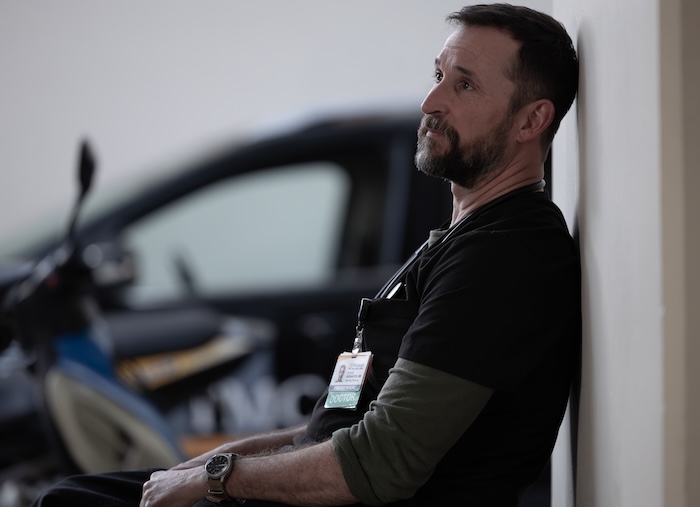
Robby, undermining the daddyness of competence and a well-groomed beard with self-destructive tendencies and motorbike midlife crises, once again tries to mask a world of pain, feelings of helplessness, and an inability to feel joy, let others in, or otherwise seek help. A walking cocktail of loneliness, regret, and anger that may feel familiar to a lot of people who similarly seek salvation in being good at a job while being bad at life.
Dana is so clearly not ready to be back, but like everyone else, she powers through. Uncommonly, she also empowers everyone else to get their jobs done through jaw-dropping efficiency and a gargantuan protective streak. Dana is a load-bearing pillar, but she is also not OK. These agents of science are as irrational as the rest of us when it comes to dealing with something broken by applying duct tape and hoping the problem will eventually go away on its own, Dana included.
Everyone is processing too many things at once, trying to work and trying to deal with personal conflicts, demons, and distractions.
Langdon is trying to get through his first day back after treatment for opioid addiction, dealing with Santos’ daggered glances, and he and Robby’s lingering crap resulting confrontational non-confrontation through most of this season. Mel is being thrown off her plan and out of the driver’s seat when it comes to her sister’s life, and the resulting fear that it might remove an excuse for not having much of her own life. That’s another reason why that mid-credits Alanis scene was so wonderful and cathartic.
Robby’s supposed-to-be replacement, Dr. Al-Hashimi, injects unwanted new person energy into a unit functioning on chaos magic that is, nevertheless, a rhythm they know how to dance to. This immediately paints her as an outsider, even though she’s also trying to ignore a ticking time bomb in her life.
So many characters are running away from or toward something as a faulty coping mechanism. We have Abbott junkeying out on adrenaline and Whitaker cosplaying in a dead man’s domestic normality.
The ever-present pressure of being a young doctor or med student is evident, as well. The mounting career path pressures and familial expectations on Javadi, the harsh reality of a missed diagnosis shaking Ogilve to his core, and Mohan being driven into an anxiety attack by her mother (among other things). And if you need definitive evidence of how far up his own ass Robby is this season, recall his crappy response to Mohan being emotionally overwhelmed. How quickly he forget.
There’s so much more facing this crew: AImaxxing, technological breakdowns, ceaseless workloads, and big flashing reminders about a crumbling society like an abandoned baby, a chronically ill patient being too scared of the cost that he rejects care, and of course, ICE thugs pulling attention, sparking fear, and throwing people around.
All throughout, these people are required to keep focus and treat the individual world-ending traumas and tragedies unfolding right in front of them. I saw some light criticism of the way The Pitt handled the ICE storyline, but that episode rang so true to the reality of the larger situation the show is trying to portray. Other shows could have dedicated more time and attention, but these doctors and nurses need to try to ignore everything in their periphery, even if it’s also life and death, unjust, and explosive. Even if it’s the melting of their own brains from the sheer heat stress burden of having been asked to walk this high wire again and again during work days that never seem to end. One trauma at a time while 11 others are breathing down their neck - that’s the job. These people don’t need vacations to stave off full-blown burnout; they all need vision quest sabaticals.
I truly hope none of us can actually relate to all of the above. But the feeling of helplessness and the need to keep grinding no matter what our bodies and minds tell us, repeating toxic patterns that we probably know how to undo if only we could figure out how to find the time to do that… I bet we’ve all felt some version of those feelings in 2026.
Every day, at least 10 ridiculous, offensive, reality-altering things happen. And then, those things get repackaged in a thousand different ways and disseminated across our numerous screens and feeds over and over again, helping nothing but the bottom lines of slop merchants. It’s all dancing in our own periphery as we try to not drive off the road while calculating rising costs, stagnant wages, and numerous slow-rolling existential crises at our jobs and in our lives.
Why watch a show that offers the opposite of escapism? As they say, misery loves company, but we also love pops of hope, like a colleague reaching out to check on you (as with Caleb and Robby), the promise of an unwritten story (as with Baby Jane Doe), and the shared awe of watching fireworks with friends and scream-singing into a mic at karaoke. There’s just never enough of those to satisfy the craving for more.
In a TV Insider interview, The Pitt showrunner Scott Gemmell teased that next season will be “all about healing.” Promise?
Jason Tabrys is a longtime TV critic and interviewer whose work has appeared on Uproxx, Splinter, and LateNighter. You can follow him on Bluesky.


