Old School. Biblically Independent.
By Kayleigh Donaldson | TV | April 14, 2026
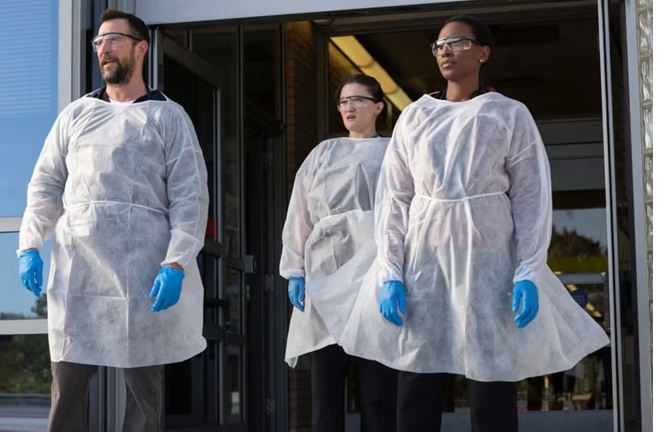
In The Pitt, HBO’s medical drama starring Noah Wyle, the staff of the emergency department at a Pittsburgh hospital work a long and stressful shift in real time. Over 15 hours, doctors, nurses, and students try to juggle myriad professional duties and the emotional toll of their difficult, high-stakes jobs. It’s a great show with lots to celebrate, from a rich ensemble of talented actors to the often stomach-churning realism of the medical scenes. While it’s no surprise that critics and Emmy voters love The Pitt, many have been shocked by its large and intense fandom. Mostly, though, they’ve been surprised by a seemingly endless succession of bad takes from said fans. It’s led some to wonder: is it possible to watch a TV show in the wrong way?
In his piece for Slashfilm (disclaimer: I’ve written for them in the past), Chris Evangelista argued that it is indeed possible to watch a show wrong, citing the ways that some fans of The Pitt seem eager to treat it like a mystery box with surprises to be figured out. ‘Does the show foreshadow things to come? Absolutely. That’s the nature of TV drama. But is “The Pitt” dropping clues that it wants its audience to solve like the puzzle box from “Hellraiser”? No, it’s not.’ Evangelista also noted how eager some fans are to place intense moral responsibility on fictional characters, like calling Dr. Robby an abuser for waking up Dr. Santos after she fell asleep at her desk.
Evangelista’s piece quickly went viral and it’s not hard to see why. It vocalised something sa lot of us have been wondering about this fandom for a while now. Passion is always welcome with a TV show, especially one this good, but seeing petty squabbles and increasingly hostile arguments veer into the kind of shipping battles and ethical self-righteousness that evokes bad memories of Peak Tumblr raised a few eyebrows. How is any of this happening over The Pitt, of all shows, people asked?
Noah Wyle’s observation on the show’s fandom was highly diplomatic. He said, “I think audiences have become sophisticated in a whole new way when they watch a show. They’re watching the show that we’re making, and then they have another show that they’re making. And when that show doesn’t align with the show you are making, they don’t like it as much because they thought you were taking it where they’re taking it. So they have their own fictions and offshoots and relationships that they are narrating in real time with the one we’re doing. It’s fascinating to watch.”
I was actually entirely unsurprised that The Pitt inspired such zeal. Sure, it’s not the ‘typical’ fandom show in the way something like Heated Rivalry or Bridgerton is, but it’s an impeccably made and gripping drama full of densely layered characters who are navigating a tough situation and shining a light on the oft-overlooked work of medical workers in America. The stakes are high and so are the emotions. It’s full of talented people who are also very hot, which doesn’t hurt. But it’s also an appealing blank slate in many ways. Fans like to tease at those quick glances or mundane moments and spin them into something else. The best fanfics are often rooted in two characters who are perfectly pleasant to one another but don’t interact frequently. It’s an empty canvas to do whatever you want, and The Pitt fans have had a lot of fun in that aspect.
A lot of the things being nitpicked over with The Pitt are typical of wide-scale online discussions of the hot new show of the moment. Why does this character behave like this? Why are they so unlikeable? Why are the writers going in a direction I’m not a fan of? I’d hazard a guess that every fandom’s gone through a similar cycle. Indeed, fandoms largely exist to provide that kind of space for discourse minor and major. We sadly don’t have the locked spaces of old, like LiveJournal communities, that made these conversations an in-house matter. Social media amplifies and exacerbates the most tedious aspects of otherwise normal conversations. Certainly, with The Pitt, a lot of the more viral complaints remind me of the way people talked about Grey’s Anatomy and E.R., two other medical dramas with devoted fanbases.
Those shows, however, were soapier in nature. The relationships between the characters and their messy private lives were as much a hook for viewers as the surgical procedures or increasingly outlandish diagnoses. Grey’s Anatomy, for one, was always billed as a show more concerned with hookups and angst than medical competency. The Pitt has its share of interpersonal relations, but it’s also a series set across one night of work and the characters are limited as such. For me, the competency porn of watching people who are good at their job succeed and care so avidly about their patients is a far more interesting hook than who might be flirting with who. So, when people say that the fans getting anal over a ‘lack of development’ for certain characters are ‘watching the show wrong’, I wouldn’t necessarily agree with them, although I certainly understand the disconnect between what many of them desire and what the series actually is.
As I’ve written about before, a lot of the loudest and most annoying fandom discourse is rooted in creating a binary where nuance is preferred. They want heroes and villains, spicy ship wars, and pats on the back for predicting what happens next. Fandoms thrive on theories, puzzles, and victories. They also love a kind of moral neatness that most great storytelling avoids. It was weird as hell, for instance, to see some fans of AMC’s Interview with the Vampire fighting over which character was the most morally upright, as if it wasn’t the entire stinking point of the show that they’re all murderous vampires engaged in mental battles over their own souls. An annoying vocal subset of Heated Rivalry fans seem determined to label the two leads (and, by extension, their actors) as bad people because of perceived slights. So, it’s hardly a surprise to see endless tweet-threads about how Santos is super problematic, actually, or the writers are doing it wrong by having a character show signs of suicidal ideation.
This is not to say, of course, that you cannot criticise this or any other show. there are certainly lots of things to dissect, both on-screen and in terms of cast choices floating in and out of seasons. There is, however, an obvious line separating the critical conversations every viewer has about the shows they watch and the intense moral declaratives that insist both fiction and those who make it are corrosive to real life. It’s not ‘watching a show wrong’ to slide into this attitude, but it is a far less satisfying and creatively fulfilling approach.


