
Old School. Biblically Independent.
By Emma Chance | TV | February 18, 2025
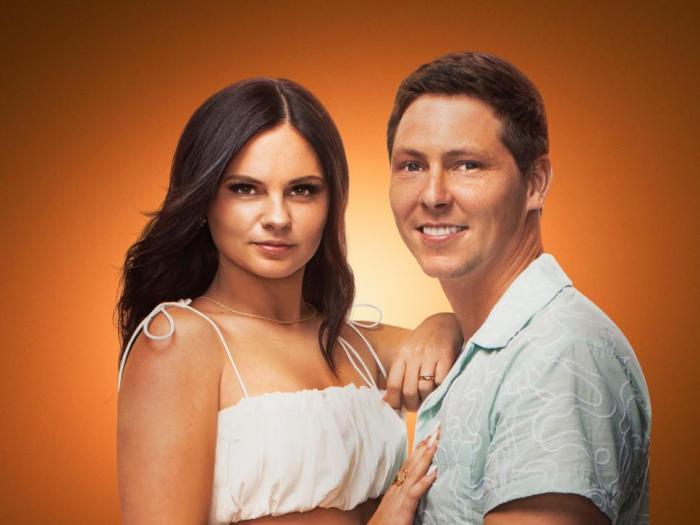
In case you haven’t been paying attention, 90 Day Fiancé is more than just hopeful Americans bringing their internet boy and girlfriends to the United States to get married for a green card. Nowadays there’s 90 Day Fiancé UK, which is like the original but set in Britain, 90 Day Fiancé: Before the 90 Days, when the boy and girlfriends travel to visit each other before filing for the K1 visas, 90 Day Fiancé: Happily Ever After?, which follows the couples that stay together after the 90 days are over, 90 Day Fiancé: The Other Way, where the Americans attempt to move to their boy or girlfriends’ countries, 90 Day Fiancé: Love In Paradise, which is like a combo of Before the 90 Days and The Other Way and the original show all in one, 90 Day Fiancé: The Single Life, which follows the people from the other shows whose relationships didn’t work out as they try to rebuild, and don’t forget 90 Day Fiancé: The Last Resort, where the most dysfunctional couples from across the franchise gather at a resort in Arizona for intensive couple’s and group therapy. My fingers are tired from typing all of that.
Within and across these many shows, celebrities are made. You probably remember Big Ed, the face that launched a thousand memes.
Or Angela Deem, who spent years trying to get Michael Ilesanmi to the US from Nigeria, only to dump him under suspicion of being a scammer as soon as he arrived.
Or my personal favorite, Jasmine Pineda, who…well, we don’t have time to get into Jasmine and her relationship.
But no matter how many new faces come in—no matter how diverse the cast gets in terms of race, religion, sexuality, and socio-economic background—the big problem remains the same. It’s not racist assumptions about people from other countries (though it’s definitely that); it’s not sad ugly people getting catfished and/or taken advantage of by younger, greedier hot people (though it’s that too); it’s old-fashioned gender expectations and dynamics.
Across the franchise, no matter who’s dating whom, conversations about jealousy, possessiveness, and the roles men and women play in relationships prevail. There are always issues of what women wear, how they present themselves or act in public, what other men they dare to make eye contact with, etc. We especially see these subjects come up in relationships between Americans and their partners from Muslim countries, like Tigerlily and Adnan Abdelfattah.
Clashes of culture are to be expected in relationships like this, but even Adnan’s mother, a devout muslim woman, told Tigerlily that she should have agency and independence in her marriage to her son.
But it isn’t always an issue of religion. Take Brandon Gibbs and Julia Trubkina, for example. Julia was a go-go dancer in Russia when she and Brandon met, and now that they’re married, Brandon has possessive expectations about how she presents herself.
After that scene, she wore a skimpy outfit to a bar and danced on the countertop. He pulled her down, told her her people could see her “P——,” had an anxiety attack, and then called her a whore.
The root of jealousy is always control. Control exists on a spectrum like all the other emotions—at the best of times, we seek control in our relationships because we see the potential in people and/or want to prove ourselves worthy of love, and at the worst of times, we simply like to feel more powerful than someone else—but it’s always more sinister when a man’s jealousy motivates him to control his female partner and not the other way around. Whole civilizations have been built on such a dynamic. The intense presence of it on shows like 90 Day, however, speaks to a larger anxiety present in modern relationships. Someday, we’re going to look back on all of these 90 Day Fiancé shows in fascination at how antiquated we were, when we thought ourselves so modern and reformed.
New episodes of 90 Day Fiancé season 11 air Sunday nights at 8pm Eastern on TLC, or next day on Max.


