
Old School. Biblically Independent.
By Kayleigh Donaldson | TV | May 19, 2026
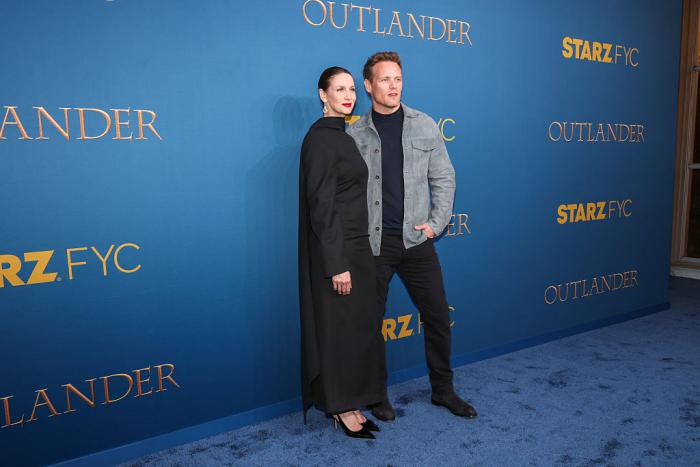
After 12 years and eight seasons, Starz’s epic time-travelling romantic drama Outlander came to an end. Fans’ reactions seem, from what I’ve seen, mixed to positive, with Jamie and Clare Fraser’s grand love story concluding in a reasonably satisfying manner. Unlike Game of Thrones, whose ending mirrored what author George R.R. Martin has for his still-incomplete novels and which left fans aggravated, Outlander author Diana Gabaldon has said her own unfinished saga will have a different ending. So, at least viewers will have options.
Regardless, is it striking how little hype I’ve seen for the final season of this show, one that has remained critically popular and has a ferociously devoted fanbase. A few of my friends said they didn’t even know it was still on the air (I even talked about this on CBC Radio’s Commotion this week!) In a post-peak TV era, one of the true stalwarts of that era, a show that could never have been made at any other point in time, fell by the wayside. Well, sort-of. Its fans remained committed, and in the country where much of the show takes place, it made an indelible impression.
Written by an American, the Outlander novels are a unique blend of hyper-detailed period piece, all-consuming passionate romance, time-travel fantasy, and sweeping melodrama across time and place. The first book, published in 1991, follows Clare Randall, a nurse who, on her honeymoon to Scotland, finds herself unexpectedly transported from the 1940s to the 18th century. There, she meets and is quickly wed to Jamie Fraser, a gorgeous redhead member of the clan MacKenzie and the embodiment of every hot Highlander stereotype you can imagine. They fall in love, have lots of incredible sex, and spend the next few decades falling head-first into a cycle of history, treachery, and fate.
Showrunner Ronald D. Moore transferred the novels to TV, with Sam Heughan and Caitriona Balfe in the lead roles, and Gabaldon on standby (and occasionally in the writers room) to keep things canon. Fans were immediately enraptured by its high passions, high stakes, and absolute commitment to its admittedly nutty concept. We were still in that odd period of entertainment where rom-coms had almost been killed off, superhero franchises ruled the roost, and romance-driven narratives were largely absent from television. And here came something unlike anything else on TV, something where the romance was the heart of the narrative and not a side-quest or prize for a man to claim after he saved the day. It was 100% serious about its love of love, and it treated it with the same level of reverence as it did the historical events it blended into Jamie and Clare’s grand tale. Anyone who was surprised by its success simply wasn’t paying attention.
I have long had mixed feelings on Outlander, both as its own thing and as a larger cog in the machine of cultural Scottishness. I 100% get who the books and show are for but found myself turned off by endless research-heavy info-dumps and the sheer proliferation of sexual assault throughout both. Gabaldon also has a habit of sticking her foot in her mouth, acting as though she knows more about Scotland than the people who live here (ask her about the Scotch bonnet incident.) But what has always interested me more is how these stories, written by an American and largely for her own people, are but one further example of how Scotland is repackaged for non-Scottish audiences.
Gabaldon was hardly the first to do it, of course. Think of the swooning romance of I Know Where I’m Going!, the cringe-inducing faux-tartanry of Brigadoon, or the heated jingoistic nightmare of Braveheart. Kilts and rolling in the heather with some haggis and an och-aye-the-noo is an image that’s good for business. Take a walk down the Royal Mile in Edinburgh and you’ll see it in every shop window (along with AI-generated images of Highland cows, sadly.) We’re currently experiencing a mini revival of Scottish romances in the BookTok era, albeit with cartoon heroes on the covers rather than oiled-up Fabios (look, the sexy Nessie book was actually pretty good, okay?!) But what differentiated Gabaldon’s work, aside from its unique premise, was both the depth of her research and the absolute earnestness of her execution. It was part of an old fantasy, yes, one that predates film and TV, but seldom had it been done with such full-throated commitment. And it was more than romance: it was history itself, one that a lot of us Scots haven’t gotten to see with that kind of budget before. Usually, we get William Wallace and Robert the Bruce and that’s it, and even then, it’s usually full of Americans.
Scottish culture, at least as it’s been packaged for Americans, usually divided into one of two camps: Highland romance or heroin misery. You get Brigadoon or Trainspotting and that’s it. Stories of working-class Scottishness, which often occurs in those scenic rural areas that take up all the postcards, seldom enter the equation. Scotland as a community and not a backdrop is just as uncommon. If you follow what makes the most money then of course it’s either the tartan-washed past or a big lesson on society’s ills that’s long descended into cliché. Every small country or community has its own version of this, the tropes that are easy to repackage into something hyper-real, like the fake France of Disneyland. Mostly, you get used to your own nation being stripped of the equation, as happens with the Harry Potter fans who pollute Edinburgh while ignoring its beauty and problems.
Outlander is messy and often reeks of “My great-grandmother was from Loch Ness so I know better” attitudes, but it’s also left an indelible impact on Scotland that, in my opinion, has been a net positive. Aside from the boost it gave to the tourism industry, it helped to quicken up the long-delayed process of giving us a sturdy film and TV industry. It was crucial in forming a foundation that will allow us to be a real part of the entertainment business. Now, we have Marvel movies being made in Scotland, and a plethora of other blockbusters. But what’s better than that is the increase in Scottish stories told by our own people: James McAvoy made his directorial debut (shooting a ton of it near my flat!); so did Brian Cox; we have our first TV drama entirely in Gaelic and we house The Traitors. I know a ton of people who were employed by Outlander. Good things have come from it, and a bright future can form from its ashes.
As with all things like this, I always hope that those who were drawn to Scotland via their love of Outlander find themselves willing to keep one foot in our nation’s present. There’s a lot to appreciate beyond the kilts. It’s a modern country and I think we deserve stories and fan support that embody that. We qualified for the World Cup this year. We can do bloody anything now!


