Old School. Biblically Independent.
By Jason Tabrys | TV | April 13, 2026
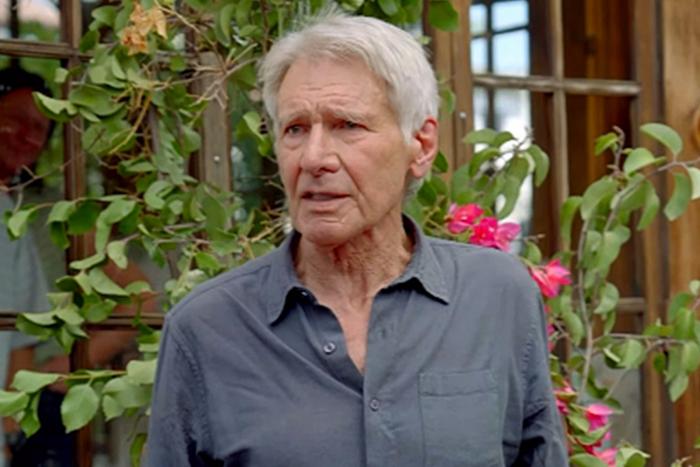
In an era of performative masculinity, manosphere snake oil salesmen, and faux-tough-guy posturing in the halls of power, let’s take a moment to celebrate Harrison Ford.
In the ’80s and ’90s, Ford was the monoculture’s ideal man - tough, tenacious, funny, charming, quick. He could give and take a punch, plant a kiss, wag a finger, do a Peter Pan off a dam, and throw terrorists off his plane. Even when put into incredible situations, there was something grounded and accessible about him, unlike many of his bulked-up contemporaries. Something supremely secure about how he carried himself, which is in contrast to modern big-screen tough guys who refuse to lose a fight or get rescued by a female character.
As Ford has matured, he has developed a penchant for revisiting his signature roles, and not purely for paychecks or fan service. In the characters of late-in-life Han Solo and Indiana Jones, in particular, Ford has found a way to reflect the reality of someone in the twilight of their life and career. And that mission has moved him to do some of his most interesting work.
While others try to fool us into thinking they’re immune to the cracks and creaks of time, like Tom Cruise’s Ethan Hunt in the Mission Impossible franchise, Ford has made his characters feel more lived-in, world-weary, and vulnerable. They’re as physically affected by time as they are by its most punishing emotional consequences: grief, regret, and the specter of fences left unmended.
Indiana Jones: The Dial Of Destiny is a clear example, somewhat ironic in that the first chunk of the film uses AI to de-age Ford for an extended flashback, establishing the film’s MacGuffin. Of the film, Ford told The Wall Street Journal, “I was really the one who felt there was another story to tell. When Indy had suffered the consequences of the life that he had to live, I wanted one more chance to pick him up and shake the dust off his ass and stick him out there, bereft of some of his vigor, to see what happened.”
Moments like seeing a shirtless and disheveled 80-year-old Indy angrily confronting a neighbor in stark contrast to his more dashing younger days are one thing, but the character delving into his pain over a son lost to war, and a wife lost to his resulting emotional distance, is something else. It’s unlike any moment in the franchise’s five films. The same can be said for the ending, when Indy fights to be left in the distant past, preferring to die quickly than return to loneliness and the absence of purpose.
Character moments like that reveal Ford’s range, self-awareness, and ambition to take his long-cultivated audience to an uncomfortable but real place. His work on Shrinking continues that effort.
The now 83-year-old actor’s under-recognized comedic chops and willingness to trade on his grouchy public persona (something he has previously exaggerated for laughs) served as the initial head-turner. But as the show has gone on, Ford’s Dr. Paul Rhoades has eased into a place within the found family that was forced on him. A paternal figure, he maintains a rough exterior but has become increasingly emotionally open. That’s directly tied to the character’s Parkinson’s diagnosis.
It’s cliché to commend an actor for heroically portraying someone suffering from a debilitating illness. As someone who has, in the past, suffered from my own debilitating illness, I can tell you those portrayals often miss the nuance while playing to the broad strokes that usually get more attention during awards season. But living within the tight grip of these ordeals is all about small moments of struggle, stubborn perseverance, and support structures that are as under-recognized as they are vital.
Shrinking does a better job than most at capturing what it can feel like to get a terrifying diagnosis and navigate upended plans and routines. To see the concern in people’s eyes when they look at you, and push back against that while appreciating the ways these things impact them as well. The skill with which Shrinking handles the spectrum of emotions kicked up by this arc is all made more impactful and rooted in truth by Ford’s talent and thoughtful approach, but his presence matters just as much.
Actors want you to see the character they’re playing in the moment, not be distracted by all the other journeys you’ve been on with them over the years. It’s certainly not Harrison Ford’s intent for you to see Han Solo or Indiana Jones on Shrinking, contending with a loss of control and worries about his mortality in the back of his mind. To do so would deemphasize the Paul Rhoades character, but some things can’t be helped. And there is an undeniable power in seeing this action hero, sex symbol, and model of cinematic masculinity portraying the natural third act of life that so many actors choose to shy away from playing or even acknowledging.
We are told to “rage, rage at the dying of the light,” but despite the beauty of that notion, it is a fight we are certain to lose someday. Because of that, it is incumbent upon us to define the nature of our pushback. For Paul, it involves a chosen evolution into someone who makes space for love, laughter, friendship, and family. The show still portrays him as a loveable grouch, set in his ways, but even he has recognized the changes and the people who have affected him as he faces the choppy seas of a progressive illness. Gratitude in the face of misfortune is a grace like no other.
As mentioned up top, we lack positive, layered examples of what it means to be a good person and a good man. But in his late career work, Harrison Ford is giving us an invaluable model and distinguishing himself as so much more than what we have come to know box office franchise headliners and icons as. Ford is, first and foremost, an actor using his art provocatively to explore human frailty, truth, love, and real strength.
Jason Tabrys is a longtime TV critic and interviewer whose work has appeared on Uproxx, Splinter, and LateNighter. You can follow him on Bluesky.


