
Old School. Biblically Independent.
By Chris Revelle | TV | July 31, 2026
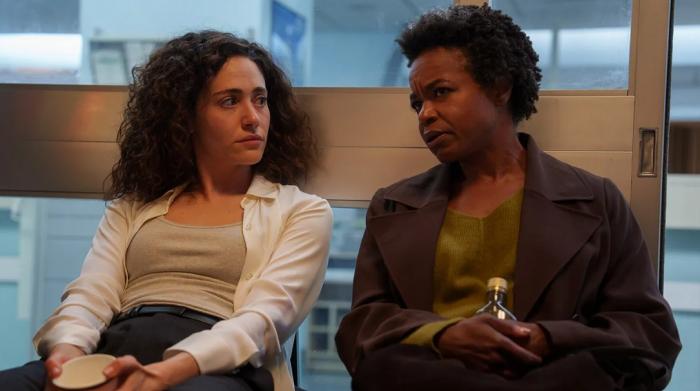
There’s a scene in the first episode of Hulu’s new crime thriller, Furious, that hooked me so hard it made my head spin. FBI agents Alice Black (Emmy Rossum) and Nora Washington (Quincy Tyler Bernstine) discuss how the justice system often makes the victims of sexual crimes feel blamed and dehumanized, especially women. She likens some of these women to Medusa, who was raped by Poseidon in Athena’s temple and was punished for it. Transformed into a monster, Medusa vented her fury by petrifying any man who crossed her path. This retelling encapsulates the thesis of Furious: when victims are denied justice, they have nothing left but rage. Acting on that rage feels empowering, but it curdles and warps. Some push it down until it rots out their life, and others might become serial killers.
The premise of Furious is simple: a mysterious killer named Catherine (Lola Petticrew) is tracking down men and killing them. Alice, a victim of domestic violence that ruined her promising detective career, struggles to keep her life together as she pursues the murderer in her new job as a junior FBI agent. On paper, it feels like a standard set-up for a crime thriller you could find on any streaming platform. Furious distinguishes itself by using the thriller framework to illustrate the ways big and small that society at large boxes women in. Alice’s ex, a scumbag played by Jake Lacy who worked with her on the force, beat her regularly, but he’s kept his position. It’s her who had to leave.
Furious is liable to make you, well, furious. The series shows so many examples of how women are kept down with a boot on their neck. Nora’s Medusa story suggests that Catherine’s murders are her doomed way of seeking the justice that’s been denied to her. Furious makes it so the viewer feels that fury with her. In the context of a world uninterested in taking Catherine’s horrible trauma seriously enough to do something about it, following that anger to violence is one of the few options left. The series presents prickly questions about the line between justice and revenge. How blurry is the line? Can revenge be just if institutions are not?
Not that said killing spree is glamorized in the slightest. Scenes of Catherine’s kills are discordant and unsettling. The image that haunts me most is the corpse of one of Catherine’s victims lying dead next to locks of hair laid out in a display. This eeriness is perfectly matched by Petticrew’s performance. They have an uncanny ability for effervescence as Catherine ends lives that gives me chills. Catherine is a terrifying character, but not larger than life. Petticrew does tremendous work making all the quirks and affectations feel real and lived-in.
The attention paid to character development is stunning. Rossum’s Alice is hard, disheveled, and unwashed; a person trying to brute force her way through the effects of her trauma. There’s a flatness Rossum takes on in her eyes, as if Alice is always keeping herself at an emotional distance. When Alice becomes more fixated on the case, it feels like watching a moth fly right towards the flame. There’s a sense of doom to Alice, but Rossum gives her just enough hope to keep going. The moments she takes tentative steps towards healing supply much-needed tenderness.
Furious completely enthralled me. It reflects a bleak world that inspires anger, but it never feels like cheap misery. Furious is as wrathful as a gorgon, and I can’t wait to see where it goes next.


