Old School. Biblically Independent.
By Jason Tabrys | TV | January 9, 2026
When one show ends, the same old debate begins: which show did it best when it came time to put up its series finale? The perfect exit, providing closure absent cringe, balancing fan service and a desire for showrunners to get one last statement off their chests.
We know the ones that never hang in this conversation. The cautionary tales like The Sopranos and Seinfeld, which took big swings in the name of buzzy ambiguity and uncharacteristic moral consequences. Lost and Game Of Thrones, so polarizing that they threaten the legacies of the shows themselves. And then, of course, there are the countless ones that we don’t really remember - not a positive or a negative, just an end. Which is a shame, considering the endurance required to actually get the chance to wrap up your own story.
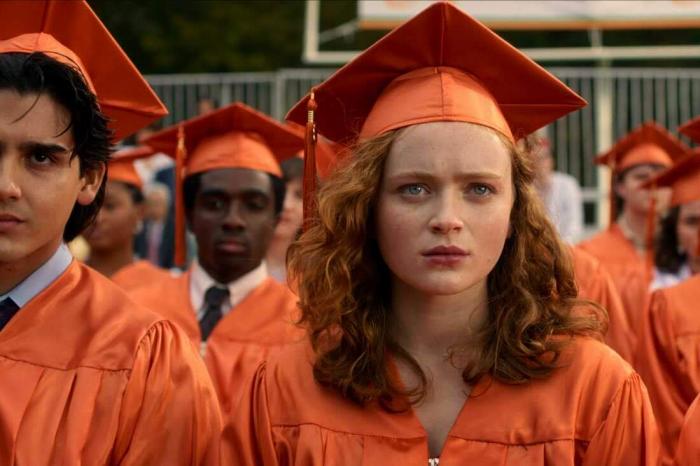
The ultimate fate of the Stranger Things finale is yet to be definitively decided, but I doubt it will be one that’s well remembered, simply owing to the fact that in a time of too much content, lasting imprints are the rarest of things. That’s something the show took for granted, taking six years between seasons 3 and 5. Not entirely their fault - global pandemic, writer’s strike - but the show’s legacy will still have to pay for it.
To me, the greatest finale is “Everyone’s Waiting,” the last episode from HBO’s Six Feet Under. Though the show is somewhat buried by its adjacency to The Sopranos and The Wire (a golden age for HBO, which also had Sex And The City and OZ around the same time), its finale is so good that it holds the power to pull people back into the show’s orbit to prompt rewatches and reassessments. And as a result, awe for how the last episode managed to create an ending that powerfully honors all of the show’s main characters while once more speaking to the randomness of death, life, everything in between, and the idea that that messiness should be a call to live life with less fear and apprehension, not more.
To say that a teenage me romanticized Nate Fisher (Peter Krause) would be a massive understatement. I crushed hard on the rogueish manchild who got pulled back from the fringes of his rebellion by the death of his father. Nate is a square peg jammed into a round hole - learning the mortuary business he previously fled, getting in too deep with a toxic and chaotic relationship, navigating his resentful/emotionally stunted brother, mentally delicate mother, and rebellious little sister. Even as things seemed to settle in later seasons, Nate is faced with a new messed-up relationship, kids, a dangerous health issue that starts the clock on his demise, and the scars of loss in terms of people, time, and opportunity. Upon reflection, the way I connect most with Nate is how he projected a persona of breezy, shaggy-haired charm while often internally lost in a massive freakout like the rest of us.
When Nate died in the middle of the show’s final season, I was gutted, but I came to understand that funerals are for the living, and we needed the Fisher family (and the show) to navigate grief and say goodbye to their unlikely cornerstone, creating pathways for growth and, eventually, closure. This is where the finale earns its roses and its resonance.
That famous final montage of all the characters eventually passing on will always get a lot of credit from fans of the show (and also, I hope, fans of the Parks And Rec finale), but upon rewatch, it’s the emotional revelations from the finale that most stand out, bolstering the effect of those flash forwards.
When Ruth (Frances Conroy) is seen alone, passively watching Just Shoot Me reruns, haunted by the realization that her hope resides in the past, it’s an unshakeable tragedy. When she bemoans never getting what she wants and winds up living a life of tradeoffs and quiet desperation, it’s something some of us recognize in our own parents and in the rearview, trying to chase us down. Sometimes, our choices and the choices made for us create a kind of tomb with air that’s running out quick.
For David (Michael C. Hall) and Claire (Lauren Ambrose), the end of the show means a happier beginning by way of making big bets on themselves. So satisfying after 5 seasons of seeing them paralyzed by fear and running in circles, directionless.
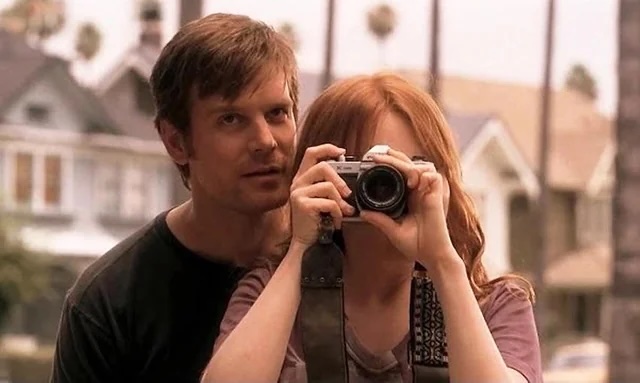
The ghost of Nate is also given some amazing moments in the finale, acting as an avatar for Ball when it comes to making big, meaty declarations about time, life, and fear before the buzzer. Owning Nate’s fears, all wrapped up in regret, provides a melancholic coda to his unfinished journey, but it speaks to an obvious truth about the character, navigating one’s 20s and 30s, the burden of expectations, and the gravitational pull of trepidation.
“I spent my whole life being scared - scared of not being ready, not being right, not being who I should be. And where did it get me?” says the ghost of Nate Fisher. If you’ve crossed 40 and you haven’t had that conversation with yourself in the mirror, congratulations and f*** you.
As a ghost, Nate is whatever his family needs him to be when he’s on screen. He’s not really there; he’s a reflection of how they each saw him - providing comfort, a cautionary tale, an instigator, and a reminder to be present while you still can.
“You can’t take a picture of this, it’s already gone,” he whispers to Claire as she takes a picture of her family before departing on an epic adventure toward a new life that, as we eventually see, will find ways to bring her back home from time to time. But in that moment, we don’t know that, and neither does she. And she has to be okay with that as she rides off to the swells of Sia’s “Breathe Me,” hitting the highway across a vast desert that winds up being an 80-year-long road.
I can’t quite decide if Claire’s eventual end is happy or sad. She has seen so many people she loves pass on, their memories reflecting back to her from the wall of a room where she lies alone, dying. Is it agony or bliss to live that long? Do we all wind up dying alone, or is the message that everyone who has ever been with us is with us then, in some small way?
A show that managed to provide answers across a massive timeline while also leaving us with big philosophical thoughts and questions - the best finale not only for how it closed its story, but for how it caused us to perceive our own.


