Old School. Biblically Independent.
By Chris Revelle | TV | June 5, 2026
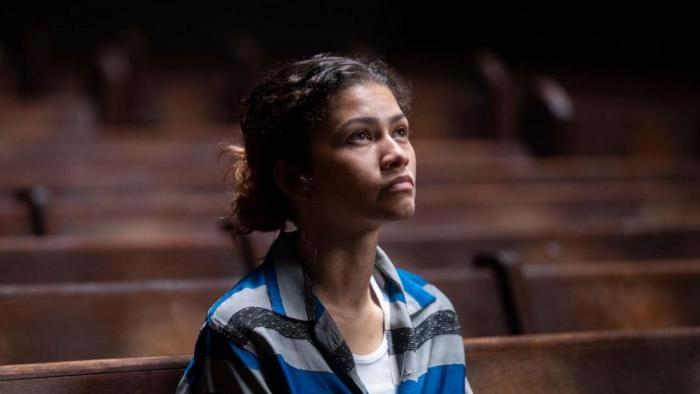
Euphoria’s series finale was an unqualified mess. The third season has its defenders, and to their credit, the series as a whole was not an utter rout. Regardless, the third season couldn’t organize its interests and concerns into anything coherent, let alone resonant. The failings of the finale, and of the show as a whole, can be attributed to the series’ lone writer and showrunner, Sam Levinson. Without others to meaningfully check him, Levinson’s all-sizzle-no-steak vision flamed out so hard that it’s an example of just how wrong an auteur-driven, single-writer series can go.
Not all auteur shows are doomed to blow up in infamy and disaster. The beloved Fleabag is the singular, tragicomic vision of Phoebe Waller-Bridge. I May Destroy You is written entirely by Michaela Coel. The filthy secret agent cartoon Archer was almost entirely written by series creator Adam Reed. Nic Pizzolatto’s time on True Detective is a fascinating example of how high and how low a series can go with a lone writer. The first season is largely regarded as excellent TV that kickstarted the trend of movie star-driven prestige content. The second season is regarded as a trainwreck that wounded the careers of its cast. When the series depends on the vision of a single person, there’s a high level of risk. The peaks are quite high and the valleys frighteningly low.
Taylor Sheridan’s Yellowstone could be a good comparison for Levinson’s Euphoria. Like Levinson, Sheridan was the sole writer of his wildly successful show. The power might’ve gone to his head, like when he was leasing his ranches to Paramount for 50k per week to shoot the show, or when he balked at the idea of staffing minimums. By the time Sheridan had written himself into the show as the coolest dude with the hottest girlfriend, Yellowstone began to look more and more like the product of bloated vanity meant to prop up Sheridan’s ego first and entertain audiences second.
Levinson tread a similar path of auteurist diva behavior like blaming shooting delays on Zendaya’s schedule when he didn’t have a script which, allegedly, birthed a feud between them. Soundtrack composer Labrinth recently exited the show, seemingly out of some conflict with Levinson. There’s some reason to doubt Levinson’s artistic process too. As he told The New York Times:
“So there’s mornings when I would show up to set and I’d say to the crew, just give me two hours. I’d sit down by myself in Rue’s living room and say, OK, I can’t shoot what I’d intended to shoot, but I know I can count on Z — I’m just going to write her going through withdrawal for 10 minutes.”This illustrates to what extent Levinson relied on his actors to cover the weaknesses in his scripts. It speaks to an ego that exists in all performing arts, but one that encourages complacency. That complacency was on display in the finale. As Rue dies of an overdose, she imagines Fezco’s escape from prison. According to Levinson, this was an important statement:
“People relapse. They f*ck up. They’re not ready to get clean, and they weren’t dying like they are now with the influx of fentanyl into this country,” he said. “I could say with absolute certainty that if I was going through what I went through when I was younger now, then I wouldn’t be here, either. There’s no reason to sugarcoat that. I wanted to tell the story for Angus and for people who aren’t granted a second chance.”
It’s clear that Levinson had topics, (fentanyl, sex work, the American dream, religion, addiction) but no direction for them. It’s admirable to give Rue a realistic end and to honor Angus Cloud. What’s unclear is how the finale achieved that. Rue’s death has such little wind-up that it feels meaningless. How is Cloud and his story honored by being an unheard voice on the phone and a figment of a death-dream? Perhaps Levinson’s vision would be better realized if there were other writers to bounce ideas with or add in perspectives that could’ve built on his themes. Levinson alone didn’t know what to do with his intentions, but maybe other writers could’ve shown him the way. Levinson’s Euphoria joins the likes of Pizzolatto’s True Detective and Sheridan’s Yellowstone as an example of the agony and ecstasy of auteur television; a show that succeeds by the vision of one artist can easily fail by that vision.


