
Old School. Biblically Independent.
By Chris Revelle | TV | June 27, 2024
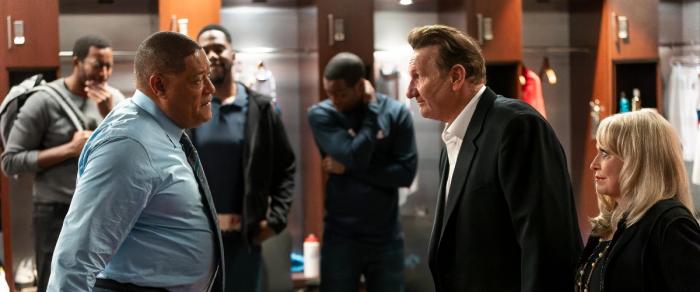
There’s a trope I’ve noticed here and there over the years in books like Jonathan Strange & Mr. Norrell and even mediocre video games like Kingdoms of Amalur: Reckoning that imagines elves and fairy folk as tremendous lovers of reenactment and recreation. These festing fey could recreate and retell a famous battle, a historical event, or a famous feast. They could spin out this way forever, remembering and memorializing, eternally moving through historical motions. There isn’t any new statement made or any new angle on these storied moments and instead there’s an obsession with verisimilitude and accuracy. It’s a trope that’s lodged itself in my mind over the years and it’s come back to me over the past few years as I’ve watched what I think of as reenactment dramas like Clipped, Winning Time, The New Look, Manhunt, White House Plumbers, Welcome to Chippendales, Gaslit, and Pam and Tommy, just to name a few. These series, and many others like them, have seemingly become more popular, or at least more numerous. I’m led to wonder why we’re in this spot, with a glut of reenactment dramas churning out to recreate moments of history both recent and far.
To be clear, there’s nothing inherently wrong with reenactment dramas. They can be great, especially when they seek to reappraise a well-known historical story or impart some kind of message. Even when reenactment dramas don’t offer a new perspective, they can be entertaining and gratifying to watch. Reenactment dramas can spark interest in the past and even inspire people to look these events up to learn more. Reenactment dramas also function as reflections of what people believe to be true about a historical moment. The choice of how to frame events or people says a lot about what a community has taken from the story and it can be interesting to see a reflection of cultural values then and now. All of this is valuable and has its place. Reenactment dramas are not innately bad. I do, however, think it’s interesting that when a reenactment drama is particularly successful, it’s because some new angle was explored because by and large, reenactment dramas don’t really do that. Usually, in their efforts toward verisimilitude and accuracy, reenactment dramas forget to have a take.
The Dropout, the story of Elizabeth Holmes and the grand grift of Theranos, is an exception that proves the rule. The series is exceptional, containing not just sharply observed commentary on real people and events, but also a career-best performance from Amanda Seyfried. The Dropout did what not even the New York Times was able to do and held Holmes to account while still managing to acknowledge her humanity. Other reenactment dramas have attempted similar things; White House Plumbers and Gaslit both present G. Gordon Liddy as equal parts Nazi and clown, Gaslit and Pam and Tommy prompted viewers to reconsider how unfairly maligned Martha Mitchell and Pamela Anderson were in their times, Manhunt functions partially as a reflection on how close America came to the Reconstruction working as intended and Clipped suggests that one-bad-apple mentalities held by institutions like the NBA ultimately protects a class of horrible billionaires. The trouble is, the depth to which these reenactment dramas engage with these ideas stays mainly on the surface, like a hand skimming the water, and mainly sticks to known facts with limited liberties taken to express something original. What we’re left with are dramas that are watchable, entertaining, and well-acted, but don’t have many new things to say or a new lesson to impart.
Again, that’s not necessarily a bad thing, but it leads me to wonder why we’re in this era of recreation. One possible reason is that reenactment dramas are in some ways creatively simpler; the plot and the characters are both largely decided already. These stories are also already well-known which means that any IP-loving media executive is satisfied it’s not a risky venture. Another possible reason is how audiences consume media now. I don’t think it’s a coincidence that reenactment dramas have become more popular as media literacy approaches its nadir. When engaging with media, a viewer would have to engage in more critical thinking to decide whether something is “good” than they do when watching a reenactment drama. Quality is a subjective and moving target after all, and that’s before we factor in the exhausting shape fandom has taken in recent years.
This leaves media literacy in an uneasy place that fosters the idea that all media are problems or puzzles to solve as if they’re questions with objective answers. Reenactment dramas reward this thinking by largely eschewing concerns of storytelling, characterization, or plot and distilling media consumption into a question of accuracy. Instead of concerns about framing or how an idea is communicated, the viewer is asked only to compare what they’re seeing to what they already know; do the actors look and sound the part, do the sets, costumes, and hair reflect what we remember of that moment? In this way, it’s little wonder why reenactment dramas are so numerous these days: they’re unchallenging to consume and ask very little of the viewer. That’s not bad in and of itself, but it seems to reflect our declining collective ability to understand media. If stories, especially fiction, represent abstraction that takes some amount of labor to understand, then reenactment dramas are literal-minded constructs that ask consumers only to remember what they already know.
There is a value to reenactment, but that value takes on a more suspect shape if it lacks reflection or re-examination. If all we’re doing is retelling and remembering, when do we move forward? If our response to waning media literacy is to ripped-from-the-headlines docudramas, then aren’t we digging that hole deeper? If we’re going to ride a high season of reenactment, is it too much to ask that we have some kind of point or reason for doing so?


