
Old School. Biblically Independent.
By Dan Hamamura | TV | January 6, 2024
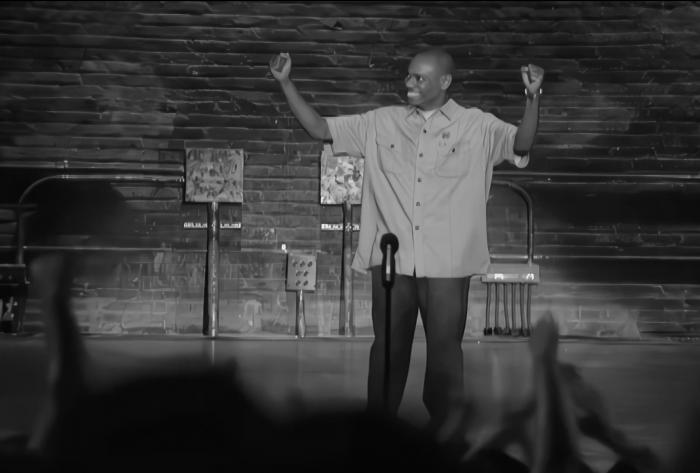
Dave Chappelle is a comedian who, at his best, has proven himself to be incredibly funny, insightful, and occasionally profound. He has a true gift that allows him to command a room as he performs in silence, building anticipation for his point, whether it’s punchline, insight, or both.
His latest Netflix special, The Dreamer , is built around this idea of Chappelle as a performer with profound insight, tying directly back to his first HBO special, Killin’ Them Softly: that special was filmed in the same venue (the Lincoln Theatre in Washington D.C.), and a number of stories that Chappelle delves into are loosely built around specific moments in his career, and the fact that he somehow managed to make his dreams come true. He has survived walking away from “Chappelle’s Show,” he has survived “cancellation,” and he’s as big as ever. He’s at the top of the mountain, ready to speak his message.
Unfortunately, that message is empty, shallow, and not particularly funny.
Much of the attention to this latest special has been focused on the controversial nature of Chappelle’s material, as he continues to make jokes about (among others) trans and disabled people, enough that at one point, he jokes about how much he loves punching down comedically. Is it offensive? I wouldn’t be surprised if some people are offended, but honestly, it’s mostly just hack. His material here is as dated as the jokes he makes about his wife, or his wife being Asian, and not even his skill as a performer can dress them up enough to keep them from feeling like comedy from decades ago. More telling, when he performs these controversial moments, he does so with the same glee one finds in the eyes of a child who has been told not to touch a hot stove, but reaches for it anyway — the material, at this point, is irrelevant (which would explain the level of joke craft at work). The only thing that he is feeling is the rush of the taboo, chasing the high of pushing against boundaries.
And while this isn’t a defense of Chappelle’s insistence on reaching for sensitive, potentially offensive jokes, it makes sense for the man who made his dreams come true. For Chappelle, there are no mountains left to climb, nothing for his comedy to inherently push against. So now, the only restrictions are coming from below, from the people he left behind as he dreamt his way up the mountain. He has been up there so long, he no longer remembers what it was like to be down here with the rest of us. All he has left are his memories of being someone who just wanted to be on the top of the mountain. And he did it. He made his dreams come true. But it’s unclear what he wants now or if he even knows the answer himself.
Most of this might be something we could ignore if The Dreamer was, you know, funny. But between the hacky, tired jokes and the long-form storytelling nature of the show (a staple of this mid-career Chappelle), there are few laughs to be had. It’s made even worse by the framing of the show, which, after Chappelle finally says goodnight, cuts to a clip of young Dave walking out to perform Killin’ Them Softly, set to Aloe Blacc’s ‘The Man’ - a reminder of how funny Chappelle could be, once upon a time, when he was still trying to make his dreams come true. Instead, now, the funniest thing about The Dreamer might be the fact that Netflix paid him an insane amount of money to do a comedy special with almost no comedy.
(Note: that last line is from Tori. Thanks, Tori!)


