
Old School. Biblically Independent.
By Chris Revelle | TV | July 17, 2026
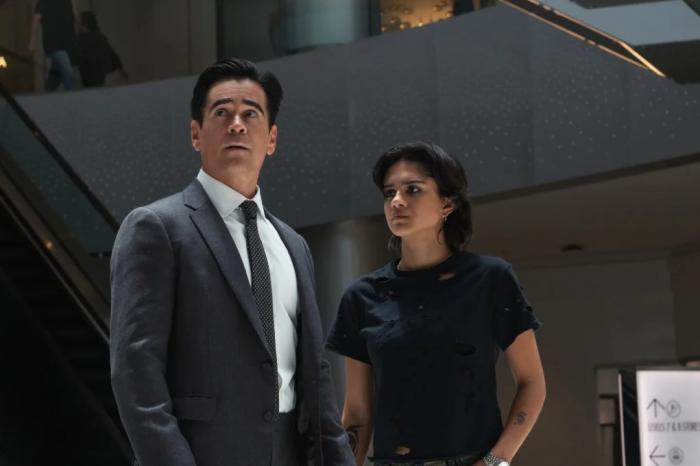
On AppleTV’s Sugar, the titular gumshoe is more noble than the average private eye on TV. Maybe his outsider perspective as an alien observing humanity gives him a broader view of things. Maybe the canon of Old Hollywood films that informs his human persona has imbued him with a halcyon idealism. Whatever the reason, Sugar (Colin Farrell) is someone who sees the good in humanity. In fact, setting aside Sugar’s alien abilities like telekinesis, I’d argue that his real superpower is his empathy. The man shows grace and care to just about everyone he meets, but his new partnership with Val (Sasha Calle) stands out as a shining example of how Sugar sees the light in other people.
Sugar is a show that has always emphasized care for those cast off by society. Season one featured Carl (Jon Beavers), an unhoused man struggling with substance addiction who Sugar tried to help. It’s an early example of Sugar’s ability to look past the surfaces to the human beneath. This season is no different. “Human beings can be beautiful, full of light,” he intones in voiceover as he travels around L.A.’s rough areas. “They can be. I see it every day, and I see how they treat their own pain. I see it sometimes, and it shocks me.” We see Sugar live this ethos when he speaks with Sandra Jaquez (Vanessa Martinez), an unhoused woman who tells our sleuth about the fentanyl flooding the streets. Arguably, the season’s central mystery is rooted in empathy for the marginalized, especially as we learn more about the terrible corners Ji-Seok (Raymond Lee) and Danny (Jin Ha) have been backed into as Korean immigrants struggling to make it.
When Sugar meets Val, she’s hustling him for cash in exchange for his gorgeous Corvette that he left unattended. As one might expect of an alien with preternatural patience, Sugar looks past the scam. He notices a light in her, something he likens to the light of stars. Val has charges, but neither Sugar nor Sugar holds that against her. She’s quick, smart, and resourceful, traits that make her an excellent ally to our favorite alien detective. Val uses the tools she has to get by in a world that’s full of pitfalls: fentanyl, gang violence, housing crises, anti-immigrant sentiments. Sometimes that means fleecing someone for their nice car.
The depiction of L.A. also contextualizes Val as a character. Her crimes, if not justified, are reflections and responses to the world around her. That world has driven her to choices she might not have made otherwise, but they don’t define her as a person. As played by Calle, she’s uncowed by her circumstances. She projects energy and drive that keep her alive, like when she uses her connections to fix Sugar’s usual car or when she tails a person of interest for him. She’s an excellent foil to the significantly milder, cooler Sugar, but she’s also a representative, of sorts. Ji, Danny, and Sandra function within the story as witnesses and/or victims, people that Sugar questions or protects. Val has the distinction of being more active as Sugar’s partner and which allows the character to represent not just the struggles of L.A., but also the potential that can be realized when people are treated with empathy. Val’s potential to make a positive difference was there, it just needed to be seen beyond the horrible circumstances around her.
It’s genuinely great to see Sugar center empathy for the downtrodden as a theme, especially when they are so often flattened or demonized. As Val, Sasha Calle gives the show spark and vigor, and her partnership with Sugar embodies the series’ theme with aplomb.


