
Old School. Biblically Independent.
By Allyson Johnson | TV | February 16, 2024
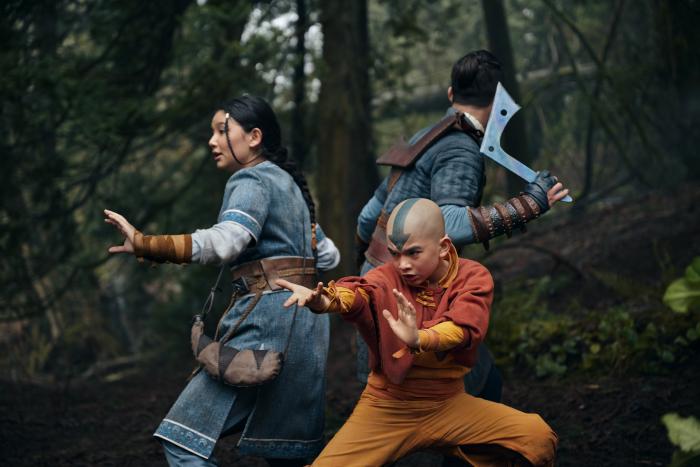
Released in 2005 and running three seasons until its finale in 2008, Avatar: The Last Airbender remains a critical darling. Created by Michael Dante DiMartino and Bryan Konietzko, the animated series is superbly crafted and delivers the type of world-building found in only the best fantasy novels. Transcending the label of “children’s entertainment” the series remains a must-watch. Wholly immersive with rich settings, strong character development, and an iconic score, the series is rightfully beloved. It makes sense that Netflix, on the heels of several other adaptations, would seek to capitalize on the continued hold it has on viewers who fell in love with it twenty years ago and remain enamored. But as the series looms closer, there’s a continued sour edge to its production.
The series takes place in a world divided into four nations — the Water Tribe, the Earth Kingdom, the Fire Nation, and the Air Nomads. Each nation has members with the ability to manipulate, or “bend,” elements. The titular Avatar is the only one capable of mastering all four and possesses the ability to maintain balance and peace in the world. Made for younger audiences, the series serves as a necessary reminder that great storytelling is unrestricted by age.
The concern began when the original creators, DiMartino and Konietzko, walked away from the Netflix production due to “creative differences.” But there’s also an air of seeing animation as a lesser medium in many live-action adaptations. There are a fair few that work. One Piece carved out a nice space for itself by leaning into the silliness of the original manga and anime. But then there’s almost any Disney live-action adaptation of their existing IP, demonstrating a clear devaluing of their animated legacy.
The press tour for the Avatar live-action is marred with tone-deaf comments. Fans are rightfully upset over the idea of sanding down the series’s edges and rough spots for a more palatable consumption. It’s 2024, and showrunners are leaning into the belief that to depict sexism means to condone it. So the series is already talking down to its audience, demonstrating less trust to its likely adult viewers than the original bestowed upon its target audience — children.
Obviously, from the trailers and teasers alone, this adaptation looks great visually. They’ve nailed down the costumes, and it all seems relatively well-cast. But there’s a flatness to it. It’s a potent reminder that animation can often achieve visual details and greatness that are unparalleled to what is possible in live action. Special effects and VFX have improved immensely, especially since the last ill-fated attempt to adapt the series. That said, as a medium, animation is lush with a grandiosity that defies our need for realism. The nonsensical works, and the worlds are bold and new.
So often, when a live-action adaptation comes out with previous animated source material, there’s a sense of “bettering” the existing output; but live-action doesn’t dictate quality. We’ve seen this many times over. This is especially true for a series where the grandiosity of the visuals is baked into the DNA of its success. When you watch Avatar: The Last Airbender, there are notes of everything from Star Wars to the works of Studio Ghibli to director Akira Kurosawa. Even the bending movement is steeped in studious lore and attention to detail. Konietzko hired a consultant with whom the team would work to create the move’s look, style, and flow, from rough storyboard sketches to completion.
If and when they get to later in the series, the Agni-Kai between Zuko and Azula, good luck capturing the sheer emotional magnitude that “Sozin’s Comet” produced.
There are plenty of reservations about the Netflix series, which also cuts outside stories with Aang, Katara, Sokka, and co., to streamline the main narrative. This choice again suggests the showrunners don’t understand the charm and initial appeal of the material they’re adapting. But adaptations come with the understanding that changes will be made, and it is no longer just the original vision. Sometimes that works well, and again, in the case of something like One Piece, entirely necessary due to its sheer length and scope.
It’s the decision to make it live-action that simply makes me disinterested in the final product. Maybe it will be great, and I’ll be embarrassed for ever having doubted it. There’s a continued belief that animation is an art form bereft of depth that is so close-minded, especially when it comes to animation for adults. Some of the best shows in recent years, from Bojack Horseman to My Adventures with Superman, have been animated — and I’m not even touching the enriched world of modern anime. But for all of the wondrous places the medium can take us, people are reluctant to dive in once they see drawn faces rather than actors.
It’s a shame because while Netflix’s Avatar: The Last Airbender will surely draw in fans, especially those who recognize the title but steer clear of animation, they’ll get a subpar version of a beautiful story. Animation allowed the original to reach heights that live-action can’t. The series merges a fully formed story that utilizes both episodic side-adventures with long-running narrative and thematic cores, eschewing the modern belief that each 12-episode television season needs to be a 12-hour movie instead. The adaptation might capture some of the charm. It will surely have fans of the original feeling nostalgic, but do yourself a favor, get over preconceptions, and simply watch the original instead.


