
Old School. Biblically Independent.
By Jen Maravegias | TV | March 29, 2025
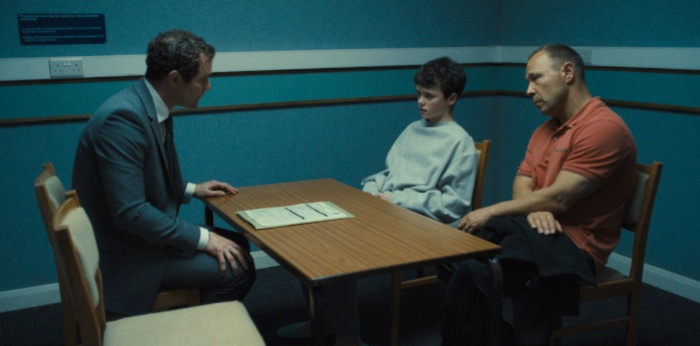
I’ve spent this week trying to figure out how I feel about Netflix’s four-part series, Adolescence. The overwhelming response has been shock at how easily a young white boy could be drawn into the violently misogynistic ideology of the online “manosphere.” But I’ve been online for a long time—almost as long as I’ve been spending time with white boys—so that didn’t surprise me. The internet is often a toxic place, and many boys are encouraged, both online and off, to ignore or suppress their emotions. If you offer them a community that blames others for their struggles, it’s easy for them to adopt that mindset as their identity.
Adolescence explores how an average, working-class British family is affected when their 13-year-old son, Jamie (Owen Cooper), commits a horrific act of violence against a classmate. The series addresses genuine fears about how misogynistic online spaces are influencing young boys. But Jamie’s internet use is only one piece of the puzzle. He’s also the child of a father still reckoning with his own childhood trauma and a culture that has never put any value on the emotional needs of boys.
Jamie’s explanation for what led him to harm Katie Leonard will feel unsettlingly familiar to anyone raising teens today, or even just watching TV about them.
Katie had shared a private photo with a boy she liked. That boy then spread the image around the school, and then everyone at school saw it and made fun of her. Jamie decided to take advantage of Katie’s socially and emotionally weakened state to ask her out. She rejected him and then waged an online bullying campaign against him, and his response to that was to murder her.
Jamie lashed out because he felt humiliated and powerless. He didn’t know how to process rejection or shame. He had never been taught what healthy attraction looks like, or how to manage difficult emotions. At 13 years old, everyone involved in this terrible series of events had undeveloped brains that needed guidance and comfort from the adults in their lives. But Jamie didn’t have that to fall back on.
The series’ final episode shifts focus from Jamie’s internet use to what I see as the emotional core of the story. The family is trying to celebrate dad Eddie’s (Stephen Graham from Bodies) 50th birthday, but the day unravels. Eventually, Jamie calls from the detention center to say he’s decided to plead guilty. In the show’s closing moments, his parents sit in his room, trying to understand how they failed their son. It’s a quiet, emotional scene that’s hard to watch as a parent. Eddie tells his wife that his only goal as a father was to avoid being like his own dad, who had been physically abusive. He thought being present and not abusive would be enough. But he didn’t know how to meet Jamie’s emotional needs. Eddie couldn’t give what he’d never received.
I don’t believe Jamie hated Katie or women in general. What he wanted was to be seen and understood as someone worthy of care, connection, and dignity. He wanted Katie to see him as desirable, and his friends to view him as someone desired. He wanted his father to notice him and to reassure him that he was OK, even when he messed up. But Eddie ceded his responsibilities to the “manosphere” when he couldn’t show up for his son emotionally. By the time he realized that, it was too late. By the time Eddie realized what had happened, it was too late.
Some kids find soft landings in friendly, supportive communities. Others get swept up by the Andrew Tates and Joe Rogans of the world who exploit their confusion and vulnerability. And, like Jamie, some don’t realize they’re being misled until they’ve become someone their parents no longer recognize.


