Old School. Biblically Independent.
By Chris Revelle | TV | August 6, 2025
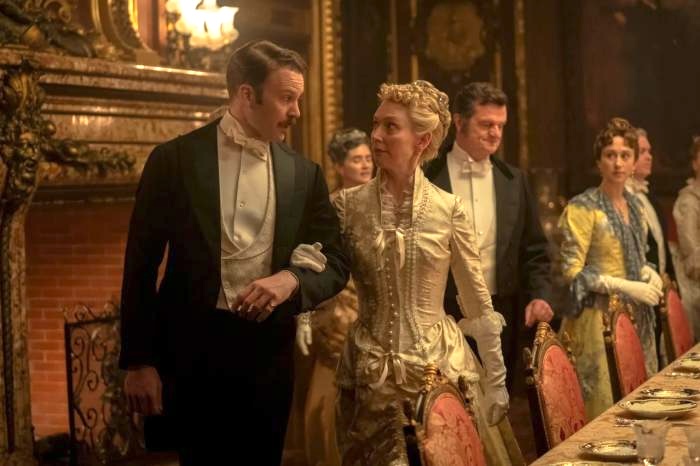
HBO’s The Gilded Age has had a banner season so far. The series has improved much of itself in its embrace of tension and conflict, and shaped its first true arch-villain. The series has also recognized the value of Denée Benton’s Peggy with a juicy storyline that pits her against her doctor beau’s traditionalist mother (played by Phylicia Rashad!). It’s a markedly better and more compelling series to watch in its third season than it’s ever been before. That said, The Gilded Age still knows how to disappoint. The remarkable and very welcome improvements also emphasize what still needs work. The difficult downside to getting better is the high standard that comes with quality. With The Gilded Age being so character-driven, let’s look at the treatment of two different characters to see how they show the series at its best and its worst.
When Hector, Duke of Buckingham, arrived at the Russell manse with his sister Lady Sarah, I clocked a rather striking amount of Crimson Peak vibes between them. Hector and Sarah haven’t been revealed as incestuous siblings (yet), but there’s an adjacent over-attached energy between them. Hector seems to be a chump with a meager ration of spine, and his sister Sarah is only too happy to take charge. With a ramrod posture and a tightly wound half-smile, Lady Sarah is a perfect addition to the kind of fizzy, well-heeled period drama The Gilded Age is becoming. She’s elaborately, fantastically obtuse, wondering aloud absurdly why Gladys has to come back with them to England after the wedding. Sure, they desperately need Gladys’ claim to the Russell fortune to maintain their aristocratic standing, but Sarah can’t seem to imagine anything more vulgar than having the heiress along with them on their hunting trip to Scotland.
Lady Sarah is well-equipped for her purpose as a fun and impactful antagonist. Her weird, intense energy makes her fascinating to watch, and her actions are properly motivated. Assuming that The Gilded Age won’t go there with an incest reveal, Lady Sarah appears to seek control. Hector is a pushover, so manipulating him is almost certainly easier than marrying another titled jerk. That Sarah ridiculously thinks they could take Gladys’ money and leave her behind speaks to Sarah’s inflated sense of power. She’s also an excellent villain because it’s simply delicious to see her defeated. Bertha swans in to clash with Sarah and teach Gladys how to put the uppity sister-in-law in her place. Seeing Bertha go up against some stuffy society asshole is one of the series’ most reliable pleasures. Their conflict also gives Bertha some measure of redemption, and as a treat, viewers got to see Gladys finally stand up for herself.
In contrast, John Adams IV turned out quite poorly as a character and typifies The Gilded Age’s weaknesses. Can someone rightly call a human-shaped plot device like John a character? He’s seen sporadically in the first season to establish Oscar’s secret homosexuality. John had the secondary function of being a mildly chiding voice of reason in Oscar’s life, like when he questions why Oscar pursues Marian and invites Oscar to live a secret gay life together. Outside of these interactions, John is absent from the series until the third season. John appears and offers to support Oscar, saving the sad man from the sad pits of destitution. Just as Oscar can begin to dream of easy leisure, John dies, suddenly run over by a carriage.
The tender moments Oscar later has with John’s sister keep the death from being too disposable, but it’s a deeply cheap move. I’m tempted to call John a token queer character, but did he even qualify as that? He existed purely as a supporting character in Oscar’s story and lacked even the barest trait that could hint at a deeper identity. It would have been acceptable to leave the character behind in the series’ steady climb in quality. Bringing John back only to kill him off makes the character something worse than a token. John is just a victim of fridging. Named by Gail Simone, the trope “women in refrigerators” refers to the phenomenon of killing off the girlfriend to motivate the male hero. Like the “girlfriend,” John lacks all but the most superficial traits because he was made to die. To whatever extent John’s death is sad, it’s only to the extent that it impacts Oscar. It’s a lazy way to raise stakes and give the hero some trauma to deal with. Besides, the death of a barely-there character has virtually no impact at all. How do viewers mourn someone they never knew? Building John out as a character on par with Oscar would’ve made his death much more effective and would have avoided the odious stench of fridging.
A flawless series isn’t possible, and all shows have growing pains. The Gilded Age is no exception. When it did so little well, it was easy to laugh off its foibles, but now that it’s doing so much better, its weaknesses are all the more clear. It proves its savvy with characters like Lady Sarah, but still falls back on bargain-bin tropes by fridging John.


