
Old School. Biblically Independent.
By Jen Maravegias | Think Pieces | April 13, 2026
When Star Trek premiered in 1966, the United States was embroiled in an unpopular "war" that it could not win. Racial tensions were high, the Republican Party was ascending, and The Beatles broke up. Culturally, it was not that different from where we are today.
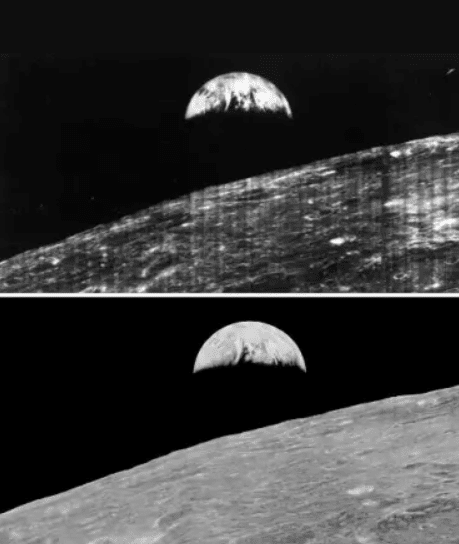
In August of that year, NASA launched Lunar Orbiter 1. It was the first U.S. spacecraft to orbit the moon. Its primary mission was to photograph the moon's surface to identify safe landing areas for future missions. It sent back a treasure trove of images, including this historic "Earthrise" shot.
Star Trek premiered a month later. Building on the optimism and hope that the NASA mission had laid a foundation for, Gene Roddenberry's vision of the future of space travel was almost beatific. The Enterprise's mission was not war, expansion, or colonization. Kirk and his crew were just tooling around the galaxy to see what there was to see. They weren't looking to strip mine planets for resources, and the one rule they had (that was often broken) was not to interfere with the indigenous peoples of the planets they visited.
Gene Roddenberry gave us hope that the human species would find its way away from racism, war, and environmental destruction into a future when we would share this planet in peace. And that we would take that sense of peace with us out into the stars.
In 2026, the future does not feel as bright as the one Gene wanted for us. The American public lost interest in space exploration after the losses of the Challenger (1986) and Columbia (2003) space shuttles and their crews. Space exploration is expensive and dangerous. How could we justify spending so much money on space travel when so many people were starving? When wars needed funding? Politicians saw the vast expanse of space as too theoretical to focus on when so many domestic issues were more popular. Our own planet had enough problems, so why were we spending so much money to see other planets?
If you know any scientists, you know they don't let go of things very easily. The scientists, mathematicians, and engineers at NASA have a singular, unwavering focus: to get us into space. And they did it last week with Artemis II.
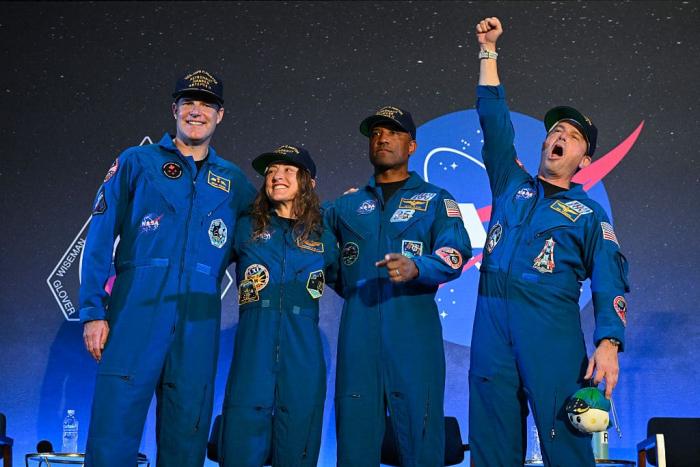
Artemis II was the first crewed flight of the Artemis program, which is focused on returning humans to the moon for the first time since 1972. It was also the first crewed flight beyond low Earth orbit since 1972. The crew of Artemis made history themselves.
Victor Jerome Glover Jr was the first Black man to travel beyond low Earth orbit. Christina Koch was the first woman to do it. Jeremy Hansen, of The Canadian Space Agency, was the first non-American to travel beyond low orbit, and Commander Reid Wiseman was the oldest person to do it. They're all the first members of Gen-X to travel so far. Together, they set the record for human distance from Earth, 252,756 miles (406,771 km), breaking Apollo 13's record of 248,655 miles (400,171 km).
During their ten days in space, the crew of Artemis II gave us so much to think about and so much to look at. They shared more about their journey than any crew before them has. NASA used social media and YouTube to give us live feeds and direct looks at what they were seeing and eating.
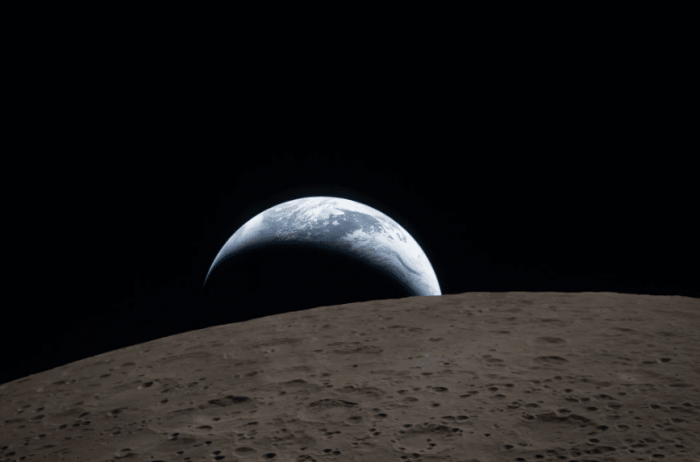

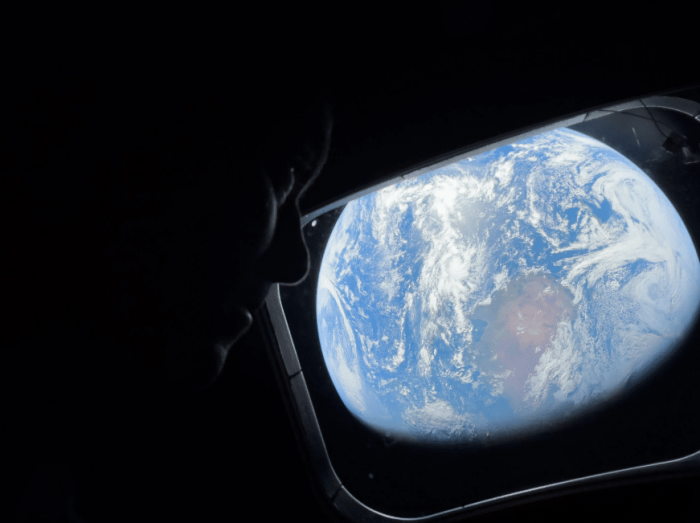
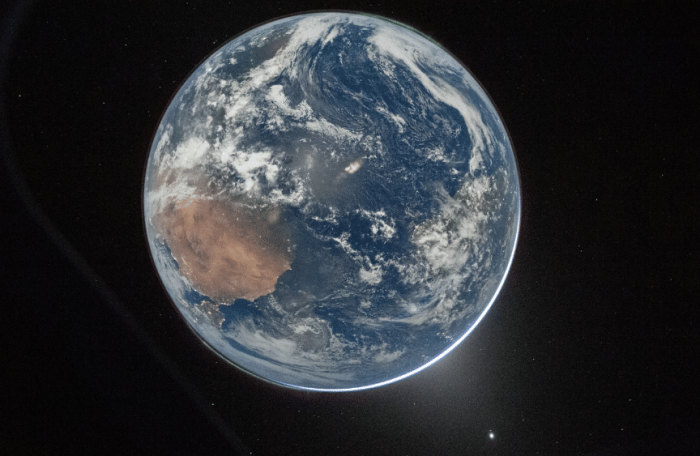
Artemis also carried some very special relics aboard on its mission. The Smithsonian gave them a one-inch square of canvas from the Wright Brothers' plane. The American flag originally intended for the canceled Apollo 18 mission was aboard the Artemis II Orion spacecraft. The booster rockets were made with parts from both the Challenger and Columbia missions. Thanks to the Send Your Name With Artemis campaign, the Artemis II mission carried the names of 5,647,889 people around the Moon. And an eight-year-old boy in California got to watch the stuffed toy he designed go to space, acting as the mission's zero gravity indicator.
We humans here on the ground had more ways to connect with and more connections to this space flight than in any previous flight. Not only did Artemis II connect us to the astronauts on board, it connected us to each other.
Last week, we were all "moon-scrolling."

It healed a lot of trauma and anxiety we carried after watching the tragedies of Challenger and Columbia. When they splashed down safely, we all collectively breathed a sigh of relief.

Artemis II gave us back something we had lost. It gave us back hope for the future that Gene Roddenberry promised us. We have all been so overwhelmed by this dystopian hellscape created by the current rise of right-wing extremism that we forgot what wonders there are just beyond the horizon. We forgot what amazing things we're capable of when we work together to accomplish something.
More than parades and protests, maybe what we needed was this reminder that we are still capable of doing great and beautiful things to galvanize us for our fight back to that hopeful future Gene Roddenberry gave us a glimpse of in 1966. If watching the Artemis II flight sparked, or rekindled, your sense of hope, you need to use that energy so we can fight our way out of this Parable of the Sower dystopia and back onto the timeline where Gene's vision is possible.
View on Threads
Thank you, Gene.
Thank you, NASA. Thank you, JPL.
Welcome home, explorers. Thank you.


