Old School. Biblically Independent.
By Kayleigh Donaldson | Film | March 4, 2026
The current Oscar season is a good one. We've been spoiled by an array of great movies, even with some painful cuts to the shortlists, and with it has come one of the strongest awards races in a long time. The fight for Best Picture is between Sinners and One Battle After Another, and a win for either would be both highly satisfying and thoroughly deserved. Truly, it says something about the strength of Best Picture when Guillermo del Toro's Frankenstein is one of the weaker offerings. Making this year even more fascinating is the distinct lack of a villain. There's no competitor that everyone has rallied against, no anti-critical darling that feels out of place among the nominees. We're used to having at least one movie to root against, that representative for the Oscars' worst sensibilities. But in 2025/6? What, is it F1? Hardly. I don't think even that movie winning, as unlikely as that would be, would inspire a deluge of think-pieces from people like, well, me.
Of course, having a remarkably stress-free awards season got me thinking about the exceptions, the ones where the victor in the top category of the night was so egregious that it aged poorly from the moment the envelope was opened. Which Best Picture winner over the past century is the absolute worst? Frankly, there are a few contenders to choose from.
The Oscars aren't best understood as a measure of merit or creative success. It's an organisation established by studio bosses to circumnavigate dealing with unions that stuck on an awards ceremony to legitimize its image (and promote its own endeavours.) Separate from those origins, the Academy still views itself as the exemplification of Hollywood. They stand tall as what the industry believes to be the best image of itself: classy but mainstream, important but for the people, and the arbiter of taste.
The Oscars aren't about who's the best but how Hollywood wants you to perceive them. So, of course they love stories that make them look good, whether it's biopics of important men or social dramas about how we're all a little bit racist. They like movies where all the hard work is on the screen, from lavish musicals to period pieces. They like stories about themselves, about America and its glories. And they don't typically like outsiders, whether it's indie producers or films made in languages that aren't English. They've always chosen their wins from a limited pool. And even then, they can still f**k it up.
From the beginning, the Oscars was motivated by self-interest over artistic joy. MGM, headed by Louis B. Mayer, received the most Best Picture nominations when the award went to the studio or production company rather than a named producer. He was known for rallying his employees who were also Academy members to vote for the home team. That meant big wins for big movies like The Great Ziegfeld, a lavish musical drama that has not aged well, over now-legendary titles like Dodsworth and Mr. Deeds Goes to Town. Rule players have always fared better than those who sought to operate outside of the system. The '70s heralded some much-needed change but then the '80s saw some of the creakiest Best Picture winners beating genuine legends and trailblazers. In the '90s, Oscar campaigning became a full-time job, with people like the Weinsteins gamifying the race to ruthless effect. The battles for the top awards got nastier, and so did the rhetoric against perceived competition.
A lot of the contenders for Worst Best Picture aren't necessarily garbage movies, but ones that took the trophy over far more deserving nominees. How Green Was My Valley beating Citizen Kane did that movie no favours. Shakespeare in Love is a very charming romantic drama but it beating Saving Private Ryan thanks to Harvey's meddling will always leave its win with an asterisk next to it. Driving Miss Daisy is mostly dull and patronising, buoyed by good performances and a catchy score, but it will forever be known as the movie that won Best Picture in the same year when Do the Right Thing wasn't even nominated.
Genuinely inept films do get nominated for Best Picture but most mercifully don't win. Bohemian Rhapsody is so poorly made that I'm stunned it didn't crumble off the screen during its premiere but Academy members were clearly dazzled by the money it made and some familiar tunes. Extremely Loud and Incredibly Close is truly awful in ways that boggle the mind, and its nomination in 2011 feels like a joke, but it was allowed to disappear into obscurity once it lost. If that had won, I truly believe it would be the winner, far and away, of the worst Best Picture film of all time. But it didn't, so who's on top/bottom?
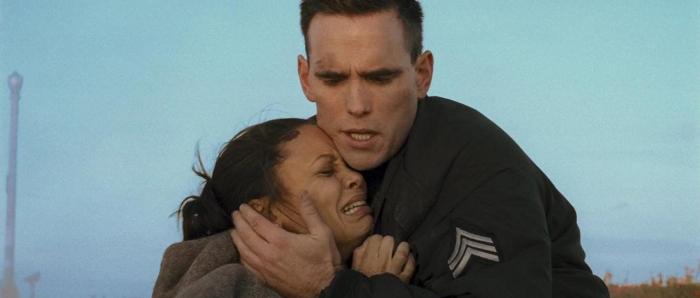
There are some obvious candidates. Crash is patronising and smug in its cack-handed take on race, so unsubtle and self-satisfied that it turns some of Hollywood's best actors into mouthpieces for CNN-style 'both sides suck' faux debates. It beating Brokeback Mountain exacerbates its awfulness. Green Book is similarly infuriating in its smarm, positioning itself as a great uniter across racial lines while treating its Black character, a real gay Black man with a life story far more interesting than what is told here, like a punching bag for cheap insults and t-shirt print philosophy. Out of Africa is tedious and focused on white people nonsense, and feels especially egregious as a winner when, in the same year, The Color Purple went home empty handed.
But it's easy to overlook the Best Picture winners that predate our general knowledge. The '50s and '60s were full of inexplicable choices, many of them bloated epics and mega-musicals that priced excess over narrative. Around the World in 80 Days was a long-winded roadshow flick shot on 70mm with a huge cast of familiar faces, and it made a ton of money. Nobody remembers it these days, especially when compared to its fellow Best Picture nominees, Friendly Persuasion, Giant, and The King and I (not nominated: Written on the Wind, which would have been my winner.)
In lists of the worst Best Picture wins ever, The Greatest Show on Earth is always included. It won in 1953, beating High Noon and The Quiet Man, the former of which was heavily favoured among critics. It's a bloated drama about a circus that features Jimmy Stewart as the scariest clown this side of Pennywise. The movie made a ton of money and is certainly epic in scale but it's also overlong, portentous, and utterly joyless. This is a film that believes itself to be hugely important, but it's also functioning as barely veiled propaganda for the Ringling Bros. and Barnum & Bailey Circus, a notoriously garbage organisation with a long history of animal abuse. A decade prior, during a performance in Hartford, Connecticut, the Big Top tent caught fire and 167 people died. The Greatest Show on Earth makes a point of noting that their tents are all fire-proof now.
Its Best Picture win seems to be a slap on the back for Paramount because it made so much money at a time when Hollywood was terrified of TV stealing their audiences. Director Stanley Kramer theorized that the win was political, with the McCarthy witch-hunts in full force at the time and High Noon being produced by Carl Foreman, who would soon appear on the Hollywood blacklist. By contrast, DeMille was a very proud conservative who was anti-union (and had also never won a competitive Oscar, which surely helped his cause.) Also, guess which film wasn't even nominated for Best Picture that year? Singin' in the Rain! But becoming known as one of the greatest movies ever made helps to numb that wound, but it might steal The Greatest Show on Earth's status as one of the Worst Best Picture wins.
Personally, I'll never get over the Crash win. It's not just that it's a bad movie, or that it beat a far better one. It's that the Academy clearly thought it was being so progressive in choosing a film about race, but they couldn't conceal their bigotry to celebrate the film about gay men. The win exemplified why the Academy is so aggravating: they wanted the glory of being forward thinking without doing the work.
I do feel like things have gotten incrementally better over the past several years. Parasite's win would have been unimaginable only a decade prior. It's still amazing that a multiverse sci-fi dramedy with an extended gag about butt plugs won this award, and last year, a screwball comedy about a sex worker took it home. This year, the Academy eschewed a lot of safer choices to embrace movies like The Secret Agent, Bugonia, and Sinners. Dare I say it, we've gotta hand it to them.
That's not to say that they won't f**k it up again in the future. They're a Hollywood organisation dominated by rich white people who don't like change. Let's not pop out the champagne just yet. Still, any year where we don't have to worry about an Emilia Perez or Crash ruining the party. It could always be worse.


