
Old School. Biblically Independent.
By Alison Lanier | Film | August 26, 2025
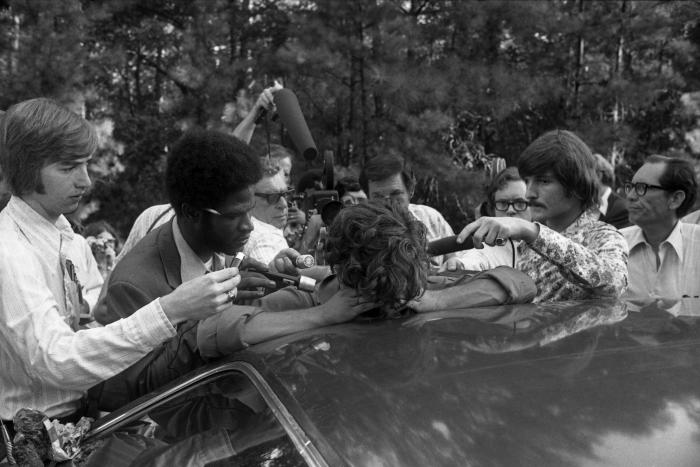
Following in the footsteps of the very real serial-killer study project that inspired Mindhunter, The Serial Killer’s Apprentice is a relatively restrained and fairly self-aware documentary about a victim turned killer.
The spine of the short documentary is the interviews that serial killer expert Dr. Katherine Ramsland conducted over the course of years with Elmer Wayne Henley. In the early 1970s, a teenage Henley was groomed by serial killer Dean Corll and helped Corll commit what would later be called the Houston Mass Murders. Dr. Ramsland carefully unfurls Henley’s story. He wasn’t Corll’s only accomplice; David Owen Brooks, then a boy Henley’s own age, was apparently uninterested in talking.
Henley, though, was the one who shot and killed Corll before confessing to the police.
In these jailhouse interviews, Henley tells his story to Dr. Ramsland. She is an author with a huge range and number of books to her name, as well as Professor Emerita of forensic psychology and criminology at DeSales University. Needless to say, she knows what she’s doing.
Dr. Ramsland navigates self-serving moments in Henley’s version, intentionally not challenging her subject at some moments and pushing back at others, in a natural-sounding but very effective strategy of trust-building. Her interview style is a mix of TV interviewer—energetic, engaged, hanging-on-your-every-word that convinces the subject that he is so valuable, so interesting, that he’ll just keep talking—and academic methodology, tracing a thorough biography with her questions.
Henley was the only accomplice who agreed to be interviewed, which gives its own indication of willingness to step in and shape a narrative. The motivation for that may be any number of things, from earnestness to self-vindication. Henley doesn’t have the intellect or cunning to have stood up to Corll—-at least in his own telling. It’s a cult-like narrative, with Henley describing how he was crafted by Corll into someone who would do the horrific things Corll needed him to do. There was no other reality, Henley says.
But this isn’t the Sherri Papini (blegh) style of true crime, where a con artist sits in front of a camera and tells ‘their side of things’ with no apparent purpose other than drawing in eyeballs. Nobody is asking the viewer to believe or to disbelieve Henley, but he’s also treated with clear skepticism. Dr. Ramsland was researching for a book, with the goal—not of tell-all revelation, though she gets that too—of examining the psychology of the person telling her the story. Helpfully, she describes her methods and process in the introduction of her book of the same name, The Serial Killer’s Apprentice.
She’s not trying to tie up loose ends but to more clearly define what, psychologically, we don’t understand about these kinds of killers, in much the same way as the (now-famous) series of interviews that became Mindhunter did. And what she turns up with is: a void. We don’t have the vocabulary to talk about killers like Henley, who apparently killed under the spell of a one-man cult.
It’s a fascinating acknowledgement of the unknown—with the refreshing twist that Dr. Ramsland doesn’t jump past the nuance to a catchphrase conclusion. Instead, she uses her conversations with Henley to highlight a lack in the general understanding of violence. Where is the line between victimhood and culpability, where manipulation and coercion took a young, isolated man into both categories simultaneously?


