
Old School. Biblically Independent.
By Alison Lanier | Film | September 23, 2025
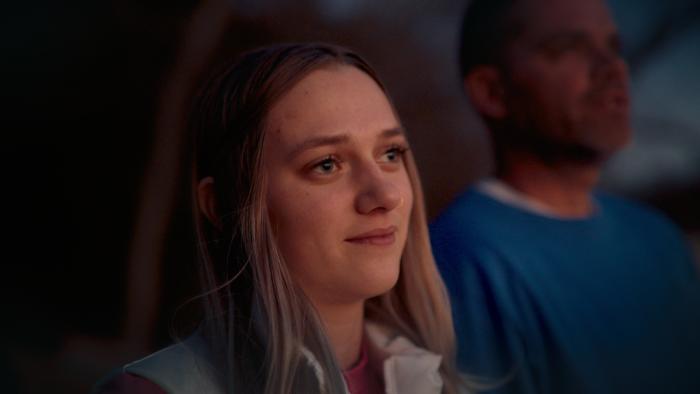
In the never-ending deluge that is the true-crime streaming market, most titles fade within weeks, if not days. Unknown Number: The High School Catfish remains an exception. Mentioning it even weeks after its release still elicits a wide-eyed pause and a can you believe it? This latest documentary from Skye Borgman (Abducted in Plain Sight, Girl in the Picture) is a horror story that delivers a question without an answer.
If you haven’t watched it yet, get thyself to Netflix and hit play. It’s a short documentary, coming in with a runtime of 94 minutes.
Beware: here be spoilers.
The story is straightforward on the surface: In a small town in Michigan, a teenage girl, Lauryn Licari, and her then-boyfriend, Owen McKenny, start getting messages from an unknown number. The messages come in at a clip of dozens and dozens a day. They’re obscene, abusive, and horrifying, targeting everything about Lauryn from her relationship to her body to her performance on the high school basketball team. The texts escalate, lashing out at more people in the teens’ network, even dropping hints that falsely implicate other students in the messages. The school authorities and overstepping parents remain powerless to track down the perpetrator, as do the local police.
That changes when the case was escalated to the FBI and subpoenas started flying. IP addresses are tracked, and the suspect pool is narrowed down to one.
One explanation for Unknown Number’s extraordinary sticking power is perhaps obvious: the identity of the perpetrator. Lauryn’s mother, Kendra Licari, was the one who spent more than a year harassing her own daughter to the point of telling her to kill herself. While hiding the fact that she had lost her remote job and allowing bills to go unpaid—leading to the family’s eviction—Kendra was also using her tech knowledge to generate untraceable, randomly generated phone numbers and blasting out vicious texts at all hours of the day and night.
There’s the added weight that it is still impossible to really answer the why of it all. One interviewee suggests a sort of Munchausen by proxy—victimizing and traumatizing her own daughter to accrue sympathy and importance for herself during a time she was adrift in her life. Another suggests a strange obsession with Owen, which tracks with the sexual nature of most of the messages. Kendra herself remains wide-eyed and apparently baffled by her own actions, for whatever that’s worth.
The people featured in the documentary remain profoundly human, rather than becoming characters. In that vein, another factor in the documentary’s persistence is likely that so many of them are clearly children—teenagers who can’t be abstracted into the kinds of stereotypes and familiar plot arcs that true crime as a genre has primed its audience to expect. That also makes the abusive messages additionally horrific: these are children. They’re not adults looking back at their high school days, but the high schoolers who have only recently emerged from this story. It’s a matter of a handful of years, not decades, for them.
The morality of drawing on these kids’ stories, pressuring them to relive their trauma, is an open ethical question. The same can be said for just about the whole of the exploitative genre of true crime. As a filmmaker, Borgman reads to me as someone who exercises a higher-than-average level of care with her subjects. I hope that I’m right. The profound level of voyeurism in this film is in lockstep with the rest of its fellow true-crime shockers. As always, the question remains: what exactly is the ethos in telling true crime stories at all?
Of the considerable true-crime flash sensations that do manage to linger, a few sink into the DNA of pop culture, sometimes in a deeply damaging way. Gone Girl went from fiction to being applied to actual women’s stories, transformed into a lens for law enforcement to disbelieve victims. But I’m optimistic that Unknown Number might land more on the side of empowering victims by introducing its narrative into the pop culture space. Where investigators initially disbelieved the kids or were tempted to shake off the whole thing as a teenage prank, to have the end of that story land with an unstable parent tormenting their own child…Well, in its ugly shock value, it drives home that this kind of harassment is nothing to shrug off or look away from.


