
Old School. Biblically Independent.
By Kayleigh Donaldson | Film | July 10, 2026
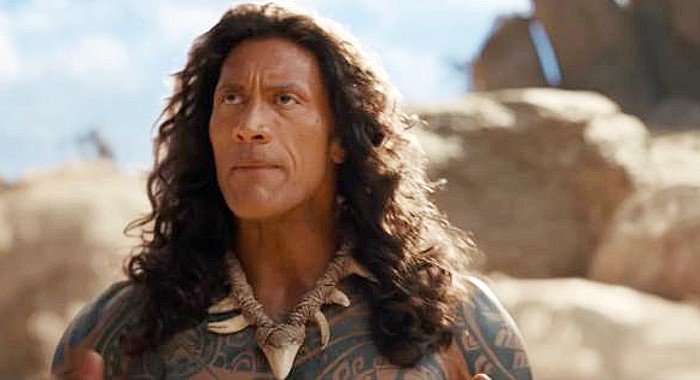
Is it fair to say that none of us expected the live-action remake of Moana to be good? Released only a decade after the original, with Dwayne Johnson reprising the role of Maui, the film seemed so clearly like a craven cash-in from the moment it was announced. Everything about it reeked of a total lack of necessity. The characters looked identical to their animated counterparts, many of the voices from the original returned for the same roles, and, line-for-line, little seemed to have changed.
The reviews did nothing to quash our scepticism. IndieWire said it was “really not an exaggeration to call it a shot-for-shot facsimile on par with Gus Van Sant’s Psycho.” Tasha Robinson wrote for Polygon, “There’s no artistic or aesthetic reason for this movie to exist.” The Playlist declared, perhaps most damningly, that “this film is destined for great viewership in households that accidentally click the wrong tile on the service and can’t reach the remote to change back to the original.” Well, mission accomplished?
For the past 16 or so years, Disney’s strategy of doing live-action remakes of its most beloved animated titles has provided the House of Mouse with a major financial boom. Many of these titles are some of the highest-grossing films of all-time, soaring past $1 billion in grosses. Disney was hardly a stranger to remaking or sequalising its iconic works before that, but the current era has been one of a particular kind of ruthlessness. These films often feel as though they barely qualify as films. They’re brand expansion exercises, strengthening the aesthetics and merchandise-friendly aspects of the originals that made them so marketable in the first place. Audiences have loved them. I find it depressing as all hell, as do most critics.
Tim Burton’s Alice in Wonderland kicked off the current trend in 2010, with an action-adventure take on Lewis Carrol’s story that, to its credit, wasn’t obsessed with copying the animated film scene for scene. The end result was certainly one of Burton’s weaker efforts, with any visual flair tempered by the desaturation of colour that accompanied a 3D transfer. It was also a huge hit. Of course Disney doubled down.
The formula soon became evident: take one of the more recognisable Disney animated features, remake it with zealous faithfulness, but add a few twists here and there in the name of “modernising” the material. So, Belle in Beauty and the Beast gets to be an inventor who tries to save herself but not really. Dumbo ends with a plea to keep animals out of zoos. Mulan removes all the songs so that Mulan herself can become a serious warrior without the distraction of Eddie Murphy. But don’t think that these shifts make them too distinct from the originals. While they make for excellent exercises in redundancy, they’re also films that are oddly tough to watch without having seen their predecessors. It feels like you only have the line work with the remakes and the originals add everything else.
You have to feel for the directors, overworked VFX workers, and crews trying to make these films work. Some aren’t so bad but they all reek of incuriosity. There’s only so much a writer or filmmaker, even one with clout like Jon Favreau or Barry Jenkins, can do with these iron-clad IPs bequeathed to them by Disney executives. The moulds have also gotten more restrictive as the films chosen for remakes (or sequels to said remakes) get, let’s be honest, more pointless. Either you tackle a stone-cold classic like The Little Mermaid where everyone is too afraid to mess with perfection, or something where the material is just too fresh to play around with. Or, as happened with Snow White, you take a ground-breaking work that doesn’t have a ton of modern-day fans and try to interject clumsy contemporary themes alongside a carbon copy of the visuals. And they all, for some reason, have the same bland cinematographic palate that leaves everything looking dingy and sad.
My complaints, of course, are not backed up by audiences’ responses. The money speaks for itself, as do the kids who are now growing up with these films at the forefront of their minds (and as the starting titles for their Disney+ deep dives.) I can be a grouch all I want - and I will, thank you! - but the numbers speak for themselves. Did you see how much money that weirdly soulless and ill-judged Lilo & Stitch remake earned? But not every film is breaking the bank like this. Snow White flopped. Most of you probably forgot that there were remakes of Pinocchio and Peter Pan on Disney+ (for good reason.) The studio seems to have realised that the formula works best with films that millennials and Gen Z-ers grew up on. The more recently they were released, the better.
So, how does that formula work when you begin to run out of material? Do they just keep plundering the 2010s as though it’s an infinite resource? A Tangled remake is on the horizon. So are sequels to Cruella and Lilo & Stitch. Many of the shelves remakes that had been announced years prior, like Sarah Polley’s Bambi or The Hunchback of Notre Dame, were of older properties or ones where beat-for-beat remakes would be, well, tricky. And the current output of Disney animated titles has been somewhat spotty. For every Frozen or Encanto, there’s a Wish. Plus, many of the more acclaimed works have been all but ignored by Disney since they didn’t make enough money for their liking, forcing them to focus on, you guessed it, sequels. This is a company already in the midst of a major cycle of self-cannibalism, but they’re falling precariously close to gnawing on the bones.
Moana is, as of the writing of this piece, projected to gross between $60—65 million domestically. Those ticket sales are just barely above the original, which opened to $56 million, not adjusted for inflation. According to Variety, “some exhibitors and rivals are predicting an even softer start around $40 million, which would be catastrophic given that “Moana” carries a massive $250 million production budget — and that’s before the studio’s hefty global marketing spend is taken into account.” Whether or not this remake is a success, it seems unlikely that the company will change course. What does it have left to replace this strategy of endless IP plundering with? Original works by exciting new storytellers? Ha.


