Old School. Biblically Independent.
By Kayleigh Donaldson | Film | May 20, 2026
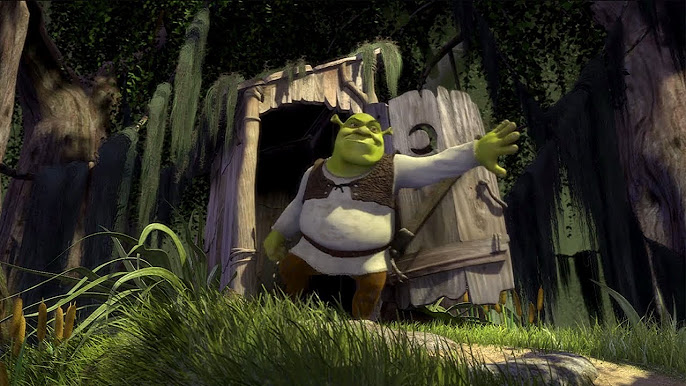
Shrek is now 25 years old. It’s old enough to be as obsessed with itself as a surprising number of Gen Z-ers are. The DreamWorks animated comedy might be one of the most crucial foundations of 21st century Hollywood pop culture, and its legacy has only grown mightier as younger generations, possibly ironically, latch onto it with gusto. You can go to Shrek rave nights. You can see Swampesque shows, complete with stripping ogres. Shrek merch is plentiful. The fervour for a fifth film was so full-on that the backlash to a brief teaser reportedly sent the filmmakers into a rewrite panic to meet lofty expectations. The future is green, snarky, and possibly from Glasgow but we’re not entirely sure even Mike Myers knows.
The lore of Shrek is already the stuff of pop culture lore. After leaving Disney following a battle against CEO Michael Eisner, Jeffrey Katzenberg set up DreamWorks SKG with David Geffen and Steven Spielberg. They were going to revolutionise the entertainment industry with the first new studio in decades. Moreover, Katzenberg was going to beat Disney at their own game with an animation division that could topple the House of Mouse during the Renaissance he had helped to birth. They focused on traditional 2D animation at first, with a lavish take on the Exodus story, The Prince of Egypt, that Katzenberg was convinced would become the first-ever animation to win the Best Picture Oscar. He had the best people working on it, and those who weren’t up to scratch were demoted to the B-project, a 3D adaptation of a children’s book by William Steig that was set to star Chris Farley. And we all know what happened next.
By the time Shrek premiered, Disney was entering a critical and commercial downturn as they moved away from their princesses and classic lore formula in favour of non-musical movies with more niche inspirations and a lot more Phil Collins tunes. People get tired of the stuff they used to love, so when Shrek turned up with a scathing parody of Disney’s sanitized happy-ever-afters, one that took direct shots at Eisner and painted Disneyland as a pseudo-dictatorial hellhole, they sat up and laughed. Nowadays, mocking Disney is like shooting fish in an extremely expensive barrel, but DreamWorks tapped into the growing snark of the 2000s that seemed daring. Shrek was crude, yes, but genuinely funny. And there was something to be said about a movie where beauty didn’t win the day. If your childhood was dominated by tales of the ugly baddies being punished, seeing the ogres get their love story was certainly a welcome alternative.
In the great animation battles of the early 2000s, DreamWorks claimed a lot of victories. Shrek had its world premiere in competition at the Cannes Film Festival. It was the fourth highest-grossing film of 2001, and it became the first-ever Best Animated Feature Oscar winner, beating Pixar’s Monsters Inc. Eddie Murphy would become the first-ever actor to receive a BAFTA nomination for a voice-only performance for his extremely quotable turn as Donkey. DreamWorks would often be accused of shamelessly ripping off Disney, particularly with the Antz/A Bug’s Life debacle, but Shrek was 100% an un-Disney product. It gave DreamWorks the identity Katzenberg desperately sought out: the scrappy farting underdog that could beat his nemesis on their own patch.
As a Scot, the enduring popularity of Shrek is fascinating. Mike Myers took over from Farley after his death and decided, despite being a Canadian with English parents, to do a Scottish accent. It’s not a bad one, per se, although I think he did it far better in both Austin Powers: The Spy Who Shagged Me and So I Married an Axe Murderer. Mostly, we didn’t get why he did, but Scots welcomed it. At one point, the Scottish tourism board made Shrek his own tartan. Hey, it was better than Mel Gibson’s attempt and we got to be the hero, even if it seemed somewhat rooted in an “ahaha, weird accent is funny” sentiment.
The fandom it all spawned, frankly, deserves a deep lore dive that would rival that of Sonic the Hedgehog. The memes got weird, veering between purposefully bad and densely surreal. Some of it is certainly a big joke, a middle finger up to the world in a way the first movie was, but I think some of it carries a vein of sincerity. Even Shrek at its snarkiest knows that we love the fairy-tale happy ending for a reason.
While Shrek had one great sequel in the second one, the third film was such a disappointment that most people pretend it doesn’t exist, and the fourth one, which was far better, is also frequently forgotten about. DreamWorks lost the balance and drove the franchise into the ground with more and more bad pop culture references, celebrity cameos, and a continued mockery of Disney that felt out of date as that company hit a low point. What people, especially younger generations who didn’t see them the first time around, remember is that first work. It was the fairy-tale parody for a new era, the post-Disney snark-fest laden with pop culture references that reimagined what young audiences wanted in a new millennium. And, like everything else we love, the corporation behind it made it tired really quickly, so fans had to reclaim it through jokes, green paint, and Smash Mouth sing-alongs. I highly doubt that the fifth film will recapture the magic, especially if it ends up trying too hard to pander to those fans, but at least those kids will have the last laugh.


