
Old School. Biblically Independent.
By Chris Revelle | Film | July 31, 2026
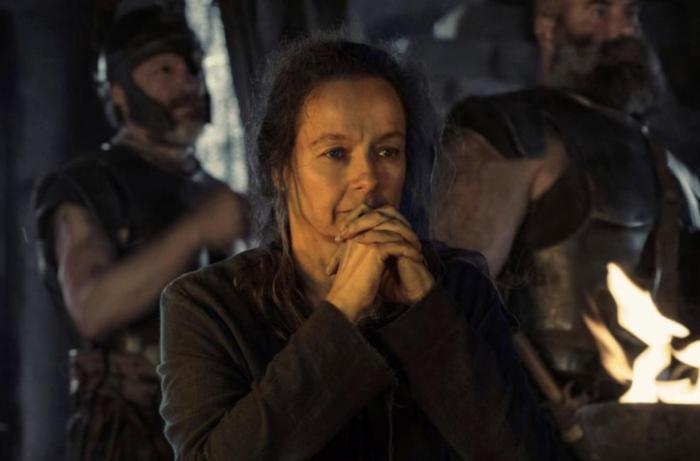
That Christopher Nolan doesn’t handle female characters in his movies very well is not a novel observation. In his films, women ultimately exist to motivate or support male heroes. There are malevolent wraiths like Marion Cotillard’s Mal and principled pseudo-girlfriends like Katie Holmes’s and Maggie Gyllenhaal’s Rachel Dawes, characters so simple in their construction that they’re more like emotional elementals that symbolize more than they breathe. The Odyssey stands as Nolan’s best effort with female characters to date, but it’s a low bar to clear. Charlize Theron’s Calypso is the weakest, rendered as a wistful figment with an unrequited love for Odysseus. Lupita Nyong’o and Anne Hathaway channel simmering outrage at the misogynistic system around them in which men contrive romantic pretenses for their wars. The film’s greatest feat on this front lies with Samantha Morton, whose performance as Circe transcends Nolan’s limitations to run away with the whole movie.
While the film doesn’t go as far with this theme as it could, The Odyssey is interested in re-appraising the female characters of the story. Its imagining of Circe is an almost total departure from the original epic. Instead of a goddess, Morton’s Circe is reimagined as a witch gifted with knowledge and insight from the gods. She still transforms Odysseus’s men into pigs, but it comes across as much less predatory. Circe seems genuinely afraid of what Odysseus’s men might do. She seems to assume they will eventually attack, indicating that it’s something that’s happened to her before.
This fits into Nolan’s guilt-ridden vision of ancient, mythical Greece, where the social contract has been broken so thoroughly that society crumbles with it. In a world so hostile and paranoid that villagers burned their homes down when they saw Odysseus’s ships, it’s not surprising that Circe had to defend herself. This contextualizes her actions, making them feel of a piece with a world turning against itself. Circe’s actions feel, if not justified, then understandable in light of how it’s everyone for themselves in a post-Trojan war world.
The other female characters of The Odyssey are defined largely by singular emotions like rage or melancholy, but Morton’s take on Circe is much more textured and complex. With eyes sharp and bright, Morton makes Circe simultaneously fearsome and fearful. When Circe begins to mold the men into their new porcine forms, Morton’s face contorts into a strange ecstasy, as if she’s stretching out a forgotten muscle. As she’s forced to return the pigs to human form, she whispers for them to “return to your disguises,” with muted anger and resignation. When she says that her sister was turned into a crow because they get along better that way, Morton infuses the short line with such knowing ruefulness that I felt I knew their unseen backstory.
This feels all the more remarkable in light of the director’s shortcomings. Nolan is a brilliant director, but his weakness with female characters is well-noted. In one brief scene, Samantha Morton reached beyond the material to create the most human-feeling character of the whole movie. Morton’s Circe electrifies The Odyssey, and if Academy voters don’t keep her in mind when Oscars season rolls around, they’re all fools without eyes to see Morton’s searing power.


