Old School. Biblically Independent.
By Tori Preston | Film | November 21, 2025
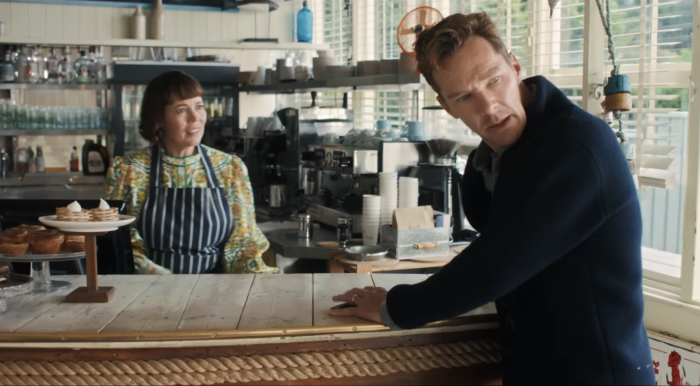
We’ve all heard the statistic that in America, nearly half of first marriages end in divorce. A statistic, though, doesn’t tell the whole story. Why do marriages fall apart? How can love turn so sour? Enter The Roses, a heady mix of mundane reality and heightened fantasy that charts the decline of Theo and Ivy Rose’s marriage from petty resentments to zany sabotage. Yet as we watch this couple fall apart, we can’t help falling in love with them ourselves, rooting for them to hold on — and that, it turns out, is the greatest trick the movie pulls. Here, divorce isn’t inevitable. And the sharpest thorn turns out to be the hope that maybe love can survive marriage after all.
To the surprise of absolutely no one, screenwriter Tony McNamara (The Favourite, The Great) nailed it. In crafting a modern update of the 1989 film The War of the Roses — and the novel on which it was based - he decided to focus more on the marriage itself rather than the process of divorce. When the novel was written, divorce in America was at its height — it was seemingly inevitable — but the pressures on married couples looked very different than they do today. For Theo (Benedict Cumberbatch) and Ivy (Olivia Colman), those pressures stem from two strong egos struggling to find balance at home and in their careers. What McNamara understands is that marriage is a long game, and there are lots of small moments and big decisions that can shift that balance over time. And in a lot of ways, Theo and Ivy navigate them well. Until they don’t.
The couple’s meet-cute is perfunctory, then the film swiftly jumps ten years to find them settled and content outside of San Francisco with two kids. Ivy’s career as a chef has taken a backseat to childcare while Theo’s working on a career-defining project: designing a maritime museum. He decides to take some of his new income and invest in Ivy’s dream, buying her a rundown coastal restaurant that she reopens as a questionably-profitable crab shack. Their fortunes shift, however, when a freak storm demolishes Theo’s museum, and with it his career, while simultaneously forcing drivers off the freeway to seek shelter at Ivy’s restaurant. One patron happens to be a food critic, and suddenly Ivy’s little hobby has become the couple’s main source of income.
It would have been easy to make this a clichéd battle of the sexes, where Theo struggles to accept his new status as a stay-at-home father and resents Ivy’s success, but McNamara knows that reality is more complicated than those comedy tropes. Theo throws himself into being a father with the same zeal he did his architecture, but he still misses the job that gave his life purpose. And Ivy does miss seeing her kids even as she enjoys the fulfillment she gets from work. Both characters are self-aware enough to recognize their own personal failings, even as they struggle to find the words to make things right. What happens when being a good partner is at odds with being the best version of yourself? You drift apart, try as you might to hold on. And Theo and Ivy do try.
There is no obvious villain here, no spouse wronged worse than the other, and there are always two sides to the story. McNamara weaves those dueling perspectives effortlessly with sharp details and hilariously barbed dialogue, though it’s Colman and Cumberbatch that make you root for this couple through all the ups and downs. Colman is predictably delightful as Ivy, proud and hurt and a little batty, but it’s Cumberbatch who is the real surprise. He’s always a reliable performer, but I haven’t seen him be this magnetic since his heyday as Tumblr’s favorite internet boyfriend in Sherlock.
Seeing two actors of their caliber come together in love and strife like this, with a script this strong, is really all you need for a good time. It’s a testament to their collective talent that, at every step of the way, you understand exactly what Theo and Ivy are feeling, why they are acting the way they are, and still somehow believe that these two might work it out - not because they deserve to, really, but because they are just so much fun to watch. The actors clearly relish the poisonous repartee of their characters as much as the characters themselves, until the question isn’t so much “How can love turn to hate?” but “How can hate this good not be love?”
The rest of the cast is icing on the cake, even if their work as comic relief sometimes threatens to pitch the film’s own tonal balance a little out of whack. Kate McKinnon is almost too absurd as the Rose’s horny empath friend, although Andy Samberg’s turn as her resigned husband (and Theo’s attorney) is so true to a specific breed of Northern California middle-aged man that I could have sworn he’d already divorced my friend from college. Ncuti Gatwa, Sunita Mani, Zoë Chao, and Jamie Demetriou round out the central friends, while Allison Janey makes the most of a single scene as Ivy’s attorney. Jay Roach has the unenviable job of directing a remake of a Danny DeVito movie, and while he lacks the visual flair DeVito stamped on The War of the Roses, the script and cast are so good that all he needed to do was stay out of their way, which he mostly manages.
For fans of the original, The Roses should still prove satisfying, with plenty of nods and even more surprises. This is not quite the story you know, because Theo and Ivy Rose are not Barbara and Oliver Rose. Their marriages are not the same, and neither are their divorces. Will they end up in the same place? All I can say is… yes and no. While The Roses doesn’t wear its pitch-black heart on its sleeve like the original, it’s still there, lurking in every punch it seems to pull until it lands twice as hard. There is still cruelty in this shiny comedy package, but it’s inflicted on the audience instead of either Rose.
‘The Roses’ is now streaming on Disney+/Hulu


