Old School. Biblically Independent.
By Jason Adams | Film | July 30, 2024
Going home for queer people has always been a knotty prospect. Some of us aren’t welcome home at all; some of us aren’t out as queer to the people we’re going there to see. I spent my grandmother’s last decade of life studiously avoiding all of her questions about whether I’d found “the right lady” yet; a strenuous effort that I find myself regretting more with every passing year. But what could be done? Queer people’s hometowns are often hotbeds of such trauma—“Hey there’s the spot in the park where those bullies beat the sh** out of me” isn’t the sort of sightseeing tour that one especially longs to take. And writer-director Matthew Fifer’s atmospheric slow-burn horror film Haze, which just screened at the Fantasia Film Festival, gives that particularly queer sense of disassociation voice. Vastly unsettling voice.
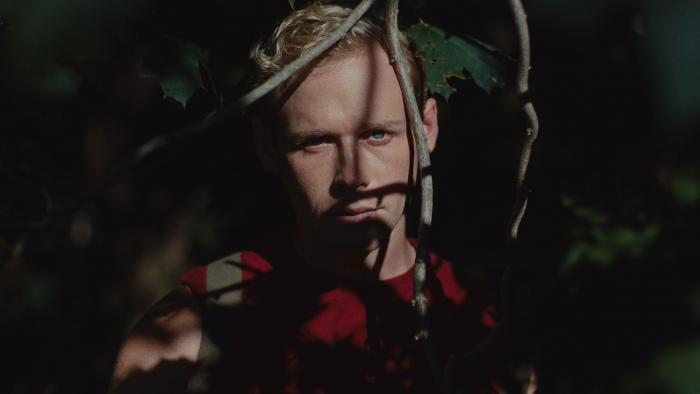
Cole Doman (of the magnificent 2015 queer coming-of-age film Henry Gamble’s Birthday Party) here plays Joe, a young journalist in New York City who needs money and material with which to earn it. So Joe decides to chase a story from his small hometown involving a closed psychiatric hospital and the alleged suicides of eight gay men which led to its closing. Literalizing queer hometown trauma, Fifer turns this history of pain into an actual physical space—in the grand tradition of haunted hospitals, Joe’s excursions into its decrepit shadows unleashes hell. Only it’s not quite what you’re expecting, and bless the vibe-y film for that.
Because as Joe uncovers the hospital’s sordid history of “aversion therapy” (that’s the one where the doctors would give electric shocks to a gay person if they got excited by a pornographic photo of a member of the same sex), it’s him who begins to become ghost-like—I personally felt something profoundly relatable watching Joe sink into a state of total disconnect the longer he spends home. The film understands and thrums with how we move through these places of memory feeling unseen. I’ve never felt more invisible than I do when I visit my hometown—I was a ghost when I lived there and I slip right back under that familiar white sheet every single time I go back.
For as much as that place formed me, it eradicated me as well—only once I escaped it could I find myself; could I build my person up into something. And every trip back is like a descent into the netherworld—hauntings of past selves, past lives. Terrible quakings of self. Haze captures that essence and then some.
And so as Joe disassociates and digs into his home’s terrible secrets, he simultaneously meets a man there named Luke (Brian J. Smith of Sense8) and the two hit it off—which is to say, in the grand tradition of gay cinema, they have lots of hot steamy and lightly explicit sex together. It starts out sweet enough—two hard-bodied lost souls commingling, with hot results—but rather than give himself a sense of purpose, this relationship pulls Joe even further toward the edge. Their sex becomes increasingly rough; they bruise one another and call each other slurs. Infatuation, obsession, lust and violence—it all starts swirling around Joe as he spins, on a whisper, toward oblivion.
Methodical in its approach, Haze very well might test your patience—it’s a big mood movie, with many things left unspoken. It often lets its expressionist cinematography—from DP Eric Schleicher, who also shot Fifer’s previous (and also very good and gorgeous) film Cicada—do a good dose of the vocalization, casting smoke around Joe that sometimes feels impenetrable and confused. But with genuine purpose. How it looks is how it feels. For some anyway. Indeed you might think the film merely a psychological study of a person’s disintegration for most of its run-time—it vibes on that for its majority, saving its swerve into horror for its last act. But when that comes I felt that too, and deeply.
Because, listen—Queer Horror has itself taken a long and winding path since the very beginnings of the horror genre (one which was detailed with encyclopedic aplomb in Shudder’s excellent 2022 documentary series Queer For Fear, so check that out). We’ve been monsters, villains, victims. We’ve been Frankenstein’s two dads. We’ve been Michael Caine wearing lipstick in Dressed To Kill. And we’ve been pretty much everything in between. (Recently we’ve even started getting to be heroes too. Who could have ever imagined that?)
But there’s one role that’s almost entirely eluded us—one that horror is very good at expressing, and one that I have always wanted to see on-screen. That of the queer avenger. The Revenge Film, starring complicated and deeply flawed protagonists who violently pay back the bastards who wronged them, is a genre stalwart—there was the “Rape Revenge” subgenre of course (I Spit on Your Grave et cetera), which mostly came out of the 1970s and gave some cathartic (and complex) voice to the righteous fury of the contemporaneous women’s movement.
But that’s only one small part of a massive library of films—take for example The Crow, which is dropping its fifth adaptation later this summer and which typifies the tale, what with its shadowy goth anti-hero unleashing the powers of hell to take down those who murdered his beloved. We root for Eric Draven to do very bad things, but to very bad people. And we come out the other side of these movies with some broken and angry part inside of us momentarily sated. Fed. An itch has been scratched; a psychological burden lessened by the power of art and of cinematic witchcraft.
So why can’t we queers get that too? There have been a few recent films that have begun flirting with the idea—the terrible 2022 slasher They/Them tried it out, sort of (and totally bungled it), while last year’s Xmas slasher It’s a Wonderful Knife got it a little more right. Then there was the fantastic Femme released earlier this year, which starred Nathan Stewart-Jarrett as a drag queen who catfishes his closet-case gay-basher (played by George Mackay) only to find their feelings getting a little too complicated for comfort. But that’s really more of an erotic thriller than it is a horror film.
Like Haze itself I realize I am saying things here without actually saying them—gesturing towards the film’s eventual developments without getting explicit about it. I’m skimming the surface. But with purpose. And you probably can work out the gist. The slow burn to get there though, it’s a sweet trip and one that you should experience for yourselves. The film took me by surprise, and I am saying that you should surrender yourselves to it too. Perhaps it will unravel the right parts of you, unknot your stomach cramps, scratch an itch you too have found wanting. Just don’t feel bad about it—give in. Take the trip. This is exactly what the movies are here for. Sweet and sexy catharsis.


