Old School. Biblically Independent.
By Jen Maravegias | Film | November 4, 2026
Election week seems as good a time as any to revisit one of the more ridiculous ideas the U.S. Government has had during our 250 years as a country.
The water hyacinth debuted as the next hot trend in ornamental gardening at the Cotton States Exposition of 1884. Unaware of the flower’s invasive nature, the fair’s organizers handed out clippings of the Amazonian hyacinths to attendees of the New Orleans Expo willy-nilly.

Within 20 years of the Expo, the flower had taken over waterways all over the South, threatening established trade routes. Local governments tried in vain to destroy the plants, but they continued to thrive.
At the same time that this botanical crisis was going on, the United States was facing a shortage of affordable beef. Catherine McNeur, a historian at Portland State University, explained it in a way that sounds very familiar:
Meatpackers blamed the grain prices and cattle shortages, butchers blamed the meatpackers, [and most everyone else] blamed the Beef Trust”—a nickname for the nation’s largest meatpacking companies—“for conspiring to profit at their expense…
Luckily, the fine people of Louisiana had elected Robert F. Broussard to the Senate, and he had a plan that would solve both the meat shortage and the water hyacinth issue. Two words: Hippo farming.
On March 24, 1910, Broussard proposed the “American Hippo Bill” to the House Committee on Agriculture. It was simple, really. Import giant herbivores from Africa to eat invasive flowers from the Amazon. When the hippos grew fat enough on hyacinths, they could be slaughtered for meat. Profit?
The New York Times used the phrase “lake cow bacon” to make it sound more palatable.
One researcher at the Department of Agriculture didn’t think Broussard’s idea went far enough. He suggested plenty of other non-domesticated animals could be brought here from other countries as well. Dik-diks, Cape buffalo, Rhinoceroses, Tibetan yaks, and Manchurian pigs were all suggested as potential game for hunting or for farming on U.S. soil.
Other proponents of the bill were legendary scout and world-traveling adventurer, Frederick Russell Burnham, Fritz Joubert Duquesne - a South African army captain who later became a German spy- and former president Theodore Roosevelt. No real surprise there.
An article in the Daily Arizona Silver Belt mused:
All we have to do to be saved from vegetarianism is to cultivate a taste for hippopotamus, rhinoceros, camel, eland, springbok, [rhebok], dik-dik, [kudu], giraffe and other African animals…Perhaps these animals, some of them at least, are not so bad as they sound.
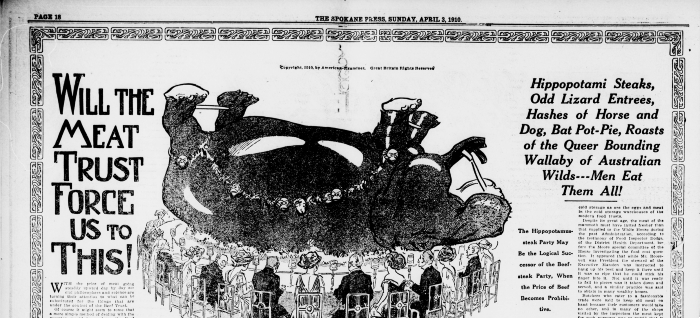
Our history of politicians aligning with weirdos from other countries to introduce half-baked ideas remains unmatched, folks.
No one took into consideration how difficult it would be to domesticate and contain hippos. They weigh between 3,000 and 9,920 pounds when fully grown, and I don’t think we make fences strong enough to keep a herd of them in one place.
Even if we did, while hippos are herbivores, water hyacinths are not part of their natural diet and would wreak havoc on their digestive systems. Bringing us to the matter of what to do with the amount of excrement herds of hippos would generate. We would be trading one ecological disaster for another, stinkier disaster.
Luckily, the Agriculture Committee was reluctant to pull the trigger on the bill. And then everyone got distracted by WWI, saving America from being overrun by wild beasts of all kinds.
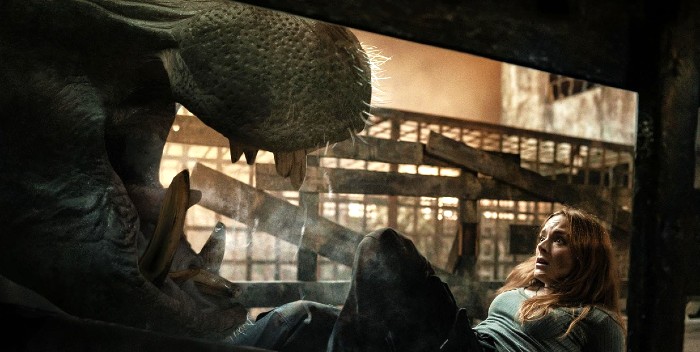
But truth never stopped Hollywood. Earlier this year, British writer/director James Nunn released Hungry, a survival movie set in the Louisiana bayou.
In Hungry, a group of tourists finds themselves stranded when their swamp tour goes off course and is attacked by something big in the water. It’s a hippo! No one expected a hippo! Chaos ensues. Most of the group die. There’s a big explosion. The Final Girl is rescued. The end.
It’s a very simple story, folks.
Hungry desperately wants to be Lake Placid. But it doesn’t have the star power or the script to pull it off. Which feels like a wild thing to say about Lake Placid.
It’s What’s Inside star Madison Davenport is Hungry’s final girl. Relegated mostly to screaming, climbing cypress trees, and more screaming, Davenport is a one-note Lindsay Lohan look-alike (circa early 2000s).
The only other star of note is Joaquim de Almeida. You know him as “the Latin Jack Ryan” from Clear and Present Danger. He is the deus ex machina, or possibly the Quint, if you want to compare hippos to sharks.
Everything is very dark, and most of the animal action happened towards the end. It saved them a lot of digital FX money, but it doesn’t make for a very exciting action movie. When Davenport’s character is whisked off to safety in a rescue helicopter, we get a glimpse of a happy happy hippo family wading off into the sunset of the bayou, reminiscent of Jurassic Park’s classic ending. Raising the question of whether or not there will be Hungry sequels.
Will we get hippos in the French Quarter? Perhaps they’ll storm the Capitol in Baton Rouge next. The hippos could fight New Orleans’ other invasive mammal, the nutria, in an epic battle royale on the streets of the Garden District. We’re gonna need a bigger set of beads, y’all.
Hungry is streaming on Prime Video.


