Old School. Biblically Independent.
By Jen Maravegias | Film | August 26, 2025
The Rocky Horror Picture Show was my introduction to camp — something that’s intentionally over-the-top theatrical to the point of being funny. Something so bad, it’s good. It made such an impression on me that so-bad-its-good movies are still my favorite. As a kid growing up in New York, the marquee at The 8th Street Playhouse advertised the midnight showing of Rocky Horror for as long as I could remember. I would ask my parents why The Rocky Horror Picture Show was so special, and why it was only shown at midnight. The exclusivity of it was a siren call. I don’t think I ever got a straight answer from my parents beyond “Oh, it’s just for grown-ups.” That didn’t make it any less appealing.
I befriended the (in hindsight) creepy old man in coke-bottle glasses and a comb-over who owned the neighborhood VHS rental store and chain-smoked cigarettes all day long. He indulged my budding taste for horror and all things weird, introducing me to 1970s exploitation horror and early 1980s slashers. And he’s the guy who eventually produced a copy of The Rocky Horror Picture Show for me to watch at home.
It was a revelation. Rocky Horror is the intersection of science fiction, glam rock, gay culture, and musical theater. It had never occurred to my pre-adolescent brain that all of those things could come together so perfectly. In the same way that reading Douglas Adams’ The Hitchhiker’s Guide to the Galaxy transformed how science fiction could be written for me, Rocky Horror changed the way I thought about writing for theater at a time when theater meant Shakespeare, Les Miz, or Cats.
After that, there was a solid two years of my life when I made “Have you seen The Rocky Horror Picture Show?” my entire personality. Sometimes I think I should apologize to people for that. But honestly, they should all be thanking me for introducing them to that sweet transvestite from transexual Transylvania.
I would show up at parties with the VHS in my bag. I was gifted the 15th Anniversary CD box set in 1990 that included the original cast recording, recordings of international casts, and rarities. I wish I remembered what I did with that because it’s going for $75 on Poshmark as we celebrate the 50th anniversary of the Tim Curry-led movie.
I memorized the soundtrack, singing and dancing along to it in my room, where I had a full-length mirror that took up an entire wall. But The Rocky Horror Picture Show isn’t meant to be enjoyed alone, behind closed doors. It’s meant to be a communal experience.
Originally produced as a stage show in London’s Royal Court Theater in 1973, Rocky Horror is the brainchild of Richard O’Brien (Riff Raff). He spent his early adulthood marinating in the rock scene of 1960s England. His proximity to the “rockocracy” and the rapidly shifting societal norms that changed music and fashion influenced Rocky Horror.
It was popular enough in London to run continuously, although in different venues, until 1980. Its US debut did not go as well. It opened in Los Angeles in 1974 and ran for nine months. But its 1975 Broadway run only lasted 45 performances, despite Tony and Drama Desk Award nominations. The film adaptation, although never a box office smash, was much more successful. Rocky Horror’s dedicated fan base made it the longest-running release in film history, thanks to all of the midnight shows and sing-along performances.
It ran at The 8th Street Playhouse from June 1978 until the theater closed in November 1992. I never got to see it there. I finally got my ‘Time Warp’ on in a small theater in a bedroom community north of New York City sometime in 1993, which was fine, but disappointing. It did not live up to my childhood expectations of the midnight show experience. The movie’s edginess was blunted by the clean suburban setting I was in.
It’s been a long time since I watched Rocky Horror. I found it streaming on Prime’s Broadway Channel, and I was worried that, I don’t know, it hadn’t aged well? But Rocky Horror is timeless. Susan Sarandon is forever the 28-year-old ingenue Janet, and Barry Bostwick is always going to be nerdy Brad, feverishly in love with her.
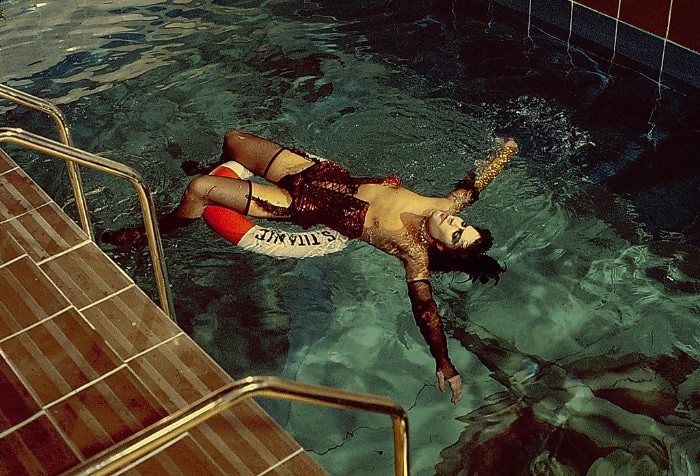
Watching it as an adult revealed some of the character choices that I missed when I was younger and caught up in the campiness of the costumes and physicality. Brad and Janet really aren’t that into each other, even in the beginning. They’re in desperate need of this night in the castle to let their freak flags fly. Riff Raff and Magenta (Patricia Quinn) have obviously been sabotaging Dr. Frank-N-Furter’s experiments for a long time, and they are happy to “accidentally” let Rocky (Peter Hinwood) loose to rendezvous with Janet. They have grown weary of this mission, and of this staid planet. If Rocky is defiled now, ruined in the eyes of the doctor who created him, it will be that much easier to convince Frank it’s time to go home.
Little Nell’s Columbia is the saddest of all the ancillary characters. The Doctor destroyed the love of her life, Eddie (Meatloaf), in his experiment. And then kills him (again) right in front of her during his big, ‘What Ever Happened to Saturday Night,’ number. Tragic.
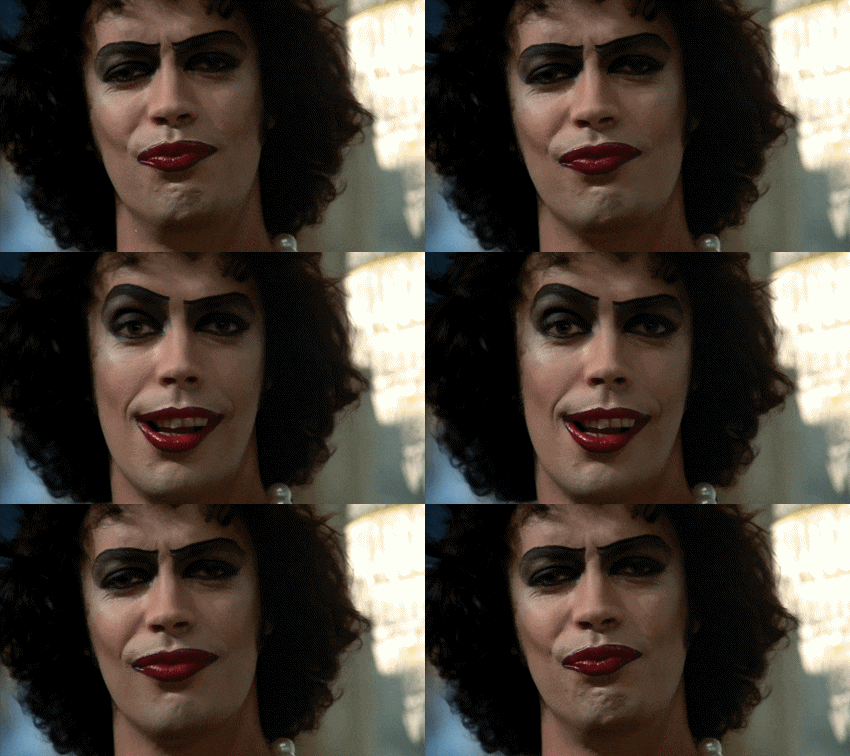
And then there’s Tim Curry’s Doctor. Frank-N-Furter’s luscious, glossy lips are as mesmerizing now as they were 50 years ago. He originated the role on stage in ‘73, and it’s hard to imagine anyone else filling the corset. According to O’Brien, at one time, Mick Jagger wanted to buy the rights to the movie to star in it himself. Imagine how that would have changed not only the film but also the trajectory of The Rolling Stones as a foundational brick in the history of rock n’ roll.
I don’t think Jagger could have pulled off the same performance as Curry. Frank-N-Furter embodies chaos and pathos. He destroys Eddie and Columbia’s lives as part of his experiments, but also opens Brad and Janet’s minds to the possibilities outside of their vanilla lives. ‘Don’t Dream It, Be It’ is a message for them and for all of us to embrace what we might be afraid to reveal to ourselves and to others. And to give ourselves over to pleasure, whatever form it may take, without judgment.
Frank-N-Furter’s tragic end feels disjointed from Brad and Janet’s arc. Riff Raff and Magenta see his experiments in finding love as a failure. But after Riff kills Frank with a laser blast, Rocky is distraught and tries to carry his body to safety, only to be shot down himself. In the end, Rocky did love Frank in a way. But Frank will never know that he built himself the perfect man who loved him.
In preparing to write this article, I came across a disappointing Pink Nation story from 2020, where creator Richard O’Brien “clarified” anti-trans statements he made in support of JK Rowling back in 2016. It brings some clarity to the ending of Frank-N-Furter’s mission in Rocky Horror.
Frank-N-Furter was O’Brien’s monster, and his creator would never see him as anything but a man in women’s clothes and shiny lips. His mission was never going to be successful.
Should that stop us from celebrating Tim Curry’s outstanding performance in this cult classic? It’s harder to separate this art from the artist when O’Brien plays an integral role in the movie and identifies as transgender himself.
50 years on, Rocky Horror still speaks to a lot of people who identify as marginalized, and Frank-N-Furter is an icon for many members of the queer community. Curry is still celebrating the movie; he’ll be part of a sing-along next month at the Academy Museum of Motion Pictures. I would go, if I could, just to see Curry get his flowers from the dedicated fans of this quirky musical. Because even if The Rocky Horror Picture Show cannot go on forever, Doctor Frank-N-Furter should.