Old School. Biblically Independent.
By Kayleigh Donaldson | Film | June 22, 2026
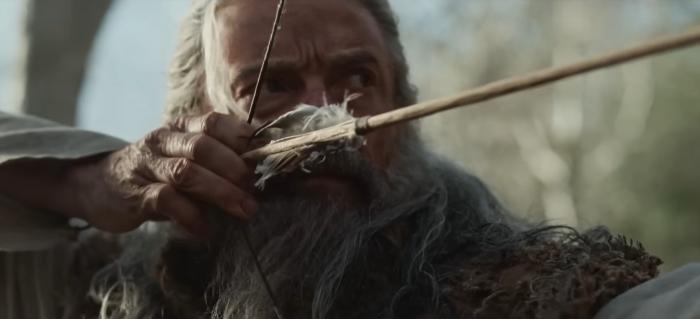
This past weekend saw the release of The Death of Robin Hood, the entertainment industry’s latest attempt to revive the Robin Hood myth for a new era. This one, grimy and brooding, stars Hugh Jackman as an aged rebel who is nursed back to health by a nun as he looks back on his life of crime and death. Reviews were mixed, with many feeling the violent and self-serious interpretation of the material was overdone, and it arrived in cinemas with nary a whisper (a matter not helped by its main competition being Toy Story 5.)
You’ve never had to wait long for another Robin Hood remake. Just hang around for a couple of years and you’ll get another movie or TV show or cartoon or saucy romance version. Few of them have made a splash over the past couple of decades, however. One wonders who the audience is for this stuff in 2026. Or 2018, when we got the last Robin Hood reboot that was intended to kickstart a Marvel-esque expanded universe. Or 2010, when Ridley Scott tried to go the serious historical drama and bored us all to tears. Did you even know that MGM+ has a Robin Hood show? perhaps it’s time for us to let Nottingham Forest’s finest take a break.
Robin Hood is a character so indelibly a part of our cultural lore that it seems impossible to imagine a time before he was created. It’s such a simple concept: a group of heroes who steal from the rich and give it to the poor. The first clear reference to “rhymes of Robin Hood” dates back to the 1300s, and from there, the ballads expanded to include now-familiar details: characters like Little John and Maid Marian, his impeccable archery skills, and his adversarial relationship with the Sheriff of Nottingham. Historian have argued for decades over whether or not Hood was a real man, citing several figures who could have been an inspiration. But the chances are that when the average person thinks of Robin Hood, they’re thinking of the tights, the hat, the bow and arrow, and many merry men.
You can hardly blame people for wanting to make fetch happen with endless re-imaginings and reboots of Robin Hood. Public domain IPs are always enticing and this story has enough malleability to it to inspire fresh takes from its core foundations (and you’re unlikely to be barraged by Hood purists in the process. Batman, he ain’t.) The core appeal has never lost its potency either. Don’t we always crave an anti-establishment underdog who believes in the redistribution of wealth and looks good doing it? If only that was the version we got most of the time.
The film industry began making Robin Hood movies almost from the moment the medium was invented. The first documented adaptation is from 1912. Douglas Fairbanks, one of Hollywood’s first leading men, donned the rights, followed by Errol Flynn. These films set the standard for Robin Hood movies: a dashing hero, lots of fights, swooning romance, and a snivelling villain. It was the kind of narrative formula you could set your watch to, and it’s still a blast to watch.
This may be why the Disney version remains so beloved and, to many people, the default Robin Hood. It’s an uncomplicated and straightforward take on the Errol Flynn version, a classic Hollywood tale of derring-do and doing the right thing. Really, the only major change from the golden age tales is the fact that they’re all animals (and that fox inspired generations of Feelings among many viewers.) Sometimes, all we want is a simple adventure tale with a clear moral and a hero we can rely on. And yet so many adaptations fail to grasp that.
Grimdark Robin Hood is just daft to me. The 2018 version, starring Taron Egerton, tried to make this ultimately jovial tale into Black Hawk Down with more trees. The arrows exploded upon contact with the scenery! It would have been funny in its overwhelming solemnity had it not been such a tedious retread of a dozen other films. Much like the Ridley Scott version, which at least tried for some kind of historical verisimilitude, it seemed to believe that an absence of joy was the same thing as tonal heft. It had to be “serious” in order to be important, which led to one of the most astonishingly misjudged character backstories I’ve ever seen in a so-called blockbuster: The Sheriff of Nottingham’s origins for evil involved being a victim of child sexual abuse at the hands of the clergy. Apparently, the only way we can make a serious movie from “silly” material is through exploitation.
I fear that the real problem stopping us from getting another truly great Robin Hood adaptation is the entertainment industry’s unwillingness to portray a hero who thinks that being corrupt is bad and that ill-gotten gains should be returned to their rightful owners. Admit it, you can already see the furious YouTube videos about wokeness gone awry because stealing from the rich to give to the poor is bad, actually.
Robin Hood feels like King Arthur or a Bronte sisters novel: we keep getting adaptations not because there’s a demand but because it’s free to do so and they’re recognisable enough to earn a studio boss greenlight. Maybe you’ll get lucky and a creative figure with a unique voice and refreshing angle on the material will help it feel relevant to our times, or you at least get something bananas. Really, it shouldn’t be all that tough to make a Robin Hood story work for the here and now, and yet the past decade has largely seen the character defined as something unappealing and derivative. The lore is being shaped around the film industry’s desperation to keep up with a trend that has felt out of date for years. Oh, another grimdark serious and tortured man with a bow and arrow? No, thanks. My kingdom for some bright colours and a hero who doesn’t hate himself.
The endless hunt for IP to plunder, preferably without paying for it, means we’re doomed to see the public domain treated shabbily by trend chasers and corporate interests. We’re only a few years away from yet another Robin Hood movie that nobody asked for. Perhaps audiences would be more intrigued by this prospect if it were a chance to experience some retro action-adventure thrills and a technicolour celebration of optimism and sh*tting on the rich, like the tales of old. Let Robin wear the tights once more.


