
Old School. Biblically Independent.
By Kayleigh Donaldson | Film | August 15, 2025
2025 has seen the worldwide box office get back to something resembling normalcy following the turmoil of the past five years. Between the COVID-19 lockdown and the Summer of the WGA and SAG-AFTRA strikes, blockbuster grosses took a beating. This year, however, we’ve had a few bona fide hits akin to the pre-pandemic days. Disney’s live-action remake of Lilo & Stitch just passed the $1 billion mark. A Minecraft Movie came dang close with a $955 million intake. In China, the animated mega-hit Ne Zha 2 has become the highest-grossing non-English film of all-time with a hefty $2.23 billion earning (and a planned English dub release on the way).
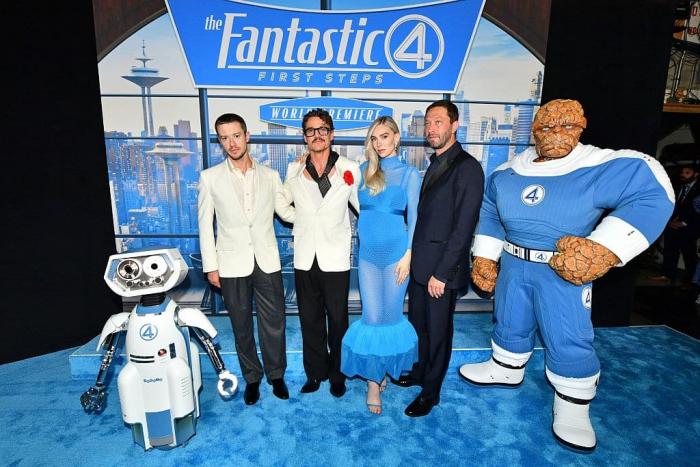
Out of the top ten biggest movies of the year so far, only one of them is a Marvel release: The Fantastic Four: First Steps, currently at number ten with just over $437 million. The long-awaited introduction of Marvel’s first family to the MCU opened strongly, at least well enough to have the industry thinking that it could be the studio’s first mega-hit in a good couple of years. But things haven’t quite gone as planned for the film. It experienced a surprising 67% drop in its second week of domestic release, which then plummeted by 59.2% in week three. That’s put the fear in the business, especially since the MCU has had a not-great 2025.
It kicked off with Captain America: Brave New World, which arrived in cinemas after a cycle of reshoots and last-minute cast additions that left fans feeling concerned. Reviews were mixed-to-negative, and it brought in $415.1 million from a reported $180 million budget. Then came Thunderbolts*, which did far better with critics, and had some calling it one of Marvel’s best works. But the decision to change its title after a mere couple of days of release to The New Avengers failed to ignite fan interest. Ultimately, it underperformed theatrically, bringing in only $382.4 million from a budget of $180 million. Over in the TV realm, it often felt like Kevin Feige was dumping MCU shows onto Disney+ and hoping people wouldn’t notice. Agatha All Along was charming and allowed to be its own thing, but Ironheart was left to flounder (and be review-bombed by the worst people on the internet).
Figuring out a film’s financial success can be tricky, given the subterfuge of creative accounting and the sheer nightmare of inflation. We often stick to the rule of ‘2 ½ times the budget = breaking even’ because it’s easy to understand and gives us a solid framework to deal with. Going by those rules, have any of the current phase of MCU movies broken even? Nope. The Fantastic Four might get there with its $200 million budget, but it doesn’t seem like a guarantee. If it does get into the black, there’s a solid chance it won’t be by much. Remember, these are films that are expected to be billion-dollar hits. That’s the marker of success, not just for the Marvel Cinematic Universe but the modern studio tentpole flick in the 2020s.
Marvel has long been close to untouchable in the records it set and the precedent it established for franchise filmmaking in the 21st century. The MCU is the highest-grossing film series of all time and it’s not even close: $32.4 billion over the course of 37 titles. They released three films a year, all of which were guaranteed to be at least pretty good, and audiences grew addicted to seeing how the increasingly labyrinthine interconnected universe expanded beyond the core Avengers. Every other studio desperately tried to reverse engineer their own multi-pronged franchise and they all failed miserably, from the DC Universe to Guy Ritchie’s King Arthur movie to Taron Egerton as Robin Hood. While there were concerns that the franchise would never maintain the momentum it had built up for the grand Avengers: Endgame climax, Phase Four titles did well enough to assuage such fears.
After lockdown restrictions were lifted, Marvel had a couple of wobbles, like Eternals, but they were still topping box office lists (all hail Spider-Man and Black Panther). But over the past couple of years, the MCU has undeniably slid into less certain territory. Audiences aren’t as eager as they once were, reviews have grown more tepid, and none of it feels as urgent as it used to. I heard a lot of complaints that it began to feel like homework for viewers, trying to keep up with so many plot threads and characters. None of it seemed fun. The storytelling became stifled by the endless need to be part of something bigger, to build to a grand climax ten or twelve years down the line. They also just looked ugly as hell, with the poor overworked and underpaid VFX teams working with increasingly impossible demands that left every movie looking the same kind of bland.
I wrote a piece a while back about how cinema has grown too big to fail, and it doesn’t feel like anything has truly changed since then. I wondered if COVID-19 and the strikes would lead to Hollywood making a conscious decision to downsize or not rest all of their hopes on these obscenely pricy flicks. That was naïve of me in hindsight. Nobody likes to double down more than a movie executive with a bonus to cash in and unions to crush. If it ain’t broke, don’t fix it. If it is broken, well, it worked once before so just keep going.
But how far can it go? How much longer can Disney and Marvel keep making $200 - 300 million movies with equally expensive marketing campaigns that have become increasingly unlikely to break even? Is it worth just holding out until the next Avengers movie and hoping that Robert Downey Jr’s return pays off? Now there’s a movie with a hefty price tag. It seems foolish, at best, to hope for the return of the days of Avengers: Endgame. ‘Good enough’ isn’t enough anymore.


