Old School. Biblically Independent.
By Kayleigh Donaldson | Film | February 19, 2025
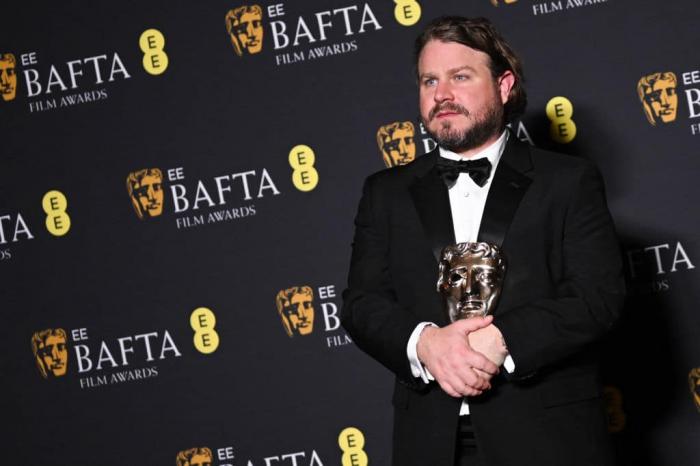
Brady Corbet is a multi-award-winning director and former actor who has been in the industry since he was a child. He starred in films like Thirteen and Mysterious Skin as an adolescent before graduating to projects like the English-language remake of Funny Games and Martha Marcy May Marlene. In 2015, he made his feature directorial debut with The Childhood of a Leader, which won him two awards at the Venice Film Festival. His most recent film, The Brutalist, is nominated for ten Oscars. He is the frontrunner to win Best Director. The movie has grossed $31.1 million at the box office so far. And he is living paycheck to paycheck.
Corbet has been candid about the difficulties of trying to make a living in the world of film. While appearing on Marc Maron’s podcast, he said that he and co-writer Mona Fastvold made no money on their previous two films. He also noted that he hasn’t been able to work over the past couple of months of awards season campaigning, and that talent is not paid to do what is essentially a full-time job of Oscar schmoozing. ‘I’ve spoken to many filmmakers with films nominated this year who can’t pay their rent.’ he admitted. The lion’s share of his income has come from a project he did three years ago.
What Corbet describes is pretty sad, and it’s also the unspoken norm of life in the arts. Most of your favourite artists are, if not stone-cold broke then certainly struggling to make a living without a safety net. Chappell Roan also talked about this conundrum in her Grammys acceptance speech, when she called out record labels for not providing health insurance or financial support to their artists.
Anyone in the public eye talking about their precarious financial circumstances, particularly if they’re on red carpets picking up golden statuettes, is unfortunately unlikely to be taken seriously. There is this prevailing notion that every artist, regardless of critical or commercial success, is rolling in it. You published one book? You must be a millionaire. You’re a bit-part actor who mostly works in indie movies and TV? I bet you’ve got money to blow. How dare you picket for fair pay or call out wage discrepancies when I saw you in a movie once so you’re clearly Rockefeller-levels of wealthy. The Rock makes $20m a project, so every actor must be on that level and we won’t hear otherwise.
Alas, the statistics speak otherwise. According to a 2022 report, the median annual income for authors whose primary occupation was their writing was £7,000, which was down from about £12,000 in 2006. SAG-AFTRA, who went on strike last year, noted that actors made a median salary of $46,960 in 2021, and that many didn’t earn enough to qualify for health insurance (a matter exacerbated by the pitiful residual cheques received from streaming services.) In film and TV, the average writer’s salary has gone down by 4%, even as studios rake in record-breaking profits. Visual artists in the UK take home a median annual salary of only £12,500 a year, a 40% decrease since 2010, as one report detailed.
The arts have only grown less accessible over the years, between staggering increases in university tuition fees and decreased wages. The already crony-filled spaces of the entertainment industry have grown more cloistered. With the cost of living at new peaks and the majority of people not financially sturdy enough to withstand the business’s strife, it’s no shock that nepo babies and tech bros have become more dominant than ever. Who else can afford to get into a business with long periods of unemployment that requires good connections to open all the doors? It’s no wonder all our favourite indie filmmakers have to make $250m+ Disney movies; at least that way they might get health insurance.
The arts should be a field where you can be a working individual who earns enough to pay their bills. It should not be turned into this hallowed space of elitism where only those with the economic foundations to do so can enter. How much crapper will our films and books be if they’re created by the same tiny minority of the privileged with the same worldviews and agendas? But the corporate structures of art in every field are more focused on pushing the artist out of the equation altogether. Hollywood fought tooth and nail against the unions to make AI the new norm in every area of development. Every social media platform has cannibalized its user bases to fuel the giant plagiarism machine.
The powers that be are determined to devalue artists while simultaneously making record profits off the art itself. We’ve grown too used to seeing art as something you don’t need to pay for, whether it’s Spotify streams making artists $0.004 per listen or craft-focused sites like Etsy being flooded with drop-shipping tat ripped off from independent artists. Amazon is overrun with AI-generated ‘books.’ It’s easy to buy into this system, especially when we’re all broke as hell and groceries are seen as a luxury. It’s all the easier to justify with that old lie of, ‘Well, the artists can afford not to be paid.’
None of this is new. We lived through Napster, Limewire, and guys in car parks with foldaway tables full of pirated DVDs. But it’s also unavoidable how oversaturated we are with the realities of increased wealth inequality and corporate overrule. We all deserve better than a broken and corrupt system of ensh**tification. Art is meant to be a light in the darkness and that shouldn’t be incompatible with it being a normal job that pays fairly and opens up that world to everyone. The last thing we need is more slop.


