
Old School. Biblically Independent.
By Jason Tabrys | Film | November 12, 2026
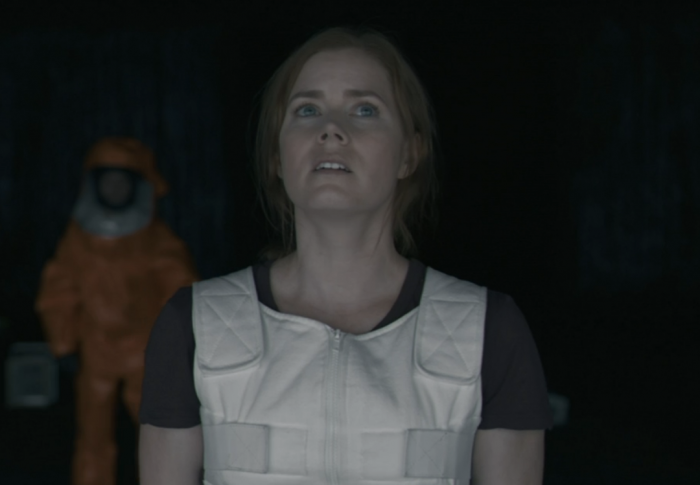
The best first-contact movies say something more about humanity than aliens. They do this by focusing on the unified chaos of fear and paranoia, human resilience, the power of hope, or some combination of the three. As with stories rooted in religion, most alien movies also reflect a desire not to be alone and to be deemed worthy of salvation or inclusion in a community among the stars.
To me, Denis Villeneuve’s Arrival is a perfect film. Released 10 years ago, it contains all of the above elements, but it also takes massive swings at deeper subjects. It ponders the nature of memory, time, and love. But the biggest challenges we would and do face when encountering something foreign to us take center stage - our need to understand and be understood.
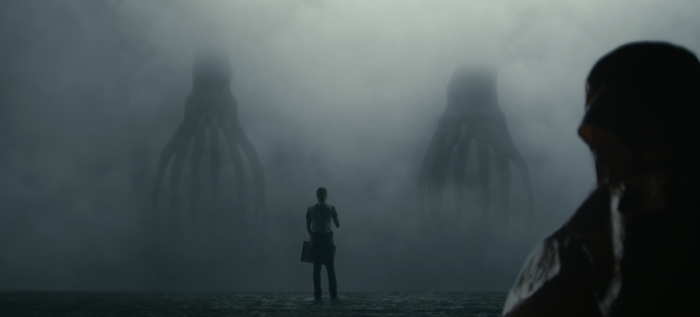
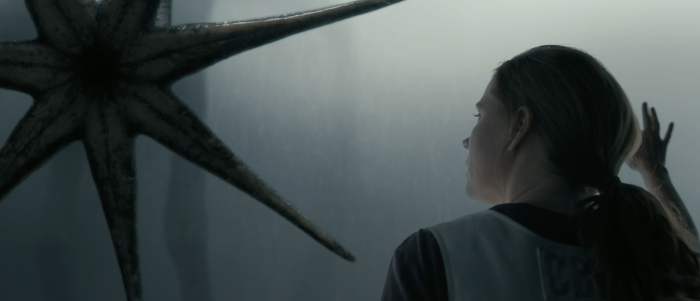
The film is less visually dynamic than either of Villeneuve’s Dune movies or Blade Runner 2049, existing primarily in a makeshift basecamp and the cavernous innards of a “spaceship.” The creatures (heptapods) who suddenly show up across 12 locations around the globe in enormous floating ships aren’t particularly flashy or made to reflect our own image like so many aliens in other films. They look like tree-sized forearms walking on their fingers, and they communicate through an inky smoke while obscured by a dense fog. There are no discernible eyes from which to draw connection, only the logograms that make up their language and specific moments of touch. One when a heptapod matches the effort of linguistics professor Louise Banks (Amy Adams) to communicate, placing its outstretched tentacle on the glass separator beside her hand. Another when tapping violently on the glass to warn her of danger.
The film’s dialogue is similarly spare, but still powerful. Villeneuve has spoken before about his lower opinion of dialogue as a tool in films, but he still wields it masterfully. Nothing is wasted. Words are wrapped by the silence and Jóhann Jóhannsson’s excellent score (with an assist from Max Richter) to make a larger impact.
The power of the carefully curated and slightly limited dialogue mirrors the power of seeing Louise stand before the creatures and the whited-out space where they reside. For all our guns and bravado, we are laughably small compared to gods and otherworldly things. Especially without language and a most pertinent desire to find some kind of common tongue or understanding.
Arrival is a humbling film in the very best way.
“We are so bound by time, by its order.”
Do you find comfort when standing by the ocean because of its enormity? Or do you feel helpless and frustrated by your inability to control it?
As I get older, I find myself thinking about the familiar Dylan Thomas poem “Do Not Go Gentle Into That Good Night.” You know the one: “rage, rage against the dying of the light.” But while it can feel inspiring and romantic, it can also feel like a prompt toward a futile endeavor. As if to say you’re going to kick, kick back against the encroachment of the tide. The light will die for us all, whether we rage at it or savor the gloaming.
I think we complicate a simple existence with caustic distractions, and the urge to conquer, carve legacies, and chase influence. We waste time trapped in doubt and regret, or cursing the inevitable passage of time with all its collateral damage. We give in to rage when we should seek out peace and acceptance.
Arrival plays out the race between fear-activated aggression and curiosity on a global scale: these two ultimate reactions to the unknown.
At the end of the film, we see Louise freed from a linear understanding of time and her own life. She saves the world while also facing a personal choice. Though it’s less direct, we will all face a similar choice when we stand at the altar of love and connection, knowing the odds of heartbreak and loss that come with it.
“Despite knowing the journey and where it leads, I embrace it, and I welcome every moment of it,” she says, bookending the flashes we’ve seen with her and her daughter before the child dies. The journey is worth enduring that sad end, for all the laughter and light that came before.
Like making ourselves vulnerable when confronting something we do not fully understand, accepting the hard realities of our limits feels anti-instinctual. But we still must.
Arrival feels like a prompt to talk less, explore more, and go forth with curiosity and an extended hand, not one resting atop an unstrapped pistol. It reminds us that we have the gift of awareness and the challenge to use it and make the most of the light we have.


