Old School. Biblically Independent.
By Kayleigh Donaldson | Film | May 29, 2026
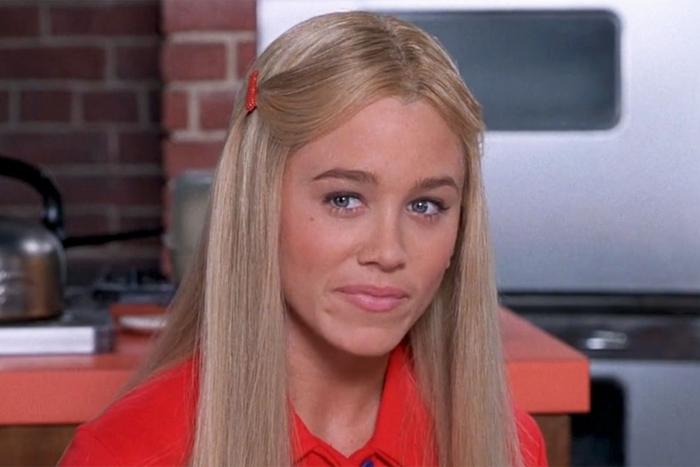
Sometimes, the hell-site once known as Twitter gets something right. Users gathered together to share in the nostalgic delights of A Very Brady Sequel, specifically Christine Taylor’s performance as Marcia Brady. The pronunciation of “I’ve never heard of a George Glass in our school” is legendary, although not as much as the “Sure, Jan” moment that followed and became one of the internet’s most beloved gifs. It was a flashback experience for users of a certain age, one that probably makes no sense to younger millennials and Gen Z-ers, for whom The Brady Bunch may as well have premiered in the neanderthal era. What do you mean there were three whole movies based on a kitschy ’70s sitcom that turned them into self-aware comedies? RuPaul’s in it? Richard Belzer turns up as Detective Munch?! Hey, it was the ’90s, and this was what we did with classic TV comedies.
We complain a lot these days (fairly, in my opinion) about the exhaustive glut of remakes that have come to dominate mainstream entertainment. It often feels as though all Hollywood has to offer is copy-paste repeats of stuff that came before, or endless reboots and sequels of stuff that was initially designed to appeal to our parents’ generation. That’s, of course, not new. Remakes aren’t all that much older than film itself. If it worked once then it’ll work again and again, so the logic goes. Once the 20/30 year nostalgia rule kicked in, we earned a whole new concept to plunder for film and TV. Happy Days and Grease were part of the 1970s’ love affair with the ’50s. The Big Chill indulged boomers’ love of ’60s music. And in the ’90s, the first generation of classic television became fair game for a specific kind of movie remake.
We got a surprising number of these films based on the shows that helped to define the first boom of TV: The Brady Bunch, The Beverly Hilbillies, The Addams Family, McHale’s Navy, The Flintstones, Dennis the Menace, and The Little Rascals (which was a movie serial in the ’30s, but the same logic applies.) These were the shows that defined the first decade of television, when it became a phenomenon that threatened to overthrow Hollywood’s dominance. Everyone watched them. There were dramatic adaptations too, from The Fugitive to Mission: Impossible, but it’s the comedies where I think the most intriguing qualities lie. It’s not just that these were remakes, although a lot of them were pedestrian retreads of their initial set-ups; it’s that many were curiously self-aware spoofs on the cheesy and of-their-time concepts, dragged into a new and more cynical decade.
The Brady Bunch Movie and its sequels are the most obvious examples of this trend. These are movies with their tongues firmly clasped between their cheeks. The Bradys live as though it’s still the 1970s, even though the rest of the world is 20 years ahead. They worry about bland, episode-of-the-week problems while navigating the terrors of sex education and scheming criminal neighbours. The joke is that the family are totally unaware of the culture clash, one that everyone else can see from space. They occupied a more innocent time and have now been flung into the rad, so-over-it, postmodern irony of the 1990s. So, of course, you cannot make a straight remake of The Brady Bunch for that decade. Nobody would buy the earnestness or traditionality of it all.
The Addams Family followed similar territory a few years prior, adapting the spooky ’60s sitcom with a contemporary setting. That remake had an upper advantage, however, because its fish-out-of-water scenario was built into the concept. The big joke of the show is that this family is creepy and kooky and totally cool with it, uninterested in pandering to the normie world (possibly because Gomez and Morticia are too busy doing it to notice.) But they still found ways to poke fun at the concept, largely by turning both films, particularly its superior sequel, into satires of ’90s vanity and consumerism. The joke isn’t just that the Addams family are uninterested in other people’s reactions to them, but that their way of life is more fulfilling than the endless search for approval that drives the white picket fence lifestyle. Being out of step with the times is satisfying.
These films have held up better than the ones that aimed for a more conventional remake approach. The Beverly Hillbillies updated the timeline but everything else was a by-the-book copy-pasting of the sitcom’s fish-out-of-water set-up. The critics called it out for feeling tired and trite, “beating a dead possum” as Entertainment Weekly put it. Doing the same thing with no twist or contemporary flair felt needless. Why not have the Clampetts embrace the ’90s?
Our current cycle of remakes aims for a similar wink of self-awareness, but seldom strays far from the initial concept. They’re never parodying the original material lest they be accused of insulting it by some loser who thinks a middling TV show is part of their sacred heritage. The Disney live-action remakes are so terrified of deviating from their extensively branded source material that the lion’s share of movies end up stylistically staid and narratively unfulfilling. I can’t see Hollywood ever doing with a 30+ year old sitcom what The Brady Bunch Movie did to its original. Imagine if they made a movie of Friends but the joke was that they still talked about love and gender like it was the ’90s. Or we got a modern Home Improvement where Tim Allen was still, well, that.
You could make the case that Wednesday, the Gen-Z reimagining of The Addams Family, fills a similar role, but that also reshaped itself to be for the new generation rather than mocking its own roots. Even Barbie, which feels a lot like those earlier sitcom remake-mockeries, had to be far more ambitious to carve out its fascinating and lived-in niche. The race to acquire and reimagine as much IP as possible hasn’t left a lot of wriggle room for that approach. It may also simply be that it’s now as cliched as the stuff it was mocking. How much more can be mined from this rehash? Therein lies the remake conundrum, I suppose. You can hang a hat on it but the end product is still part of an endless assembly line of redos over new ideas.
These ’90s remakes of ’50s and ’60s shows are a fun time capsule of both eras and the clash between them: The freshness of a new medium versus their evolution into cliché and our need to acknowledge that lest we take things a tad too seriously. Nowadays, it feels like we do take all this stuff too seriously, cherishing the most middling parts of our pop culture childhood as though they reinvented the wheel. Maybe we could use a little more Marcia Brady in our lives.


