
Old School. Biblically Independent.
By Kayleigh Donaldson | Film | April 21, 2026
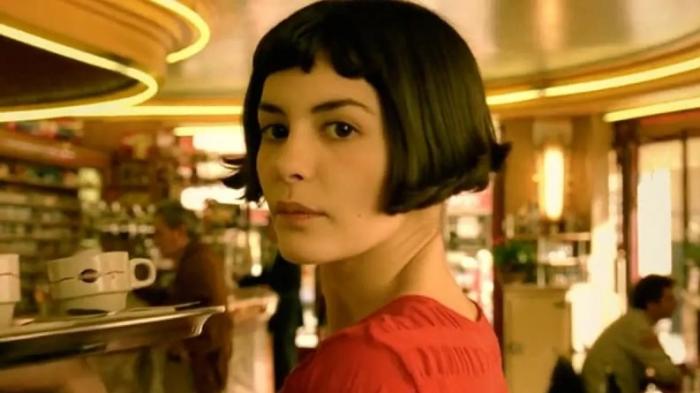
When I was a kid, the idea of watching a film in a different language felt like, well, a foreign concept. At a young age, the mere idea of making movies felt mystical, like something conjured out of thin air by magicians, but the notion of them being spoken in something other than English just didn’t register. That started to change once I began learning French in primary school, and then moving on to high school. Suddenly, there was this whole world that I, a burgeoning film nerd, got to explore. And the film that defined that experience for me was Amelie.
Titled Le Fabuleux Destin d’Amélie Poulain in its native France, the 2001 romantic comedy directed by Jean-Pierre Jeunet was a breakout hit in a major way. It earned $174.2 million worldwide against a budget of $10 million, was nominated for give Oscars, and was recently ranked number 41 on The New York Times’ list of “the 100 best movies of the 21st century. It was even adapted into a Broadway musical. Audiences worldwide were completely won over by this story of the eponymous Amelie (played by Audrey Tautou), a shy waitress who decides to change the lives of those around her while falling in love from afar with a man named Nino (Matthieu Kassovitz.) For a certain generation, when they think of French cinema, the image that first comes to mind is that of Amelie, cracking open the top of a crème brulee or leading Nino on a chase through Paris.
By the time I first saw it as a teen, I was already familiar with Amelie through its iconic poster, which I would later acquire for my shared bedroom, much to my younger sister’s chagrin. It became one of the most-watched movies in my collection, one I wanted everyone to watch with me, but only if they got it as acutely as I did. For some reason, I fell away from Amelie in adulthood, and it entered the realms of my imagination as a nostalgic relic. Now that the film is celebrating its 25th anniversary, and Curzon is re-releasing it in cinemas in the UK, I thought it was the ideal opportunity to revisit Amelie’s Montmartre and see if my admittedly snobby tastes still had space for her.
Reader, I wept.
Amelie is still a stunning film. It’s a feel-good slice of stylish joy that embraces earnestness and whimsy with both hands, but not without a few acidic turns. It looks your cynicism straight in the eye with a guileless smile. And frankly, it was just what I needed.
It’s easy to see why a lot of people find Amelie to be twee or too precious to live. It’s a film that rejects realism in favour of a multi-hued version of Paris dominated by quirky characters and their many shenanigans. Amelie works with a hypochondriac tobacco saleswoman and a former circus worker in a cafe where one of the regulars is stalking his ex. Her neighbours include a reclusive painter with fragile bones and a bully grocer who won’t stop haranguing his sweet but dim son. When she meets Nino, on his knees looking for discarded images under a photo booth, the chemistry is immediate. But why just ask the guy out when you can lead him on the ultimate rom-com goose chase?
The mistake pessimists make with Amelie is to assume that its theatrics are entirely serious and saccharine to boot. A lot of it is pretty dark and knowingly so. Take Amelie’s childhood, which includes a suicidal goldfish, a distant father who misdiagnoses her as too fragile for life, and a mother who dies when a jumper falls on top of her (I’d forgotten about the last part and did the loudest cackle in the cinema when it happened.) The combination of quirk and grotesque is a familiar marker of Jeunet’s work, which includes the black comedy Delicatessen and the surreal sci-fi fantasy City of Lost Children. In comparison to those movies, Amelie is rather tame, but there is a squeeze of lime in this souffle to prevent a sugar overload.
The creative hijinks of this French Emma Woodhouse can only go so far before the reality of her own loneliness kicks in. As played by the radiant and melancholic Audrey Tautou (with perhaps the best bob haircut in cinematic history), she’s a quiet figure with a wallflower streak who often seems petrified of a basic human conversation. Arranging other people’s lives doesn’t work for every unwitting player — the hypochondriac and stalker’s romance is short-live because, as any normal person would tell you, dating a creep never ends well — and it only further highlights Amelie’s isolation. Her courtship of Nino, who embraces the chase, is one entirely of elaborate gestures and zero communication. When they finally arrange a face to face, she’s terrified. Being in a rom-com is hard. Eventually, you have to start acting like a normal person. Otherwise, the relationship is doomed.
That’s what makes Amelie sing for me. It’s an aesthetic dream just on the right side of sensory overload, and its self-consciously unreal Paris embodies so much of what makes Jeunet’s work endure. But in the end, it’s about a lonely woman realising she has to get out of her comfort zone and seize the day, lest she be left behind by the world and her own foolishness. All the grand gestures in the world can’t compete with Amelie finally making that choice to live her life fully. It was around this point where I started crying for about the third time in my viewing. It was worth it.


