Old School. Biblically Independent.
By Kayleigh Donaldson | Celebrity | March 27, 2026
This month, Johnny Blue Skies, the alter-ego of outlaw country singer Sturgill Simpson, released a new album, Mutiny After Midnight. It's a sleazy country-disco record that's funny, angry, and deeply horny. I love it, and being a die-hard Sturgill fan, I pre-ordered the CD the moment I was able to do so. That was also a necessity, it turned out, because Simpson revealed that Mutiny After Midnight would be exclusive to physical formats. It wouldn't be uploaded onto any streaming site (although it was briefly on their YouTube channel before being deleted.) Some skeptics claimed that this would kill the album. How could you expect a new release to survive in the Spotify age if you're not on that platform? Pretty solidly, it turns out. Johnny Blue Skies debuted at number three on the Billboard album charts, with around 59,000 copies sold. No streaming numbers needed.
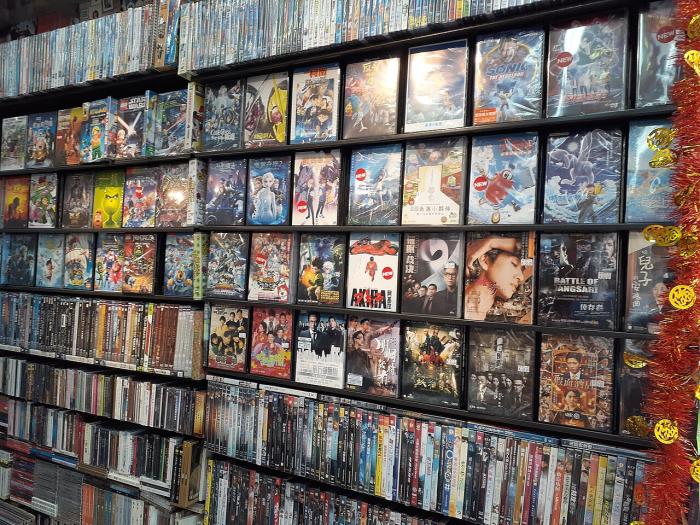
While I don't think this one artist's decision to stick it to Spotify signals a paradigm shift for a broken industry, it does feel like yet another reminder of something I've seen flourishing over the past few months: a genuine hunger from fans to invest in physical media at a time when the streaming and forever-online model of distribution has become increasingly exploitative. There's been an undeniable increase in enthusiasm for things like vinyl, DVDs, second-hand books, and even older formats like cassettes and laserdiscs. Vintage game consoles are all over my social media feeds, eliciting some hardcore envy in those of us who played them the first time round.
While physical media sales are still declining, they only dropped 9% in 2025, compared to drops of over 20% in 2023 and 2024. Boutique Blu-ray companies like Criterion and Vinegar Syndrome are on the rise. Vinyl sales reached new heights last year, with $1 billion in revenue in the U.S. alone. Demand for CD players saw a staggering rise last year, with sales in the UK up 74%, according to The Guardian. Cassettes are back in a big way. Hardback book sales are up. Rental stores are a thing once more, thanks to places like Vidiots.
What has surprised me is seeing how much Gen Z has rallied around the push for a physical revival. They're on TikTok showing off their DVD players, purchased on eBay, and learning how to burn CDs to make their own mixes. In a Los Angeles Times piece on the phenomenon, one person quoted said they saw physical media ownership as an act of "rebellion."
For many of the younger members of Gen Z, they don't have the organic nostalgia for things like DVDs with tons of special features or going to HMV to buy your favourite artist's latest album on CD the day of its release. They were supposed to be the first generation for whom instant access was the status quo. It certainly came with some benefits. How cool to be able to access music from around the world, to be an English-speaking kid who embraced Reggaeton and KPop and had no qualms about the language barrier. You could access films from decades gone by with one click. Dozens of hours of TV were at your disposal for a binge-watch. Wasn't this a positive future for art? Well, they, and the rest of us, soon found out that wasn't the case.
It's frankly embarrassing how many pieces of art have become completely inaccessible because a few corporations made that call for seemingly inexplicable reasons. There are a surprising number of films, for example, that never received a physical release of any kind. Many musicians on major record labels had streaming-only album drops. Streamers like Netflix are embarrassingly devoid of films and programmes from before 1980. The solutions we were offered have only exacerbated the problems. Accessibility was a lie because all of it can and will be deleted at a moment's notice, whether you like it or not. There are so many streaming services or online platforms for this content, and they're all upping their subscription prices, but the quality hasn't increased with it. Studios can just delete shows and movies now, leaving fans and creators alike with nothing but memories of their favourites (well, that and the need to rush back to piracy.)
Corporations have made streaming and online accessibility an expensive hassle that offers customers less product for more money, and everyone I know is sick of it. Nobody has the cash for the sheer number of services required to watch just a portion of what's out there. Spotify's becoming increasingly oversaturated with AI slop. So has Steam. I watched a movie on Amazon last night for work, and on top of wonky subtitles that I believe were AI-generated, there were several minutes-long ad breaks inserted at the most inconvenient times. To get rid of the ads, you need to pay more, and there's still a solid chance that particular movie you want to see will disappear anyway.
The desire for a slower, less online life is one that has become more prominent in recent years. We've written before about things like cozy hobbies and analog bags, attempts made to wean people off the ceaseless algorithms of 24/7 phone use in favour of something less corrosive. Being online isn't as fun as it used to be, and the frictionless ease with which it lures us into an inescapable cycle of slop and self-harm is petrifying. Physical media is all about friction. Yeah, that could be a bad thing - CDS skip, vinyl gets scratched up, storage options are limited - but isn't it nice to have a bit of friction in our lives? There's something to be said for making those little moments into experiences. I like browsing my CDs and taking the time to choose the ideal music for the moment. It's far more satisfying to choose a new book to read by flipping through the pages and feeling the weight of it in my hands than by swiping up on my e-reader (which I also love, but it scratches at a different itch.)
It shouldn't be a radical stance to want to own the thing you've paid money for, and yet here we are. There's something about committing to physical media that feels like a long-term project, a signal that you're dedicated to the joy of entertainment beyond its stock market value. It's a choice to move away from the incuriosity of algorithms in favour of fostering your own tastes. This used to be the norm, but you can't exactly blame us for becoming so used to the other option. It wasn't so and in the beginning. Remember when you could browse Netflix with relative ease? But now, the promise of choice is a falsehood, and one that feels less satiating than the unique freedom of limitations. How many times have you logged onto a streaming service to find a movie, only to spend an hour browsing before settling on something you've seen a dozen times? Physical media doesn't entirely cure that problem but it sure as hell puts some barriers around it.
I can hardly blame Gen Z-ers and others for a rose-tinted view of a world where cassettes were a neat idea and portable DVD players were the height of technology. As Meta faces endless court battles over their proud creation of addictive platforms designed to hook kids into a lifetime of ruin, the semi-analogue life offered with a CD player and Gamecube must feel like a salve. We used to go online to get away from the real world and now kids are flocking to the opposite: a curated and relatively lo-fi real life free from the shackles of the internet.


