Old School. Biblically Independent.
By Kayleigh Donaldson | Celebrity | August 21, 2026
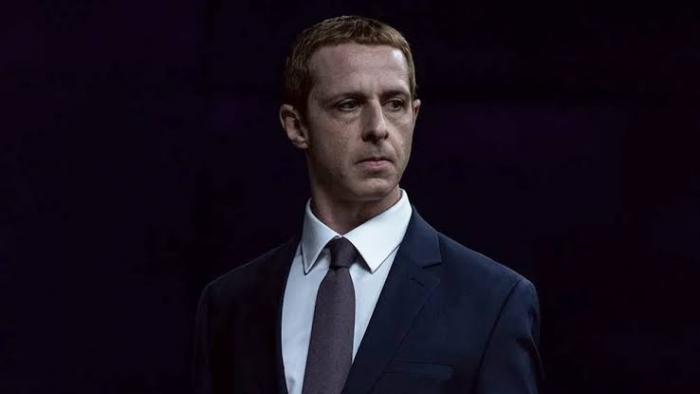
Oh, Jeremy Strong. You do try so very hard. Despite being a multi-award-winning actor who is beloved by his peers and owns an excellent collection of bucket hats, his reputation remains that of a man who takes himself a little too seriously. On the promotional trail for his latest film, The Social Reckoning, he gave an interview to GQ where he spent the lion’s share of his time with the journalist talking in a Polish accent. Strong’s not Polish. He’s just playing a Pole in a remake of The Boys From Brazil, and that means months of maintaining a totally different voice. As the profile notes, he did the same thing for his new movie, wherein he plays Mark Zuckerberg. This is pretty tame by Strong’s standards. Remember, this is the guy who asked Aaron Sorkin if he could be shot at with real tear gas while making The Trial of the Chicago 7.
For what it’s worth, I do think Strong is extremely talented, and he definitely has a sense of humour about himself (did you see the Dunkin’ Donuts ad?) But I also entirely understand why the general responses to him are ones of eye-rolling mockery. It feels like, every time we get a new story of Strong’s full-throated commitment to his craft, the internet responds with jokes. The GQ story led to many a meme, as well as sharing of stories from other actors talking about how much they hate so-called method performers. Robert Pattinson joked that no method actor seemed to commit to playing a halfway decent person. Anya Taylor-Joy claimed it was a privilege afforded only to men and “women don’t method act because we have things to take care of, so we can’t completely lose our minds.” Kristen Stewart echoed that point, saying that method actors are almost always men.
These performers, all of whom are highly acclaimed, are expressing something that feels like a turning of the tides in the acting world: a hell of a lot of people are sick of the faux-method nonsense that seems to exist largely to allow gross dudes to act like weirdos and pass it off as a symbol of their genius. Jeremy Strong isn’t one of those guys, for the record, but it’s telling that he’s been lumped in with the likes of Leonardo DiCaprio’s liver-chewing masochism or Jared Leto’s list of OSHA violations. Audiences have a decreasing tolerance for the supposed greatness of this “method” and so do many in the industry who have to deal with it first-hand.
Let’s just get it out of the way: what we often refer to as method acting is not technically the method. Originating from Russian theatre director Konstantin Stanislavski in the early 20th century, his “system” of acting techniques was designed to bring emotional realism to an often mannered style of performance. Stanislavski’s students spread the word across Europe and eventually to America. One follower, Lee Strasberg, encouraged actors to use experiences from their own lives to bring them closer to their character. That way, the emotions would feel more organic rather than forced. Stella Adler, a one-time student of Stanislavski, reshaped his techniques with her own ideas, choosing to focus on emotional immersion of the character. She wanted her students, who included Warren Beatty and Marlon Brando, to imagine the scene’s “given circumstances”, rather than recalling experiences from their own lives. Strasberg wanted actors to recall their own experiences and feelings, while Adler preferred a focus on the character.
But as actors like Brando, Robert De Niro, and Dustin Hoffman became renowned for their all-consuming approach to their work, their histories as students of the method became bastardised into a myth of self-flagellation and ego-driven suffering. To play the boxer Jake LaMotta in Raging Bull, De Niro infamously gained over 60 pounds through a cycle of binge-eating that left him with a variety of health issues. But it also won him an Oscar.
It seemed to become the norm for actors (read: men) to go through increasingly strained stunts to “become” the character: drastic weight loss or gain, months of preparation and isolation from loved ones, staying in character for extended periods of time both on and off-set. It became a cheat code for winning an Oscar, a symbol of your commitment and skill. Every awards campaign was dominated by stories of the suffering, of the sheer amount of homework required to play a real person, or someone with severe issues. It was not enough to pretend: one had to be the character. Soon, the method became something else, a far crueller and more invasive form of supposed emotional realism. The more you hurt, the better the performance, so seemed to be the new norm.
There is a reason that this bastardised version of the method has become so legendary. Within the entertainment industry, actors have immense respect for their fellow performers who throw themselves into something so overwhelming. Jeremy Strong is beloved among his peers and has been for years, well before he broke out in Succession. Look at how everyone rushed to defend him from that New Yorker profile where the writer dared to make fun of his self-seriousness in the mildest terms possible.
Acting is a weird job. Imagine spending up to 16 hours a day in front of dozens of people and a ton of cameras, smothered by costumes and a wig and maybe prosthetics, pretending to be someone else. The mental weight of taking on all that responsibility is real. In her excellent memoir, former Game of Thrones star Hannah Murray talks about how difficult it was for her to cast off her characters’ pain. Even though she knew it was fake when she played a victim of police brutality and sexual assault in Detroit, her mind and body couldn’t shake the sensation that she’d been genuinely hurt. It’s no wonder that actors seek to find ways to support or justify this surreal side-effect of their work. Maybe sticking with an accent for a few months makes more sense in their minds when they’re in the midst of a psychological tailspin.
Method acting in its truest sense will never die because it’s the essence of acting to generations of performers. Imagine a world of performance where people decide not to aim for emotional realism or take a craft-focused approach to their work. I do, however, feel that the cultural tolerance for those who use tedious inconveniences and cheap stunts in lieu of the work itself is at an all-time low. It seems like something that fewer and fewer performers can get away with in 2026. The ones who maintain it cannot be a bother to anyone beyond themselves, lest another Jared Leto be unleashed onto the planet. Movies are expensive to make and few studios or directors have the time, patience, or finances to support a bunch of barely-veiled tantrums disguised as craft.
Many actors working today use method acting as it was defined by its creators, and yes, many of them are women. Tapping into one’s own emotions or deep-dive researching a character’s life beyond the script is standard stuff, and I don’t think anyone would begrudge an actor for trying to navigate the oddities of their occupation with some helpful tools. We appreciate a good eccentric. We just don’t want an arsehole. Jeremy, keep doing your funny voices. Just stay away from the tear gas.


