Old School. Biblically Independent.
By Kayleigh Donaldson | Celebrity | April 1, 2026
Sometimes, I just need to act as the official British translator for our majority American audience. Here is one such example.
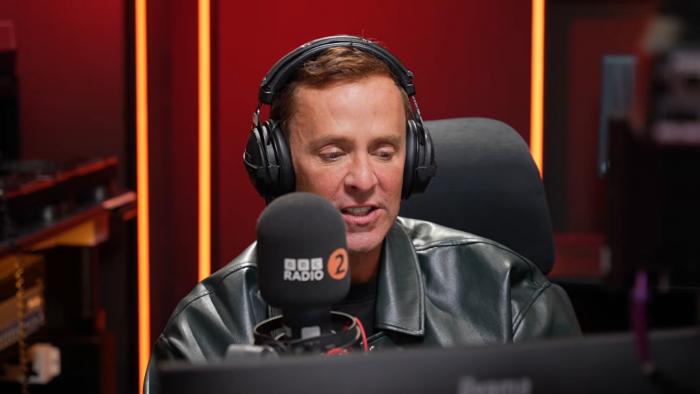
This week, shockwaves went through the British media world when it was suddenly announced that Scott Mills, the BBC Radio DJ, had been sacked. He had gone into work as per usual, announced he’d be back the same time tomorrow, then he wasn’t. It was reported that Mills, who has been with the BBC in various jobs for decades, was questioned in 2018 over historical allegations of serious sexual offences. The Mirror first published the allegations, related to the period between 1997 and 2000s. At the time, Mills would have been in his mid-20s. On Tuesday, the Metropolitan Police told BBC News that the teenage boy at the centre of the sexual offences investigation was under the age of 16.
The BBC was made aware of a police investigation into Mills in 2017, but they said that “new information” brought forward this week led them to fire Mills from the corporation. Mills was investigated by police over historical allegations of serious sexual offences in 2016, but no charges were brought after prosecutors decided in 2019 there was insufficient evidence to proceed with the case. In a statement, a BBC spokesperson said:
“Scott Mills had a long career across the BBC, he was hugely popular and we know the news this week has come as a shock and surprise to many. We also recognise there’s been much speculation in the media and online since Monday. We hope people understand that there is a limit to what we can say because we have to be mindful of the rights of those involved. What we can confirm is that in recent weeks, we obtained new information relating to Scott and we spoke directly with him. As a result, the BBC acted decisively in line with our culture and values and terminated his contracts on Friday 27 March. Separately, we can confirm the BBC was made aware in 2017 of the existence of an ongoing police investigation, which was subsequently closed in 2019 with no arrest or charge being made. We are doing more work to understand the detail of what was known by the BBC at this time.”
Nobody saw this coming. Scott Mills wasn’t a celebrity about whom there were rumours (at least not any I’ve been able to find.) The BBC loved him and had him appear on many other programmes and platforms, including co-hosting annual coverage of the Eurovision Song Contest. His radio show is one of the most listened to in the country. He took over the coveted breakfast show on Radio 2, which is geared towards an older audience and is typically the most popular of the BBC’s radio channels, from Zoe Ball last year. That was big news, akin to a passing of the torch, and a sign that Mills was a very big deal. It made him one of the highest-paid people at the company.
And this wasn’t a drawn-out firing. He went to work one day, then he was gone the next. It’s been a massive shock here, both because of the allegations themselves and the speed with which this has unfolded. Mills has, so far, not replied to any of this. One wonders at what point in time, “in recent weeks”, they were made aware of the Mills story, and how much the Mirror’s report of it sped up their decision. Mills did go on the air, as per usual, said he’d be back tomorrow, then wasn’t. Did he know he wouldn’t be returning?
The BBC has been mired in scandals like this for a while now. Following the revelations of Jimmy Savile’s decades-long reign of abuse, and the BBC’s hand in covering it up, the company has lost a lot of its reputation. This makes it handy for bad-faith players, like the right-wing press, which has always hated the notion of public broadcasting, to attack them. But it’s also tough to deny that, at best, there was a serious error in judgement over the past decade wherein the BBC knew about the police investigation and decided not to dig deeper. Given how the Savile case exploded, one would imagine that the company would be more vigilant about historic allegations of abuse and their role in potentially aiding and abetting the accused.
This news also comes a couple of years after Huw Edwards, arguably the most famous newsreader in the country and the man who headed the BBC’s coverage of the Queen’s death, was being investigated for making improper sexual images of a teenage boy. In July, he pleaded guilty to three counts of making indecent images of children and was given a six-month suspended jail sentence and was added to the sex offenders’ register for seven years.
Right now, a lot of the coverage of this case has been patently homophobic and anti-BBC, with the alleged victim at its heart ignored or used as a convenient excuse for the same old people to make the same old arguments against the BBC. That’s not to say we shouldn’t criticise the BBC, especially if it is revealed that they knew more than they’re letting on. But as often happens with stories involving celebrities and sex crimes, it’s the victims who matter most and should be prioritised.


